Ingredient Encyclopedia
Check the characteristics of the ingredients and how to use them in cooking.
Watermelon
2
3
Watermelon is a fruit high in moisture and bright in sweetness, used widely from chillingly sliced to eat as is, to beverages, salads, and light desserts. The red flesh adds cool sweetness, and the white inner rind remains crisp, making it good for pickles or namul. In cooking, ripe, clear aroma and firm flesh are easy to handle. If the cut surface oozes a lot of water or the flesh breaks easily, it is more suitable to puree for juices, sorbets, or sauces rather than salads. The seeds and the tough outer rind are usually removed, but the white part can be kept depending on the use.
Taste and Texture
Watermelon features a light, clear sweetness with a faint grassy note, and the cooler it is, the more refreshing it feels. When combined with ingredients with strong acidity or spice aromas, the sweetness can come across more distinctly. Ripe red flesh breaks softly and releases juice; the more you chew, the wetter it becomes. For salads where crunch matters, add just before serving, and for drinks needing a thinner texture, you don’t need to add a lot of extra water.
Main uses
- Chilled slices plated as fruit or dessert, with a pinch of salt or lime/lemon juice to alter the sweetness impression.
- Puree the flesh to use as the base for juice, slushy, sorbet, or ice-filled desserts. Since it already has a lot of moisture, if the blender runs well, avoid adding too much water or ice, or the flavor may be diluted.
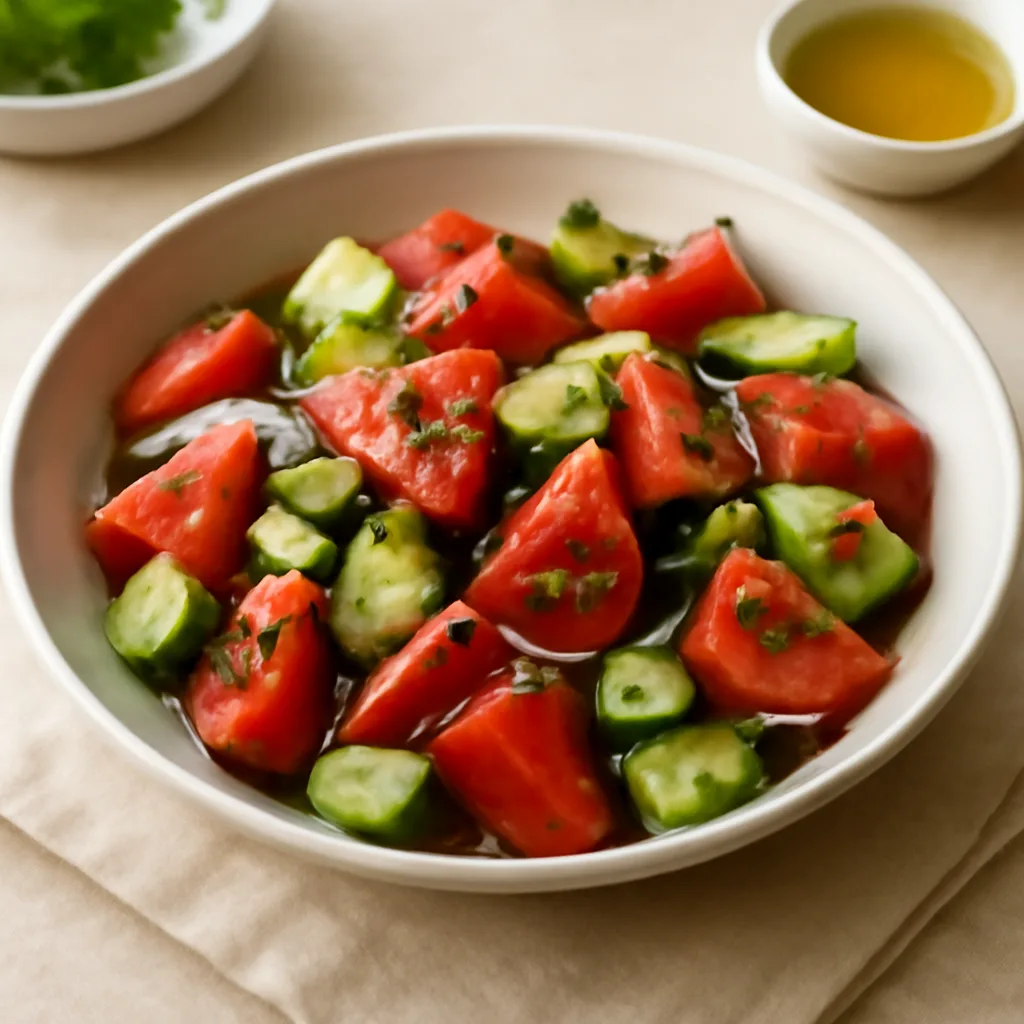
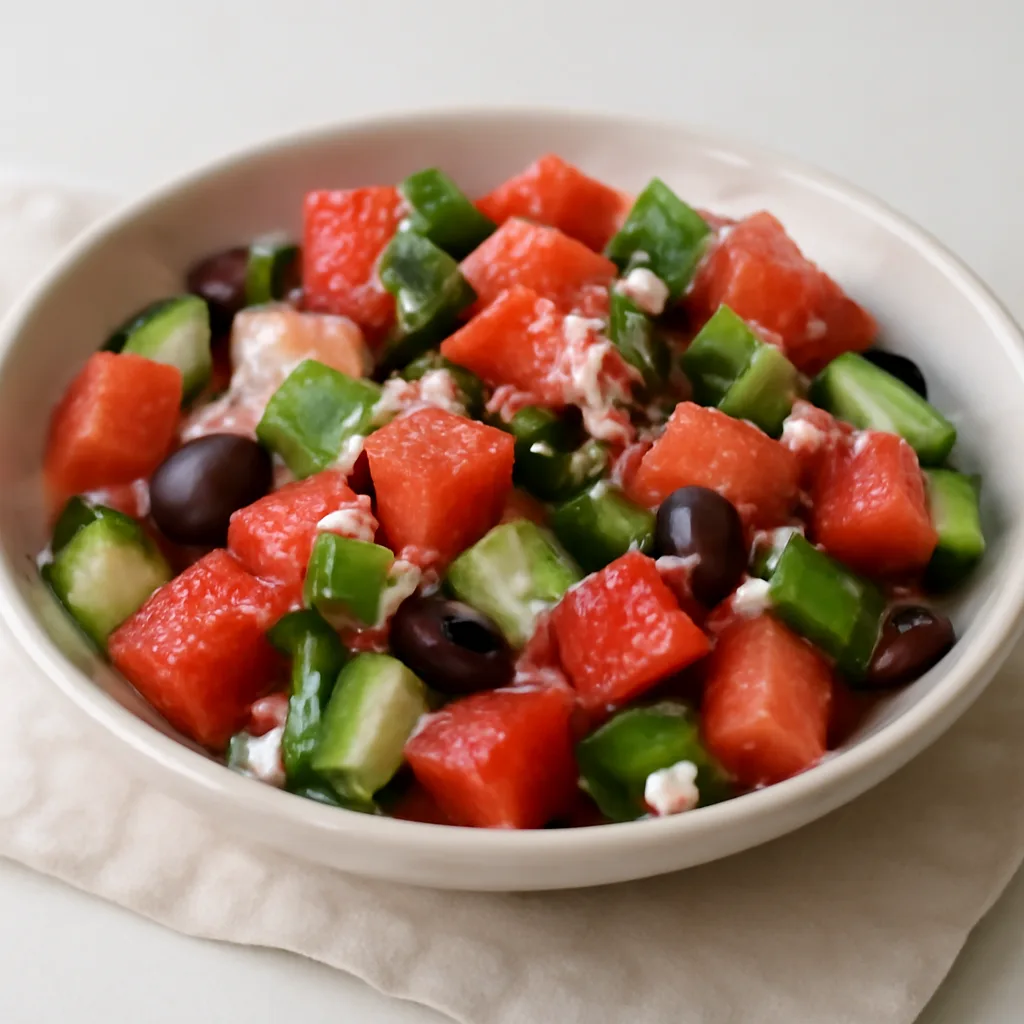
- Cut small cubes and mix with cucumber, tomato, herbs, cheese for a cold salad. If mixed in advance, the released juice can thin the dressing.
- The white inner rind is thinly sliced and used for pickling, namul, or stir-frying. It is useful when the sweetness is milder than red flesh but crispness is desired.
Preparation tips
- Rinse the outer surface under running water before cutting to reduce the chance of surface contaminants transferring to the flesh.
- When using red flesh in salads, remove seeds and cut into bite-sized pieces, then place on a paper towel to briefly blot excess surface moisture. Pressing to remove too much water can crush the flesh.
- When making juice or sauce, puree only the watermelon first to check thickness, then adjust acidity and sweetness gradually. If you add other liquids from the start, it is hard to restore sweetness and aroma later.
- When using the white inner rind, remove the green outer rind thoroughly and slice thin. If you feel bitterness or tough pieces, the outer part remains, so it is better to trim further.
Cooking characteristics
- Watermelon flesh loses its crispness and bright sweetness quickly when heated, as cells break down and release a lot of water; warm cooking should be short or added at the end.
- Searing briefly over high heat or quick pan searing can drive off some surface moisture and concentrate aroma. But if kept too long, it becomes watery and soft, so use solid chunks and cook in a large pan in small batches.
- If salt or acidic ingredients are mixed early, the juices can release more with time. If pooling on the plate is a problem, add dressing just before serving.
- Pureed watermelon can separate into pulp and liquid over time, especially with softer watermelon; for drinks or sauces, stir once more just before use to adjust texture.
Good combinations
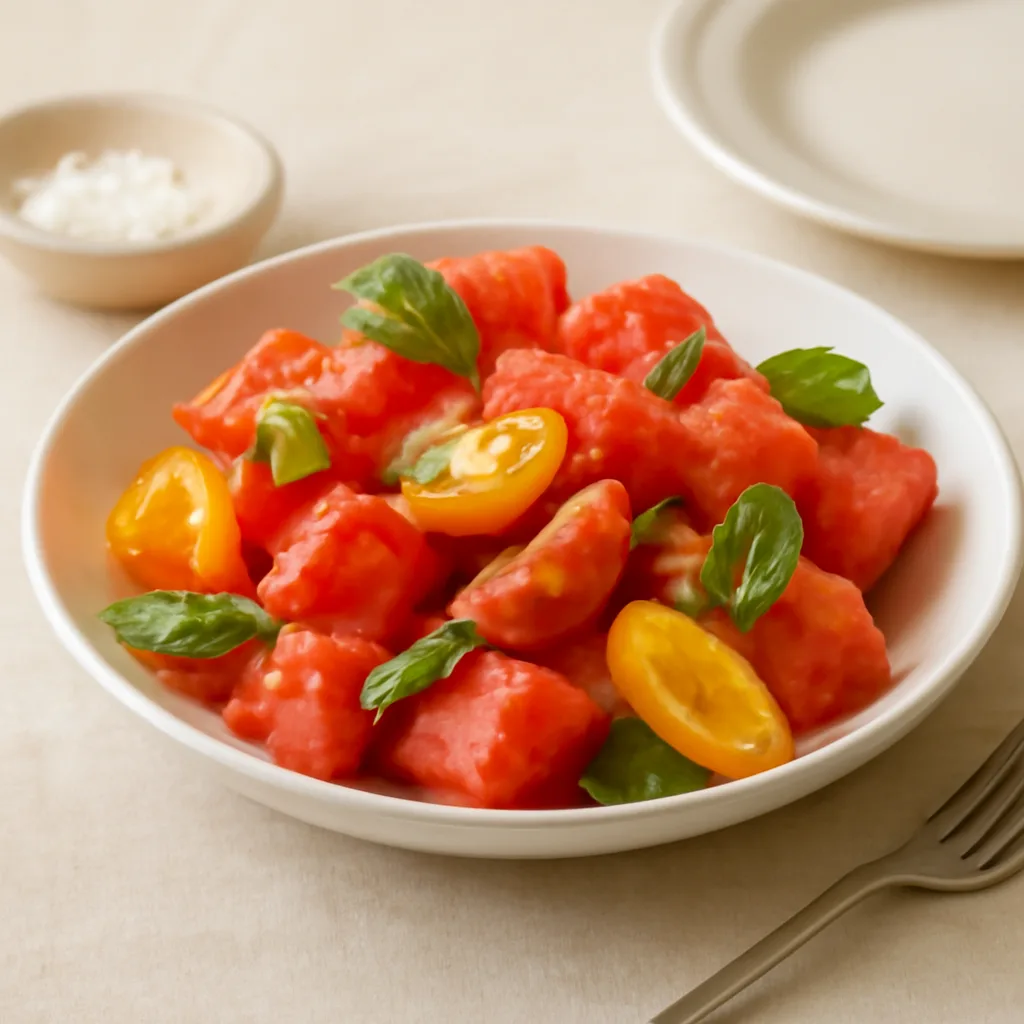
- Salty, crumbling cheeses like feta, herbaceous and aromatic like mint or basil, and crisp, neutral ingredients like cucumber contrast well with watermelon’s moisture.
- A touch of lime or lemon acidity and a hint of chili or pepper can sharpen the sweetness in salads and drinks, so start with small amounts and adjust.
- Rich cream sauces or long-simmered heavy sauces can overwhelm watermelon’s delicate aroma. In such cases, prefer a form that concentrates flavor, like cooked watermelon or concentrated watermelon juice.
Points to consider when substituting
- For salads needing the cool moisture of fresh watermelon, you can use muskmelon or ripe melon, but note the flavor and sweetness directions differ, so adjust dressing acidity and salt accordingly.
- For drinks or sorbet, frozen melon, strawberry, or peach can be used. Fruits with less moisture than watermelon may blend thickly, so gradually add liquid as needed.
- If the crunchy texture of the white rind is the goal, cucumber, radish, or kohlrabi can be substitutes, but their sweetness and texture differ, so adjust seasoning and soaking times by taste.
Ingredients commonly used together in actual dishes
Aggregated based on the co-occurrence count of representative ingredients in public dishes registered in CookPagoda.
Dishes that use this ingredient
Shows dishes where this ingredient is a representative ingredient, sorted by view count.