Gericht ansehen
Überprüfen Sie die Basisdaten des ausgewählten Gerichts.
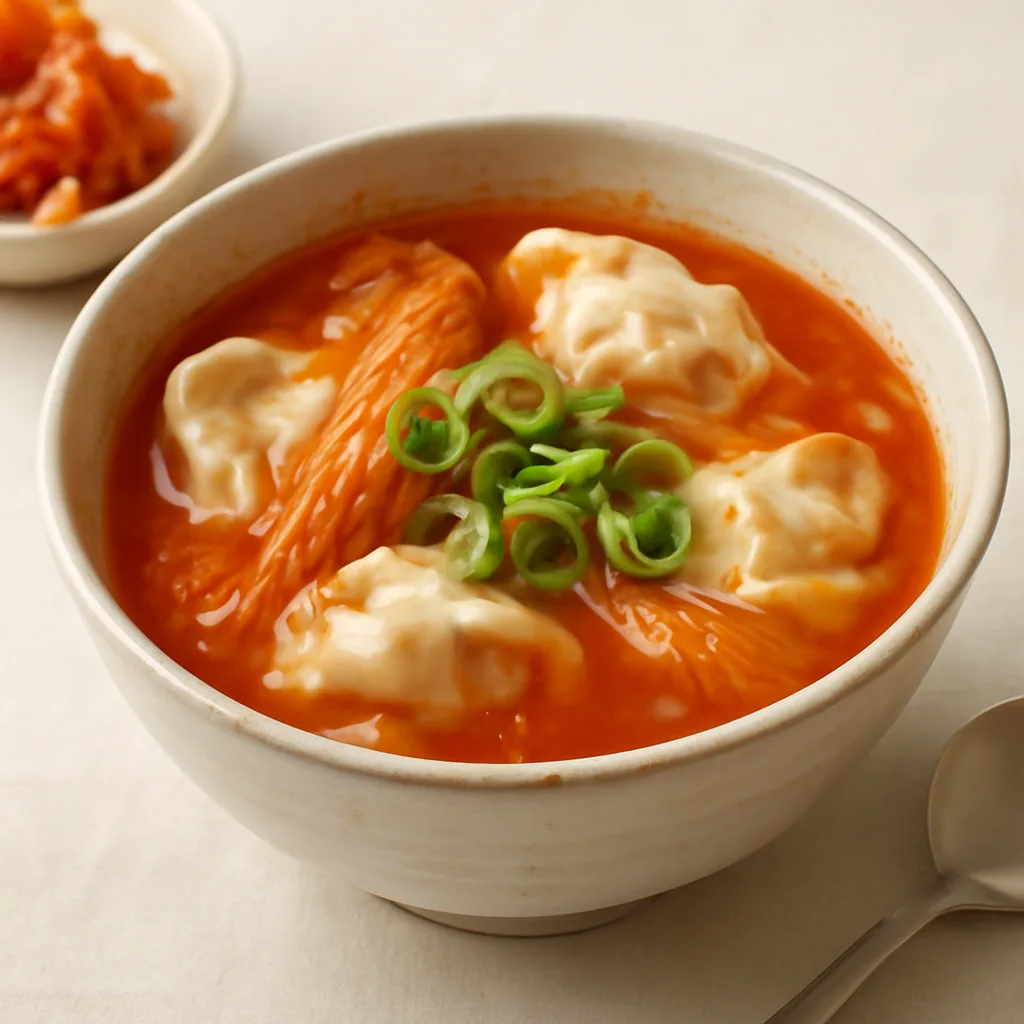
kimchi-mandu-soup
Eine Brühe, die Kimchi und Kimchi-Mandu verwendet. Charakteristisch ist eine scharfe, erfrischende Brühe. Einfach köcheln lassen, vermittelt ein beruhigendes Gefühl im Bauch.
Hauptzutat
Verwandte Themen
7
Abfrage0
Gefällt mir1
AI-Empfehlung0
Habe ich gemachtÜber dieses Gericht
Kimchi dumpling soup is a brisk, hot soup dish that comes together in one pot with kimchi and kimchi dumplings. Since the kimchi is boiled in water first to release sour and spicy notes into the broth, the kimchi 상태 greatly influences the broth flavor. If the kimchi is too salty or heavily seasoned, add only a small amount of soy sauce at the end after tasting. Cooking time is about 20 minutes, and the completion criteria are when the kimchi becomes tender and the dumpling filling is thoroughly heated. After the dumplings float, simmer briefly to heat the inside, but avoid overboiling so the broth stays clear and the texture remains firm; keep the boil at a moderate level. The listed 구성 (water, kimchi, kimchi dumplings) finishes simply with soy sauce and pepper. With no stock ingredients, the broth remains clear and light; if you expect a richer flavor, this method may feel rather mild.
Geschmack und Textur
Sourness and heat from the kimchi release into the water, creating a sharp, refreshing impression. Soy sauce adds salinity while balancing the kimchi flavor, and pepper adds a sharp touch at the finish. When fully boiled, the kimchi becomes tender, and the dumplings offer a contrast between soft wrappers and hot filling. If you boil the dumplings too long, the wrappers can burst and the broth may become cloudy and the texture may lose its shape.
Der Schlüssel zu einem leckeren Gericht
- When the water boils, simmer the kimchi for about 5 minutes first so the stems soften and the seasoning flavors permeate the broth; if kimchi pieces remain firm, simmer a bit longer before adding dumplings.
- After adding the dumplings, if the broth is too vigorous, the dumplings may collide and the wrappers tear; once it returns to a boil, adjust to a steady simmer on medium heat.
- One tablespoon soy sauce may be too salty depending on the kimchi’s saltiness, so taste the broth after the dumplings are cooked and add in small amounts as needed.
- The dumplings floating is a sign of heating progress, but does not guarantee the centers are hot; after they float, simmer 1–2 minutes more to heat the centers.
Häufige Fehler
- If you add dumplings as soon as you add kimchi, the kimchi may not soften enough and the broth flavor may not steep well; first simmer the kimchi to extract flavor, then add the dumplings.
- If you add all the soy sauce at once and the broth becomes too salty, it is often because the kimchi itself is salty; for next time, reserve the salt and judge at the end, adding water gradually to adjust.
- If dumplings stick to the bottom or the wrappers tear, you likely stirred too hard right after adding them; after adding, gently shake the pot or move only the edges.
- Overboiling makes the dumpling wrappers thick and mushy; turn off the heat as soon as the dumplings float and the inside is heated.
Anwendungsideen
- If the broth is too spicy or sour, reduce the kimchi slightly and add a bit more water, then compensate the missing salt at the end with soy sauce.
- If the pepper flavor clashes with the kimchi spiciness, omit pepper and let the flavors from the kimchi and dumplings come through more clearly.
- If there are many kimchi chunks making the broth feel coarse, cut the kimchi into shorter pieces so it can be eaten with the dumplings in one bite.
- Even for extra heat, if the kimchi seasoning is already very spicy, it’s easier to adjust by extending simmering to draw out more from the kimchi rather than adding more spicy seasoning.
Beilagenideen
- Right after cooking, plate the broth and dumplings together to enjoy the dumpling wrappers’ moist texture before they swell.
- If serving kimchi with the broth, the crisp kimchi stems add a contrasting crunch between the dumpling’s tenderness.
- If the seasoning was kept mild, allow each person to add a pinch more pepper to their own bowl for aroma control.
- When pairing with rice, keep the broth relatively light to prevent the kimchi and dumplings’ saltiness from feeling heavy.
Notwendige Zutaten
kimchi
김치
kimchi-mandu
김치만두
Ausgewählte Zutaten
Es gibt keine separaten ausgewählten Zutaten.
Kochanleitung
냄비에 물 4컵을 붓고 끓입니다.
물이 끓으면 김치를 넣고 5분간 끓입니다.
김치가 부드러워지면 김치만두를 넣고 7-8분 더 끓입니다.
간장 1큰술과 후추로 간을 맞춥니다.
불을 끄고 그릇에 담아냅니다.