Gericht ansehen
Überprüfen Sie die Basisdaten des ausgewählten Gerichts.
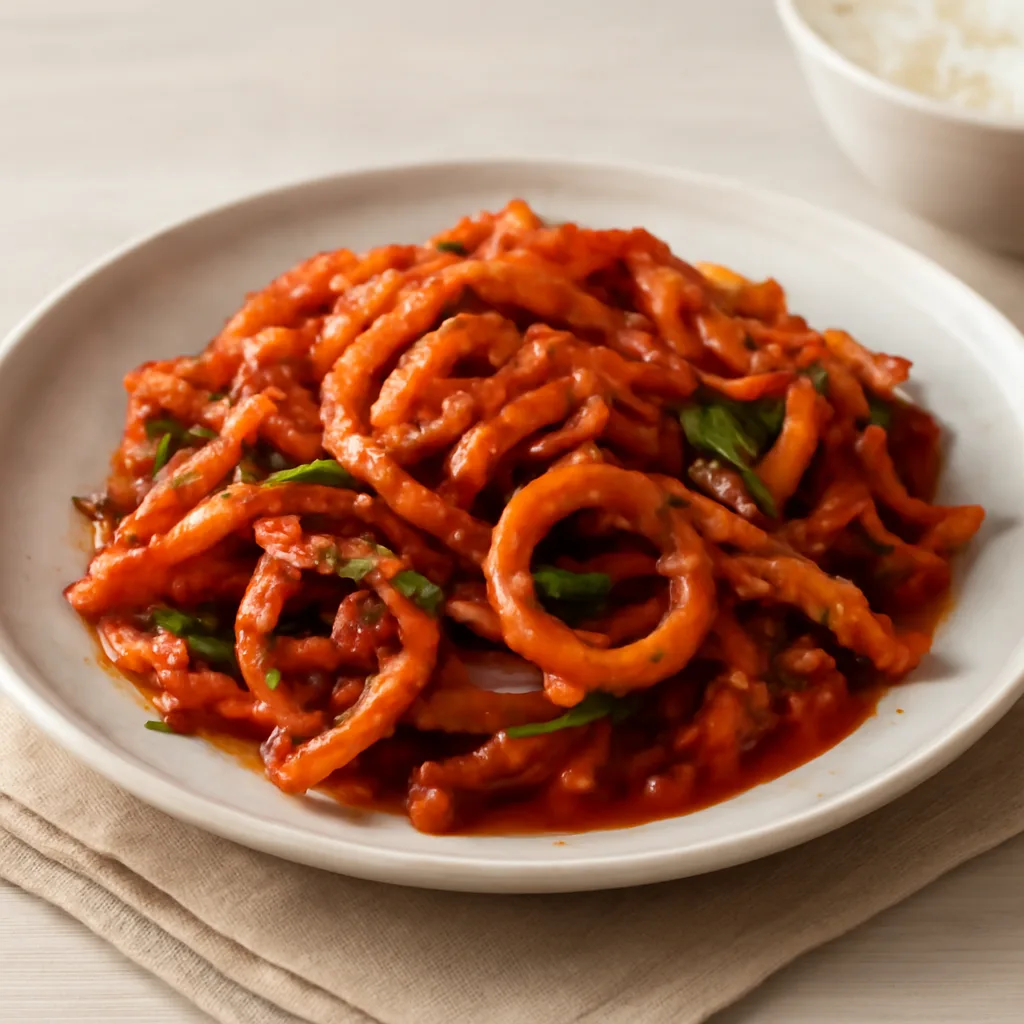
Über dieses Gericht
Spicy squid strips stir-fry is a simple tapa where cleaned squid is quickly stir-fried in a seasoning of gochujang, soy sauce, and minced garlic. Because the cooking time is short, how you manage the squid’s moisture determines the finish. Preheat the pan well, then stir-fry quickly all at once so the glaze coats the squid with gloss and the squid maintains a chewy texture. Since gochujang and soy sauce are involved, heating on high heat for too long from the start can cause the glaze to stick to the bottom of the pan, feel salty, and taste thick. When the squid turns opaque white and the edges start to dry a bit, check doneness and lower the heat or finish. Green onions and sesame seeds are not essential, but green onions refresh the aroma of the spicy seasoning, and sesame adds a toasty finish. It’s an easy dish to make in about 15 minutes, but if you expect a very dry, crispy style by cooking the squid longer, this short method may not be suitable. This recipe is best for lightly coating soft, chewy squid with the seasoning.
Geschmack und Textur
The spicy, rich flavor of gochujang with the salty, savory notes of soy sauce and the sharp aroma of garlic. If you add green onions, a subtle onion scent lingers at the finish, and sesame adds nuttiness. When squid is stir-fried briefly, it stays bouncy and chewy. Conversely, if you cook it longer while there’s still a lot of liquid in the pan, the seasoning becomes runny and the squid can become tough.
Der Schlüssel zu einem leckeren Gericht
- Wipe moisture off the squid surface as much as possible before frying. If moisture remains, the pan temperature drops, cooking becomes more poached than stir-fried, and the seasoning can become thin, so press with a paper towel and then add to the pan.
- Preheat the pan and cooking oil over medium heat first, then add the squid. When you add the squid, a light sizzle should occur immediately; if not, reheat briefly so moisture doesn’t release excessively.
- When the squid becomes opaque and the edges start to dry, add the seasoning and mix quickly. If you continue to cook after it has already contracted a lot, it tends to become hard, so once the seasoning is evenly coated, check the doneness immediately.
- Do not leave the gochujang and soy sauce on the empty parts of the pan; mix them with the squid right away. If you smell the glaze sticking thickly, lower the heat and shake the pan to blend with the remaining moisture to finish.
- Add the green onion at the end and quickly stir-fry for just a moment. For a brighter onion aroma, turn off the heat just as the aroma begins to fade.
Häufige Fehler
- If there’s a lot of moisture from the squid and the seasoning becomes watery like broth, it’s possible the pan wasn’t hot enough or the squid was wet on the surface. Next time, dry the moisture, preheat the pan, and lightly sear on high heat to evaporate moisture quickly, finishing before the seasoning becomes overly reduced.
- If the squid dries out and becomes hard to chew, the total stir-fry time may have been too long. As soon as it becomes opaque, don’t cook for too long; mix the seasoning and, when the edges start to dry slightly, finish immediately.
- If the finish tastes particularly salty and spicy, the gochujang and soy sauce may be too concentrated for the amount of squid. In the next cook, try adding only part of the seasonings first to test color and salt, then adjust.
- If there are black glaze residues on the pan bottom, the gochujang may have stayed on high heat for too long. After adding the seasonings, keep at medium heat and stir quickly, lowering the heat if it starts to stick.
Anwendungsideen
- If you want to temper the spiciness a bit, reduce the gochujang and add more green onions to balance the aroma. Note that reducing gochujang too much will also lessen the red color and deep flavor of the stir-fry.
- To make the squid’s texture more defined, slice the body wide and thin, and cut the tentacles to a comfortable length. If cut too thin, even a short stir-fry can cause it to contract and look sparse.
- Sesame seeds can be sprinkled on the plate at the end for a nutty aroma. If added early, the aroma weakens and they may stick to the pan, so finishing with sesame is better.
- If green onions are unavailable, you can cook without them. However, the aroma contrast will be reduced, so focus on not overcooking the squid rather than heavily increasing garlic.
Beilagenideen
- Spread the squid on a plate while still warm to prevent further steaming and to showcase a glossy glaze.
- Finish with sesame seeds and chopped green onions for a savory aroma and texture that makes it a good party food.
- When the spice is very strong, pair with plain rice to balance salt and heat. If you want to highlight the squid’s chewy texture, serve it without other moisture-rich sides.
Notwendige Zutaten
오징어
신선한 오징어를 사용합니다.
식용유
팬에 두릅니다.
고추장
양념장에 사용합니다.
간장
양념장에 사용합니다.
다진 마늘
양념장에 사용합니다.
Ausgewählte Zutaten
대파
다진 것으로 사용합니다.
통깨
마무리용으로 뿌립니다.
Kochanleitung
오징어를 깨끗이 손질하고, 먹기 좋은 크기로 썰어줍니다.
팬에 식용유를 두르고 중불로 예열합니다.
오징어를 팬에 넣고 2-3분간 볶아줍니다.
고추장 1큰술, 간장 1큰술, 다진 마늘 1작은술을 넣고 잘 섞어 볶습니다.
오징어가 익을 때까지 2-3분 더 볶아줍니다.
마지막에 대파를 넣고 1분 정도 더 볶아줍니다.
접시에 담고 통깨를 뿌려 마무리합니다.