Zutaten-Enzyklopädie
Überprüfen Sie die Eigenschaften der Zutaten und wie sie in der Küche verwendet werden.
Dolognudeln
1
1
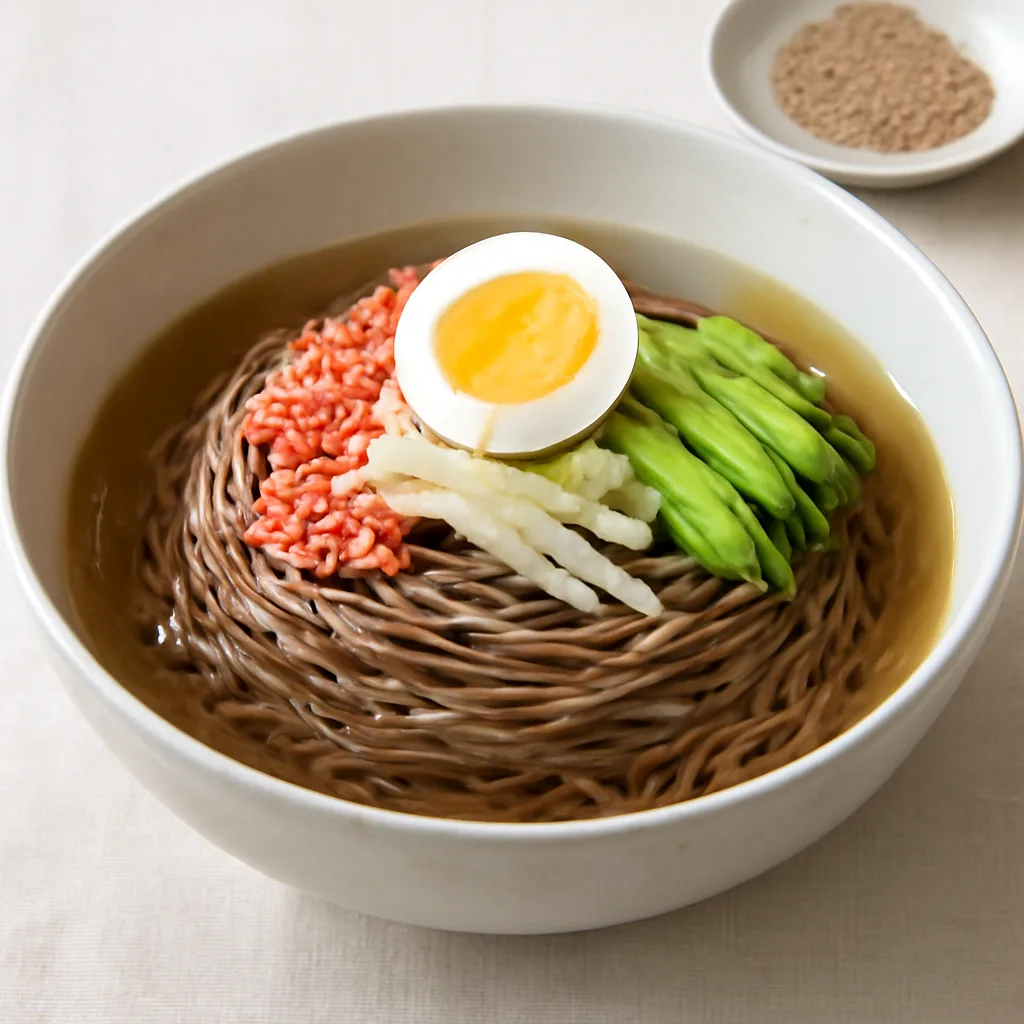
Buckwheat noodles are made mainly from buckwheat flour and are used in both soup dishes and cold/vegetable dishes. Depending on the product, buckwheat content and the ratio of wheat flour and starch can vary, causing significant differences in color, aroma, cooking time, and elasticity, so it is best to first follow the package directions. If rinsed cold, the mild buckwheat aroma comes alive and it goes well with cold broth or a soy-based sauce. It can also be used in warm broth, but if soaked for a long time the noodles absorb more moisture and become softer, so if you want a firm texture, it is practical to serve the noodles separately from the broth. In recipes using buckwheat noodles, accompaniments like cucumber, radish, seaweed, green onion, egg, sesame, and soy sauce seasoning are common to enhance aroma and flavor. Since the buckwheat aroma is delicate, too strong spices or oily sauces can mask the noodle’s character.
Geschmack und Textur
Buckwheat noodles have a rustic, mild grain aroma with a hint of earthy depth. The aroma is more pronounced than wheat noodles but not overpowering, making it harmonious with clean flavors like soy sauce, broth, and radish juice. Texture varies a lot by product. Noodles with a higher buckwheat content can feel firmer and somewhat to soft but with a certain bite, while products with wheat flour or starch mix are smoother and more elastic.
Hauptverwendungszweck
- If you wrap them in cold broth with cucumber, radish, seaweed, and green onion, you get a cold noodle dish that highlights buckwheat’s light aroma. If the broth is strongly seasoned, reduce the noodle cooking time a bit or rinse thoroughly to prevent excess salt from coating the noodles.
- These can be used as cold or warm soba-like dishes by tossing in a soy-vinegar sweet sauce. If too much sauce is added all at once, the noodles tend to clump and the buckwheat aroma gets covered, so mix with a small amount first and then adjust the seasoning as needed.
- They can be served as warm noodles in a clear broth or hot broth. If so, briefly rinse the cooked noodles and add them at the end to reduce turbidity and excessive spreading of starch.
- The dipping style makes it easy to adjust the texture. When served cold with a soy-based tsuyu and toppings like green onion, radish, and seaweed, each person can season to taste.
Vorbereitungstipps
- Fill a large pot with plenty of water and, right after adding the noodles, gently loosen with chopsticks. If the noodles stick together in a clump, the inside may not cook evenly, so keep the water flowing and stir once or twice.
- If foam rises during boiling, lower the heat slightly or add a small amount of water to control overflow. If boiling too vigorously, thin noodles may soften and break first.
- If serving cold, drain immediately and rinse thoroughly under running cold water. If the water is too turbid or the surface is slimy, wash again until clear and drain well.
- If not serving immediately after boiling, it is better not to soak the noodles in broth or sauce ahead of time. The longer they sit, the more moisture they absorb and become soft, so keep the noodles and the broth/sauce separate until just before eating.
Besonderheiten beim Kochen
- Buckwheat noodles can cause the starch to swell and the water to become cloudy and foamy during boiling. This is common, but if the water becomes too thick or the noodles break easily, it may mean the cooking time was too long, so shorten it in the next step and check one strand in the middle.
- Rinsing in cold water stops surface starch and makes the noodles firmer and more elastic. Conversely, adding them directly to warm broth yields a soft and comforting texture, but if left too long the broth becomes cloudy and the noodle shape can blur.
- Sourish dipping sauces can enhance the buckwheat’s earthy notes, but too much vinegar can make the aroma feel sharp. Start with soy sauce or a seasoned base to set the flavor and add vinegar gradually at the end to adjust.
- Toasted oils like sesame or sesame oil pair well with buckwheat, but adding too much can make the noodle surface slippery and prevent even seasoning. If you want more savoriness, toss and then finish with a small amount to leave a fragrant finish.
Gut passende Kombinationen
- Cucumber and radish add crisp texture and moisture, complementing the soft texture of the noodles. Especially for cold noodles, pat the vegetables dry so the broth or seasoning doesn’t become diluted.
- Seaweed, sesame, and green onion naturally support the buckwheat’s earthy aroma. If the seaweed aroma is too strong or in large quantities, start with small amounts and add more gradually.
- Soy-based sauces, clear broth, and radish juice are good choices to highlight the noodles’ aroma. When using spicy seasonings, reduce the amount of gochujang or gochugaru and balance with vinegar and soy sauce to keep it lighter.
- Eggs or mild chicken are good for a simple meal. When paired with fatty meat or rich fried sauces, it’s better to use cold-rinsed noodles to reduce greasiness.
Hinweise zum Ersetzen
- When buckwheat noodles aren’t available, cold dipping noodles can use soba-style wheat noodles or thin wheat noodles, but the distinctive buckwheat aroma will be weaker. In this case, top with aromatics like seaweed, green onion, and radish but don’t overdo the fragrant oil.
- In cold dishes, you can substitute with medium or chewy noodles for bibimmyeon, but tougher noodles may require more sauce. Start with the same amount of sauce and add gradually after coating the noodle surface.
- In warm soups, udon or wheat noodles can be alternatives, but their dough thickness and absorption differ, so adjust the soaking time in the broth to be shorter. Thin noodles are suited for immediate eating, while thicker and chewier noodles work better for hot pot-type dishes that simmer longer.
- For dishes requiring gluten or chewiness, substituting with another buckwheat-heavy noodle is unlikely to yield the same result. Since product compositions vary greatly, the most practical approach is to adjust the cooking time to achieve the desired texture.
Zutaten, die häufig zusammen in echten Gerichten verwendet werden
Basierend auf der Häufigkeit der gleichzeitigen Verwendung von Hauptzutaten in den bei CookPagoda registrierten öffentlichen Gerichten.
Gerichte, in denen diese Zutat verwendet wird
Wir zeigen Ihnen die Gerichte, in denen diese Zutat als Hauptzutat enthalten ist, nach Aufrufzahlen sortiert.