Ver recetas
Verifica los datos de referencia de la comida seleccionada.
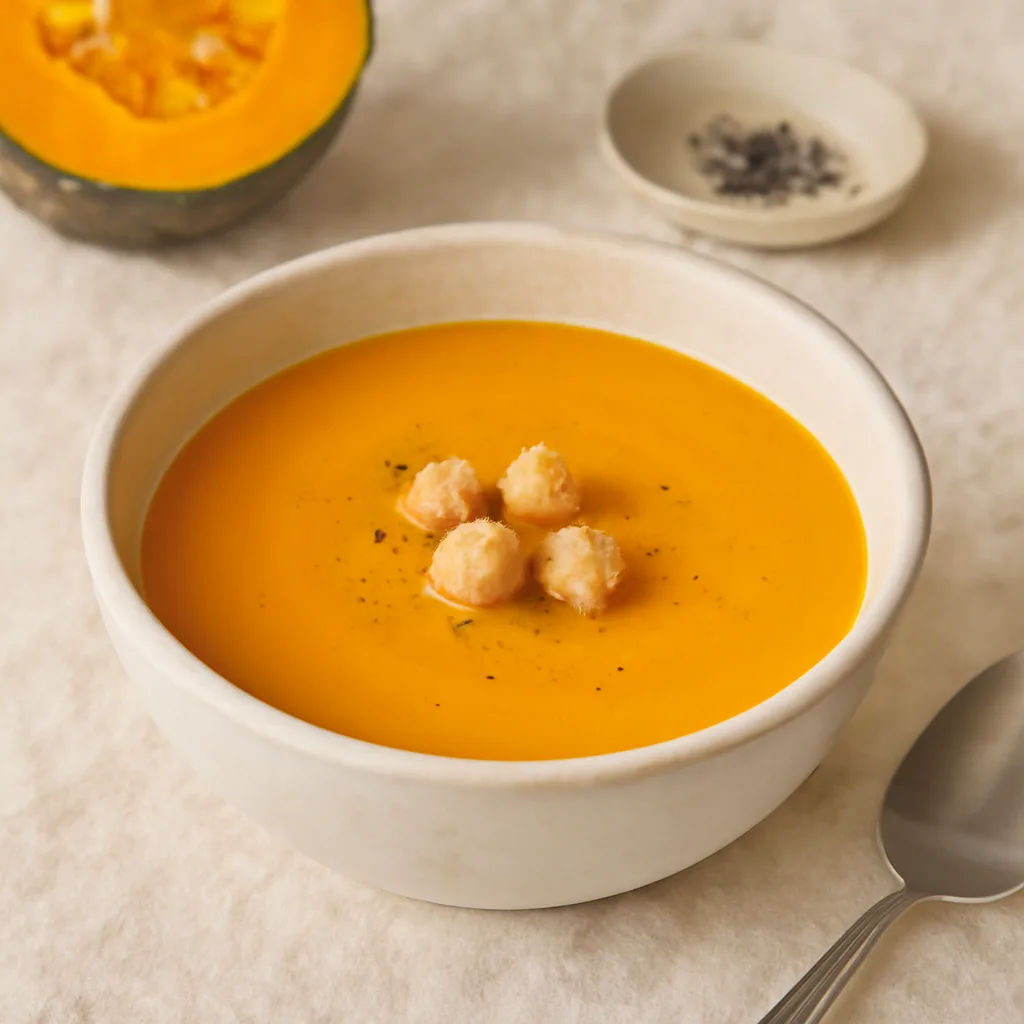
Sopa de calabaza
La sopa de calabaza es conocida por su sabor suave y cálido. La dulzura de la calabaza y la textura cremosa de la leche se combinan para crear un plato reconfortante, perfecto para comer en un plato.
Ingrediente principal
Tema relacionado
7
Consulta0
Me gusta1
Recomendación de IA0
HechoSobre esta comida
Kabocha squash soup centers on the gentle sweetness of the squash, with the savoriness of onions and the richness of butter and milk, making a warm soup. Because the main ingredient is simple, the aroma and concentration of the squash itself largely determine the final result. It is a low-difficulty dish that can be made in about 30 minutes, but the smooth texture shines when the ingredients are cooked until very soft and finely blended in a blender. It is great as a hearty one-bowl meal, and the thickness can be adjusted between a meal-soup and a soup to accompany bread by the amount of milk. However, if you add a lot of milk to make it light, the dense flavor of the squash may fade. Conversely, if it is too thick, it may feel more like a puree than a soft soup, so it is better to decide the intended use first and adjust the thickness accordingly.
Sabor y textura
A well-made kabocha squash soup blends the cozy sweetness of the squash with the nutty aroma of sautéed onions and butter. When milk is added, the flavor becomes smoother and more rounded without any sharp edges. The texture should be smooth to the point where no grains are noticeable. If there are squash fibers or onion pieces remaining, it may not have been pureed enough, so blend once more to refine the texture.
Claves para hacerla deliciosa
- Cook the kabocha until soft enough to crush when pressed, so that long fibers do not remain in the blender and a natural thickness develops.
- When sautéing onions in butter, cook until they are transparent and soft, before the browning becomes pronounced, to add a subtle aroma that does not overpower the squash sweetness.
- When blending, if the mixture is too thick and the blades struggle, do not add all the milk at once; add gradually while monitoring the desired flow.
- After adding milk, heat on a gentle simmer rather than a strong boil to reduce rough texture. If you see gentle steam at the edges, that is sufficient.
- Just before finishing, tilt the spoon and let it flow slowly and widely to achieve a thickness suitable for one bowl. If eating with bread, it can be a bit thicker; to drink more lightly, add more milk to thin it.
Errores comunes
- If the squash is not fully cooked before blending, you may notice graininess or coarse fibers in the soup, so check ease of mashing with a fork or spoon before blending.
- Adding a lot of milk from the start can make the squash taste thin and bland. First blend relatively thick, then heat and add milk as needed.
- If onions are fried in butter on high heat too long, a roasted aroma may clash with the soft squash flavor; if the color darkens quickly, reduce the heat and continue cooking.
- When the hot ingredients are blended in a full blender, contents may splatter or not blend smoothly. It is better to blend in portions and, if needed, let the heat subside briefly before continuing.
Ideas de aplicación
- For a richer, cozier texture, use less milk to preserve the squash thickness, while keeping enough moisture for the blender to run smoothly.
- If you want the onion aroma to be more pronounced, sauté the onions until transparent before mixing with the squash. However, over-browning them can alter the soup’s bright, mild flavor.
- To emphasize the butter’s nuttiness, use just enough butter during the onion sauté to let its aroma spread softly, and especially check balance if the squash sweetness is weak.
- When a thinner, lighter soup is desired, adjust by adding milk gradually. However, if it becomes too thin, the satisfying feel of a spoonable soup may diminish.
Ideas para acompañar
- Serve warm to enjoy the soup’s soft texture as a simple meal or comforting dish.
- Pair with bread to enhance the soup’s thickness; if the soup is thin, dipping bread works well, and if it’s thick, it’s nice to spoon it onto bread.
- Serve in small bowls before the main course as a gentle, warm starter that won’t overpower the main flavors.
- If the soup cools and tightens, reheat with a small amount of milk to loosen it softly before serving.