Ver recetas
Verifica los datos de referencia de la comida seleccionada.
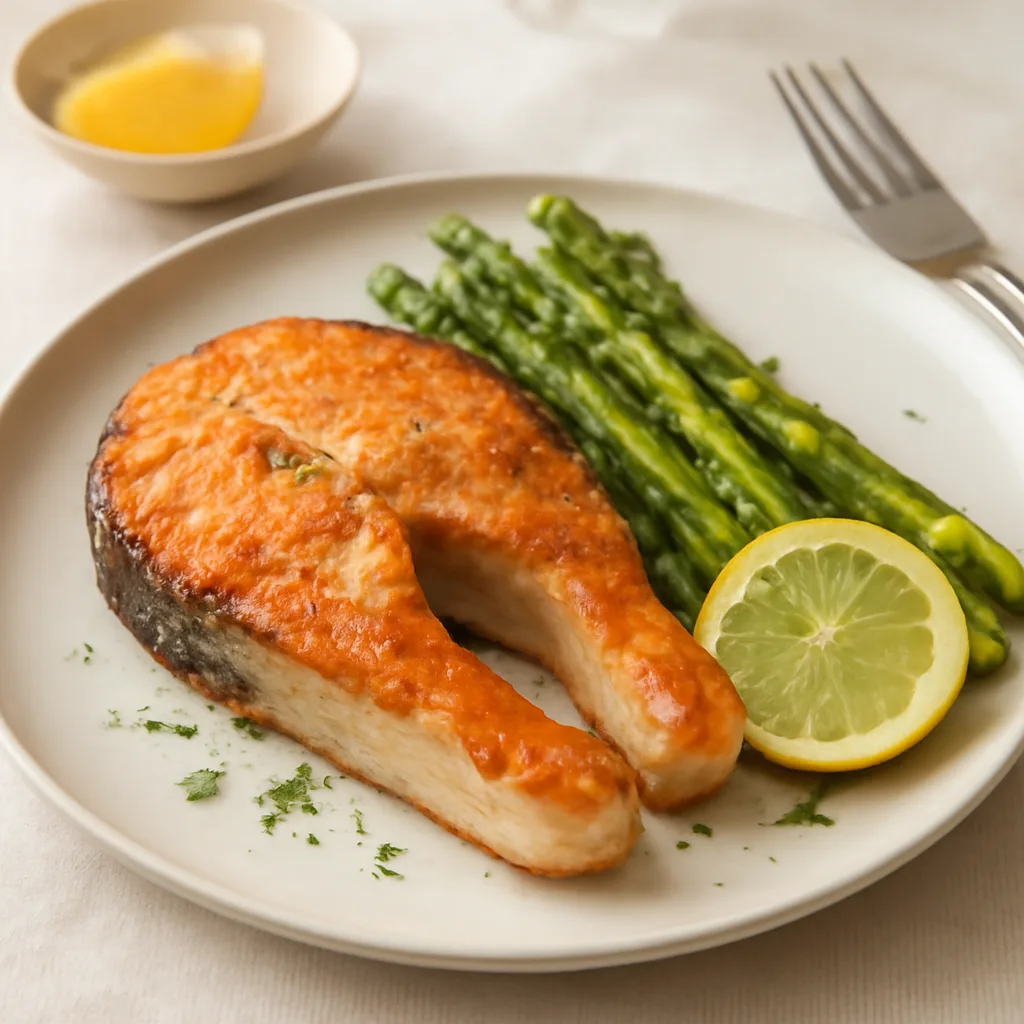
Lemon Roasted Salmon Steak with Asparagus
El filete de salmón tierno coùmple con espárragos para ofrecer un sabor distintivo. Con jugo de limón que aporta frescura y una forma de cocción sencilla para que cualquiera pueda hacerlo fácilmente.
Ingrediente principal
Tema relacionado
10
Consulta0
Me gusta1
Recomendación de IA0
HechoSobre esta comida
Lemon asparagus salmon steak is a main dish that lets you enjoy the moist flesh of salmon with the fresh texture of asparagus in one skillet. The nutty flavor of butter is the base, and adding lemon juice keeps the salmon’s flavor from feeling heavy, creating a bright, clean impression on the plate. It can be made in about 20 minutes, but the finish depends on judging the doneness of the salmon and asparagus separately. When the salmon’s center starts to become almost opaque and the grain splits easily, it’s good to turn off the heat, and asparagus should be cooked just until the stems remain a vivid green and a fork can be inserted. Suitable as a home restaurant–style one-dish meal, but if you don’t prefer strong lemon acidity or want a deeper butter flavor, it’s better to adjust lemon juice at the finish rather than adding a lot at once.
Sabor y textura
The salmon, with butter, feels soft and rich, and the lemon juice lightens the oily impression. The asparagus adds a fresh herbal aroma and crisp texture that contrasts with the pale salmon flesh. If lemon is added too early or too much, the pan’s aroma can be weakened and the acidity can be too pronounced, so it’s easier to balance by adjusting brightness at the finishing stage.
Claves para hacerla deliciosa
- Dry the salmon surface before cooking so the side that contacts the pan sears well, and if it looks like it’s sizzling with moisture, raise the heat slightly or wait until the excess moisture evaporates.
- Preheat the skillet thoroughly before adding the salmon, but lower to medium heat once butter starts to darken too much, signaling the temperature is high.
- For thicker asparagus, trim the tough bottom part and start cooking first. If the stems are still firm when you add with the salmon, cook the asparagus a little longer on its own, then combine with the salmon.
- When the salmon’s sides are mostly opaque and the center looks slightly moist, remove it as residual heat will finish cooking.
- Add lemon juice after the salmon is almost cooked to check and adjust the flavor. When added to the pan, the aroma quickly fades, so if you want a bright aroma, some can be served on the plate and added later.
Errores comunes
- If the salmon surface sticks to the pan or the browning is weak, the pan may not have heated enough before adding the fish. Do not force a flip; wait until the bottom naturally releases, then flip once.
- If white proteins come out of the salmon and the flesh becomes firm, excessive heat or long cooking is the cause. Next time keep the heat on medium and remove from the pan before the center dries completely.
- If the asparagus becomes limp and dull in color, you may have cooked too long while trying to match the salmon’s doneness. Start with thicker stems to cook quickly, then adjust the remaining cooking as the salmon rests.
- If the lemon flavor is too sour or butter flavor is overwhelmed, you may have added too much lemon juice at once. Add gradually next time, and if needed add a little more butter to soften the acidity.
Ideas de aplicación
- If you have lemon zest, grate a small amount right before finishing to add a citrusy aroma centered on the scent rather than juice, and avoid the white pith which can be bitter.
- If asparagus is too thick, cut it lengthwise in half so it can cook alongside the salmon. Conversely, very thin asparagus can overcook, so after flipping the salmon, add it later.
- To deepen the butter aroma, cook the butter until it turns a light brown and nutty aroma emerges, then add the salmon. However, at high heat the butter can burn quickly, so this method isn’t ideal for those not comfortable with heat control.
- If you skip lemon juice and instead serve lemon wedges, diners can control the acidity themselves, which is convenient for different preferences.
Ideas para acompañar
- Arrange the salmon and asparagus on a wide plate side by side, and lightly spoon the remaining butter and lemon juice from the pan to enhance gloss and flavor.
- Pair with plain rice or roasted potatoes to enjoy the lemon-butter sauce together and create a hearty one-dish main.
- Crispy bread on the side helps soak up the juices and butter, but if aiming for a lighter dish, increase the asparagus portion instead of bread or potatoes.
- Finish with a touch of salt and pepper at the table to balance lemon acidity with the salmon’s savor right before eating.