Voir les plats
Vérifiez les données de référence des aliments sélectionnés.
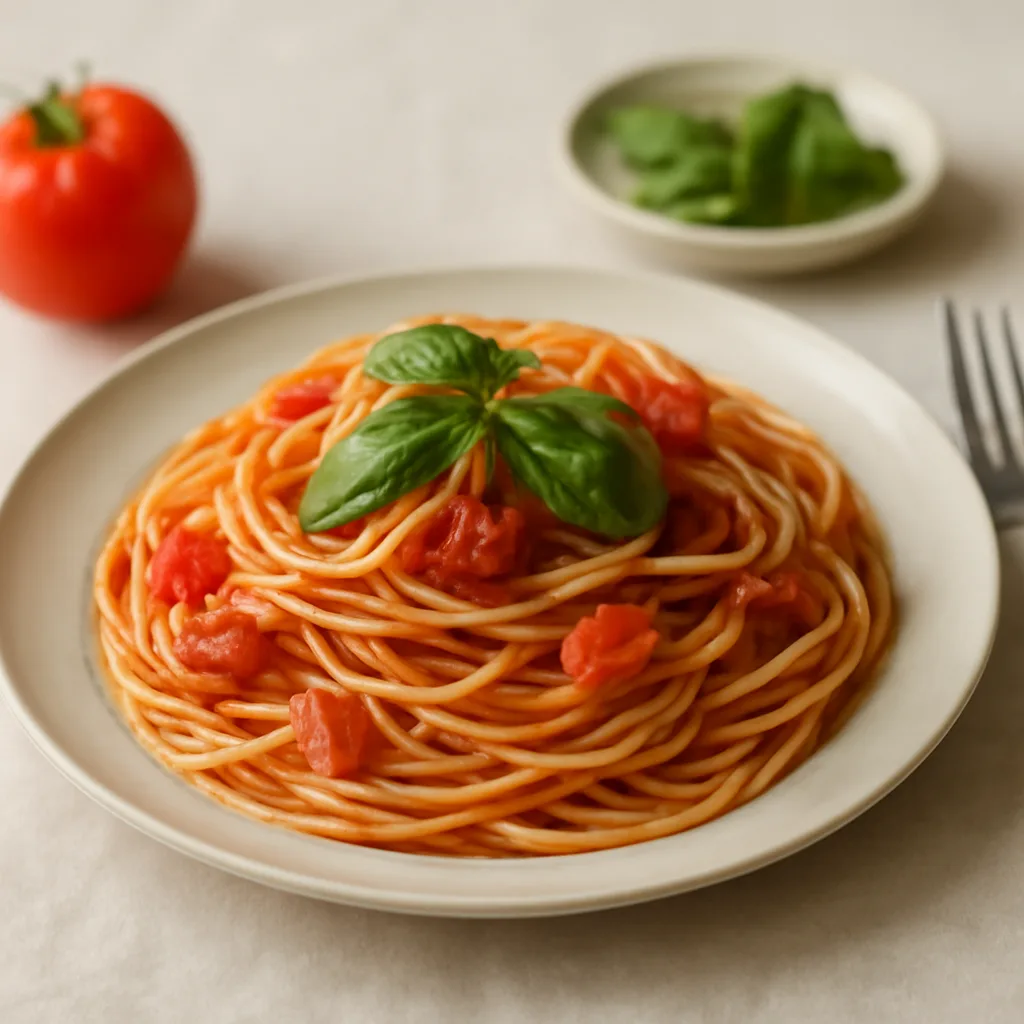
Spaghetti tomate et basilic
Le spaghetti tomate et basilic associe des tomates frais, du basilic et une mozzarella fondante pour une saveur rafraîchissante et riche. Ce plat est simple et permet de goûter chez soi le goût d’un restaurant italien.
Ingrédient principal
Thèmes associés
11
Consultation0
J'aime1
Recommandation AI0
CrééÀ propos de ce plat
Tomato basil spaghetti is a pasta dish that layers the bright tartness of tomatoes with the aroma of basil and the soft creaminess of mozzarella. Because the ingredient list is simple, differences in moisture from the tomatoes, doneness of the pasta, and timing of adding cheese determine the final quality. Cooking time is about 25 minutes, and the difficulty is intermediate. When handling tomatoes in the pan, it’s wise to decide first whether to keep the thin fresh tomato sauce or reduce it a bit to cling better to the pasta. For a bright style, brief heating suits, but with juicy tomatoes, the sauce can pool on the plate. Basil and mozzarella lose their advantages the longer they’re heated. Add basil at the end to leave fragrance, and add mozzarella after turning off the heat or with the drained pasta’s residual heat to melt gently, not covering the tomato flavor, while giving a rich impression.
Goût et texture
The properly cooked spaghetti carries a light acidity and juice from the tomato; basil finishes with a clear, aromatic aftertaste. Mozzarella adds a soft, fatty texture rather than saltiness, helping soften the tomato’s sharpness. If the sauce is not reduced enough, it stays moist and fresh, but the pasta pair becomes light; if reduced enough, the flavor concentrates, but the fresh tomato feel can fade.
Clé pour réussir
- When the spaghetti has just a very slight resistance in the center, move it to the pan to finish cooking with the tomato sauce, reducing spreading as it cooks; if the pasta is already soft, keep the pan time short when tossing.
- If a lot of clear liquid collects on the pan bottom after heating the tomatoes, the sauce may run off from the pasta rather than cling; continue cooking a little to adjust the moisture to the desired thickness.
- After adding the pasta to the sauce, gradually add small amounts of the reserved pasta water as needed to coat; only use water when the sauce is too thick, and if the tomato moisture is already sufficient, it’s better not to add extra water.
- Tear or finely chop the basil and add it at the finishing stage to keep its aroma; if the pan heat is very high, off the heat and then add to prevent browning.
- If mozzarella releases a lot of water, the overall mixture can become watery, so lightly blot the surface moisture before using; especially when the sauce is already moist, avoid over-adding cheese for balance.
Erreurs courantes
- If you stir the pasta in as soon as you add the tomatoes, the tomato moisture may not settle enough, causing a pool of liquid at the bottom; observe the tomatoes’ juices in the pan, and if juice is excessive, reduce a bit more before adding the pasta.
- After boiling, letting the pasta sit too long makes the surface dry and clump, causing uneven coating of sauce; finish the sauce as the pasta gets ready, or if waiting is unavoidable, have sauce ready to mix immediately.
- Boiling basil for too long early can leave a green, grassy scent and dull color; if the aroma is weak, add basil toward the end rather than heating it more during cooking.
- Boiling mozzarella for a long time on high heat can make it clump or appear oily; as soon as the cheese melts, you’re done, so lower the heat or remove from heat before adding.
Idées d'application
- If you want a brighter acidity from tomatoes, don’t reduce the sauce much; instead finish with a generous amount of basil. However, with very juicy tomatoes, pasta may become watery, so this method isn’t suitable if you want a thick sauce.
- If you divide mozzarella into small pieces and mix through the pasta, a soft texture spreads with every bite; placing larger pieces on top makes the tomato and basil flavor feel more pronounced.
- If you’re bothered by the tomato skin texture, peel the tomatoes before using for a smoother sauce; conversely, if you want a lively texture, keep finely chopped tomatoes.
Idées d'accompagnement
- As soon as finished, spread on a wide plate and scatter basil and mozzarella on top so the cheese melts into the sauce and preserves the contrast of ingredients.
- If the sauce is moist, roll the pasta with tongs first, then spoon the remaining tomato sauce on top to avoid the plate looking too saucy.
- For a light meal, finish with visible basil and tomato to emphasize a fresh impression; if you want to highlight the creaminess of the cheese, place mozzarella over hot pasta and serve while slightly melted.