Xem món ăn
Kiểm tra dữ liệu tiêu chuẩn của món ăn đã chọn.
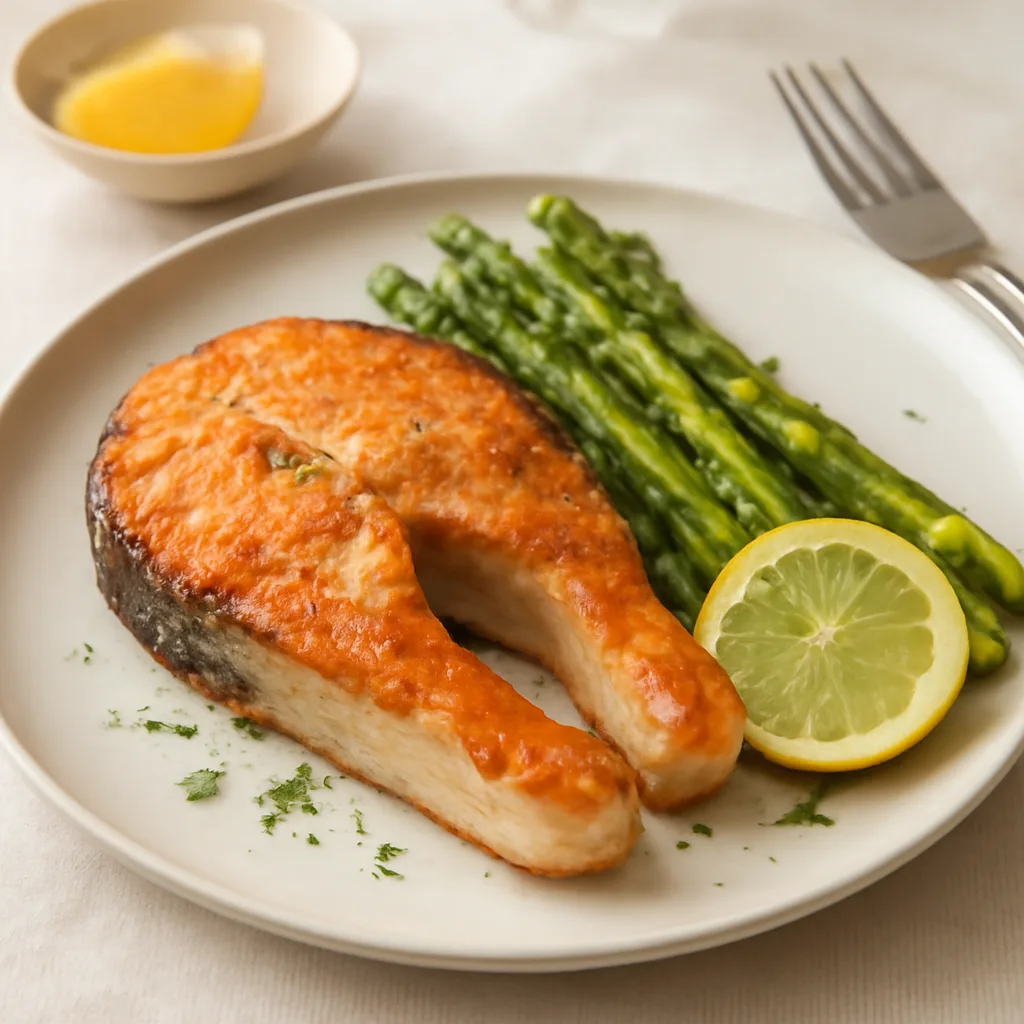
Về món ăn này
Lemon and asparagus salmon steak is a main dish that lets you enjoy the moist flesh of salmon together with the fresh texture of asparagus in one pan. The savory notes from butter, enhanced with a touch of lemon juice, keep the salmon bright and not heavy when plated. It can be prepared in about 20 minutes, but the finish depends on judging the doneness of the salmon and asparagus separately. Turn off the heat when the salmon's center becomes almost opaque and flakes easily; for asparagus, cook until the stem maintains a vivid green color and can be pierced. This is suitable as a home‑style restaurant single‑plate dish, but if you don’t prefer strong lemon acidity or want a stronger butter flavor, it is better to adjust lemon juice gradually at the end rather than adding a lot at once.
Hương vị và kết cấu
Salmon feels soft and savory with butter, and lemon juice lightens the oily impression. Asparagus adds a refreshing herbaceous aroma and crisp texture that contrasts with the salmon’s tender flesh. If you add lemon too early or too much, the pan flavor becomes faint and the acidity may become pronounced, so it’s easier to achieve balanced taste by adjusting brightness at the finishing stage.
Chìa khóa để làm ngon
- Before cooking, pat the surface of the salmon dry so the side that touches the pan sears well, and if it starts to sizzle with moisture, raise the heat slightly or wait until the excess moisture evaporates.
- Preheat the frying pan well before adding the salmon, but once the butter starts to darken, lower the heat to medium to prevent overdoing it.
- For thicker asparagus, trim the tough ends and start cooking those first. If the stems are still firm when added with the salmon, cook the asparagus a little longer by itself and then combine with the salmon.
- When most of the salmon’s sides are opaque and the center looks slightly moist, remove from the pan as carryover heat will continue to cook it.
- Add lemon juice after the salmon is nearly cooked and taste to adjust. Since the aroma fades quickly once added to the pan, if you want a bright aroma, reserve some to add to the plate later.
Những sai lầm thường gặp
- If the salmon skin sticks to the pan or browning is weak, the fish may have been added before the pan was hot enough. Do not force a flip; wait until the bottom naturally releases, then flip once.
- If white proteins are releasing heavily and the flesh is firm, heat may have been too strong or cooking too long. Next time keep the heat medium and remove from the pan before the center fully dries.
- If the asparagus becomes limp and dull in color, it may have been heated too long trying to match the salmon. Thicker spears should be cooked briefly first, then finish while the salmon rests.
- If lemon flavor is too sour and butter flavor is overwhelmed, lemon juice may have been added all at once. Next time add in small amounts and, if needed, add a little more butter to soften the acidity.
Ý tưởng ứng dụng
- If you have lemon zest, grate a small amount just before finishing to add aromatic brightness; avoid the white pith as it can be bitter.
- If asparagus is very thick, split it lengthwise to cook with the salmon in similar time. Conversely, for thinner asparagus, it will overcook easily if left too long, so add it after flipping the salmon.
- If you want a deeper butter aroma, cook the butter until it turns light brown and releases a nutty scent, then add the salmon. However, this is not ideal on very high heat as butter can burn quickly if you’re not skilled with heat control.
Ý tưởng kèm theo
- Arrange salmon and asparagus on a wide plate and lightly spoon the remaining butter and lemon juice from the pan to enhance gloss and flavor.
- Pair with plain rice or baked potatoes to enjoy the lemon-butter sauce with the dish as a one-plate main.
- Crispy bread to soak up the salmon juices and butter is nice. For a lighter option, increase the amount of asparagus instead of bread or potatoes.
- Finish with salt and pepper at the table to adjust the lemon acidity and the salmon’s saltiness just before eating.