Gericht ansehen
Überprüfen Sie die Basisdaten des ausgewählten Gerichts.
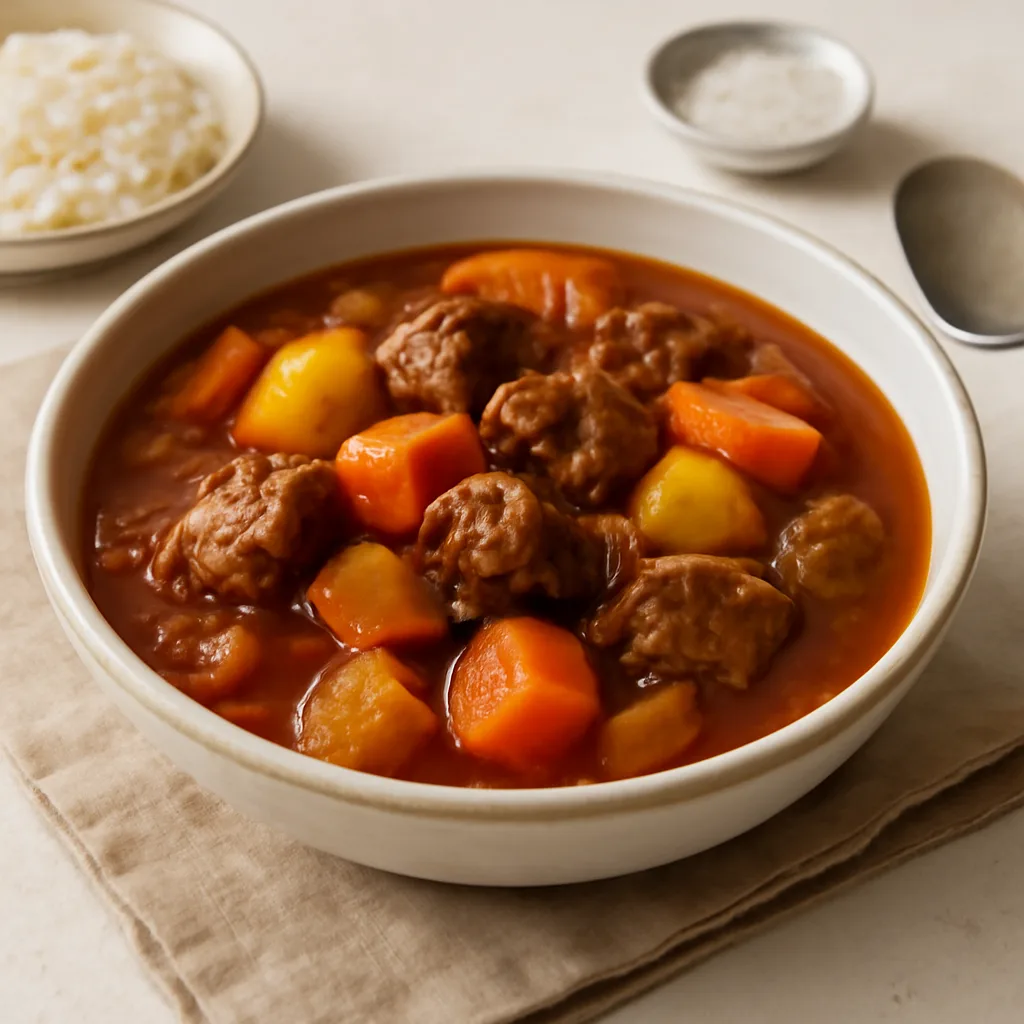
Rindergulasch/Souppie?
Rindergulasch ist ein Gericht mit einem tiefen, intensiven Geschmack, bei dem zartes Rindfleisch mit verschiedenen Gemüsesorten harmoniert und eine reiche, würzige Aromen entwickelt. Es wird lange geköchelt, um einen tiefen Geschmack zu erzeugen, und warm serviert – ideal, um ihn mit der Familie zu teilen.
Verwandte Themen
9
Abfrage0
Gefällt mir2
AI-Empfehlung0
Habe ich gemachtÜber dieses Gericht
Beef stew is a warm Western-style dish where beef is simmered with potatoes, carrots, onions, and celery so that the flavors blend into the broth. Since the cooking time is about 70 minutes, it is better to monitor until the meat becomes tender and the vegetables naturally melt into the broth, rather than finishing quickly on high heat. You can cook in a single pot, but rather than assuming all ingredients cook at the same rate, it's important to control the cooking pace of tougher vegetables and the meat. In particular, if potatoes are added too early, the edges can fall apart and the broth can become dull and thick. If you want a clear and chunky stew, adjust the timing while checking their shape. Flavorings beyond the basic ingredients, tomato components, or whether to use broth are not specified in the provided information. Therefore, even if you want a deeper flavor, it is safer to first taste the beef and vegetables and then adjust seasoning step by step rather than adding a lot of different ingredients arbitrarily.
Geschmack und Textur
Slow-simmered beef becomes tender and shreds easily, and onions and celery add a subtle sweetness and aroma to the broth. Potatoes and carrots provide a cozy texture, making this a hearty one-dish meal despite being a broth-based dish. The thickness of the broth depends on how well the potatoes have softened and how much moisture has reduced. For a crisp-style with discernible chunks, cook briefly; for a softer and thicker style, cook until some potatoes are mashed.
Der Schlüssel zu einem leckeren Gericht
- Check if the beef remains tough after simmering by cutting a piece; if the fibers don’t break easily, add a little water or broth and maintain a gentle simmer.
- Cut potatoes and carrots into similar sizes; if the potatoes are of a variety that breaks easily or are small chunks, add them later than the carrots to keep their shape.
- If the broth boils hard and the solids shake too much, the potato surface may break and the meat may become rough, so keep the heat at a level where surface bubbles steadily rise.
- If the aroma of onions and celery feels too strong, judge more by the mid-to-late broth flavor rather than early; during extended simmering, the vegetable aroma tends to meld softer.
- Season to taste after some broth has reduced. If seasoned too early, water loss can make the final saltiness too high.
Häufige Fehler
- If you finish cooking when the meat is still tough, you’ll miss the tender texture characteristic of a long-simmered stew. If the meat chunks are large, give it a bit more time, and if the broth looks low, add a small amount of water to prevent scorching.
- Starting with high heat will cause the broth to reduce quickly and can cause the edges of ingredients to stick and scorch. When you see a burnt aroma at the bottom, lower the heat immediately and gently stir to check the state.
- If potatoes are cut too small or added too early, they can disintegrate into the broth and blur the texture of the solids. For chunkier potatoes, cut larger and reduce stirring as needed.
- Seasoning too early can prevent the concentration of vegetables and broth, making the final dish overly salty. Season lightly during cooking and taste again at the end to adjust.
Anwendungsideen
- If you want a lighter broth and to preserve the shape of vegetables, finish after the meat is tender and adjust the doneness of the potatoes and carrots at the end.
- For a thicker texture, mash some fully cooked potatoes a little from the edge into the broth. However, this method is not suitable if you want a clear broth and distinct solid textures.
- If you don’t like celery flavor, reduce its amount and increase the proportion of onions and carrots, but note that the balance of the provided basic ingredients may differ, so adjust by tasting during cooking.
- If you cut the beef into smaller pieces, it becomes easier to eat, but it may break apart if simmered too long; to keep chunkiness, avoid cutting into pieces that are too small.
Beilagenideen
- Serve the finished stew in deep bowls while hot so that meat, potatoes, and carrots are visible and you can enjoy both the broth and the solids together.
- Pair with bread to dip into the remaining broth, or serve with rice to make a hearty one-dish meal.
- If the broth seems too runny right after cooking, uncover and simmer a little longer to adjust the thickness, then serve. Conversely, if it’s too thick, gradually add hot water to reach the desired consistency.