Gericht ansehen
Überprüfen Sie die Basisdaten des ausgewählten Gerichts.
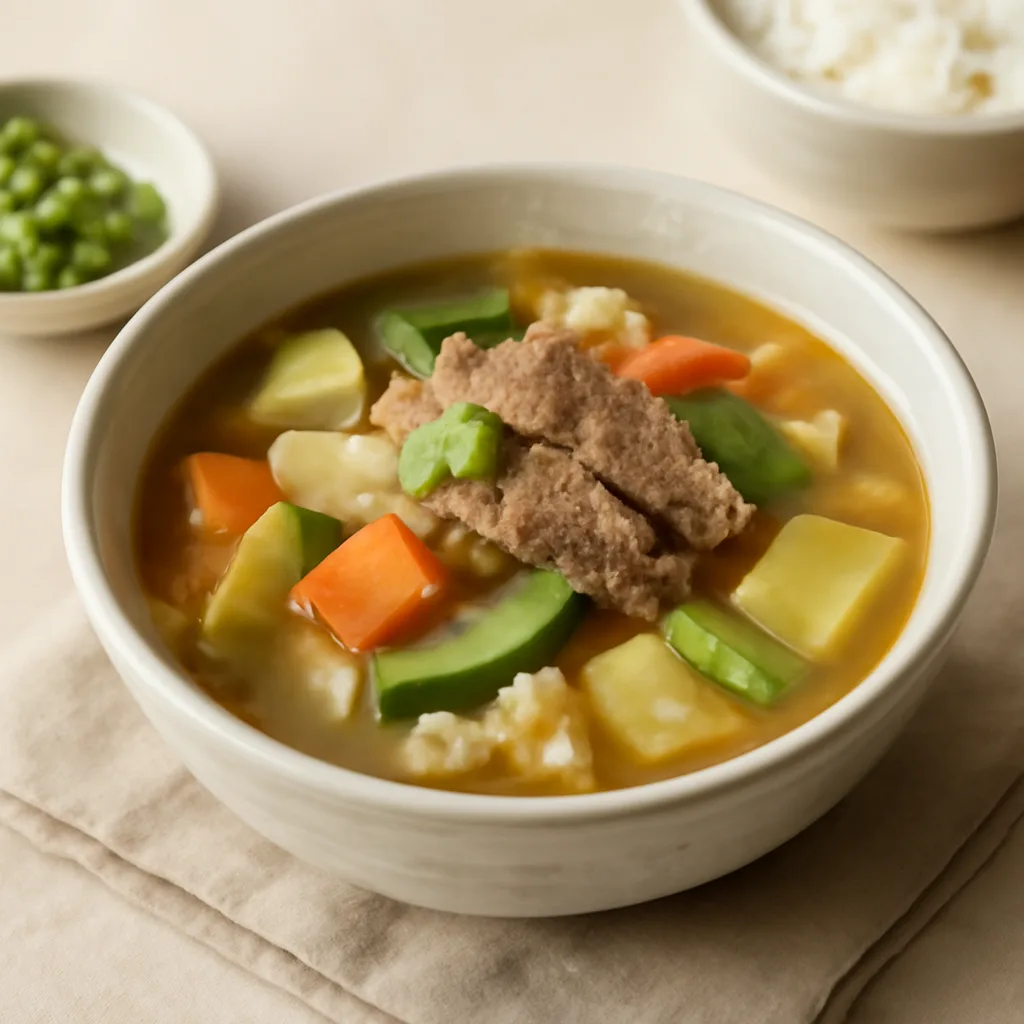
Rindfleisch-Gemüsesuppe
Rindfleisch-Gemüsesuppe ist ein warmes Gericht, das durch die Mischung aus verschiedenem Gemüse und Rindfleisch einen tiefen Geschmack entwickelt. Zartes Rindfleisch harmoniert mit knackigem Gemüse, und die Brühe überzeugt mit ihrem aromatischen Geschmack.
Verwandte Themen
11
Abfrage0
Gefällt mir1
AI-Empfehlung0
Habe ich gemachtÜber dieses Gericht
Beef and vegetable soup is a warm soup dish where beef, potatoes, carrots, onions, and celery are cooked in one pot to infuse the flavors into the broth. The roughly 50 minutes of cooking time may include tenderizing the beef fibers and ensuring root vegetables are fully cooked, so it's important to adjust the size and cooking speed of the ingredients. Potatoes and carrots add a cozy texture and subtle sweetness to the broth, while onions and celery form the flavor base. Depending on the cut of beef and the desired broth thickness, results can vary, so for a clear, light broth keep the vegetables intact, and for a heartier feel you can cook the potatoes longer to release some starch into the broth. Cooking difficulty can be considered medium. You only need one pot, but you must observe the timing to keep the beef from becoming tough and to prevent the vegetables from becoming too mushy by adding them in the correct order.
Geschmack und Textur
The broth centers on the savory, rich beef flavor with the sweetness of onions, the bright aroma of celery, and the soft notes from carrots and potatoes layered together. The longer you simmer, the more rounded the vegetable aroma becomes, but the distinct aroma of celery and the crisp texture of the vegetables diminish. When well cooked, the beef should be tender to chew, and the potatoes and carrots should break apart easily with a spoon while still retaining their shape. If the potatoes break apart too much, the broth may become slightly cloudy and thicker, which may not be suitable if you prefer a clear broth.
Der Schlüssel zu einem leckeren Gericht
- Slice the beef relatively evenly against the grain so that even after a longer boil, the bite isn’t tough, and if the pieces vary in size, start with smaller pieces so they don’t overcook first.
- Cut the potatoes and carrots to roughly the same size as the beef; if potatoes tend to break apart too early, cut them a bit larger next time or add them later to maintain their shape.
- Onions and celery are ingredients that build the broth’s aroma, so long simmering can blend the aromas softly, but if you want a more pronounced celery aroma, adding some toward the end of cooking is more appropriate.
- Once the broth starts to boil, keeping a gentle simmer rather than a strong boil helps prevent the ingredients from breaking apart due to excessive agitation.
- Aim to test doneness by pressing the potatoes to see if they break to the center easily and feel the firm carrot core; if the beef is not tender enough, you can remove the vegetables first and continue simmering only the beef with the broth to soften further.
Häufige Fehler
- Boiling vigorously from the start so the broth becomes cloudy and the potatoes fall apart from the edges; after boiling, reduce the heat to maintain a gentle simmer and reduce stirring for the remaining cooking time.
- Cutting potatoes and carrots too small so they break apart in the broth and lose their texture; next time cut them a bit larger and check their doneness mid-cook.
- If the beef isn’t cooked enough and feels chewy, rather than boiling the vegetables for too long, remove the vegetables when they’re done and simmer the beef and broth further to make it smoother.
- Boiling celery for too long can make its aroma heavy or overpowering; reduce the amount or add part of it at the end to balance the aroma.
Anwendungsideen
- If you simmer the potatoes longer so that some edges naturally dissolve, you can achieve a cozier broth texture without needing a separate thickening ingredient, but this isn’t suitable for a very clear broth. If you don’t prefer the celery aroma, you can reduce its amount and keep the onion and carrot balance; in this case the broth will become sweeter and softer.
- If you cut both beef and vegetables into larger pieces, you get a more substantial, chunkier soup; if you cut small, it’s easier to eat with a spoon but the vegetables may soften faster.
- If you prioritize clarity of the broth, turn off the heat just before the potatoes break apart and don’t simmer; if you want a slightly thicker texture, mash some boiled potatoes into the broth to adjust.
Beilagenideen
- When hot, ladle into a warm bowl so beef, potatoes, and carrots are evenly visible, enjoying both the broth and the chunks together.
- Pair with plain bread or rice to naturally finish the remaining broth, and if potatoes are already plentiful in the dish, keep side portions light for balance.
- If you want to highlight the celery aroma, garnish with finely chopped celery, but for those sensitive to aroma, serve the broth without the raw celery to keep it mild.
- If the broth is thickened, serve in wide bowls like a stew; if clear, pour generously as a broth-based dish to emphasize warmth.