Gericht ansehen
Überprüfen Sie die Basisdaten des ausgewählten Gerichts.
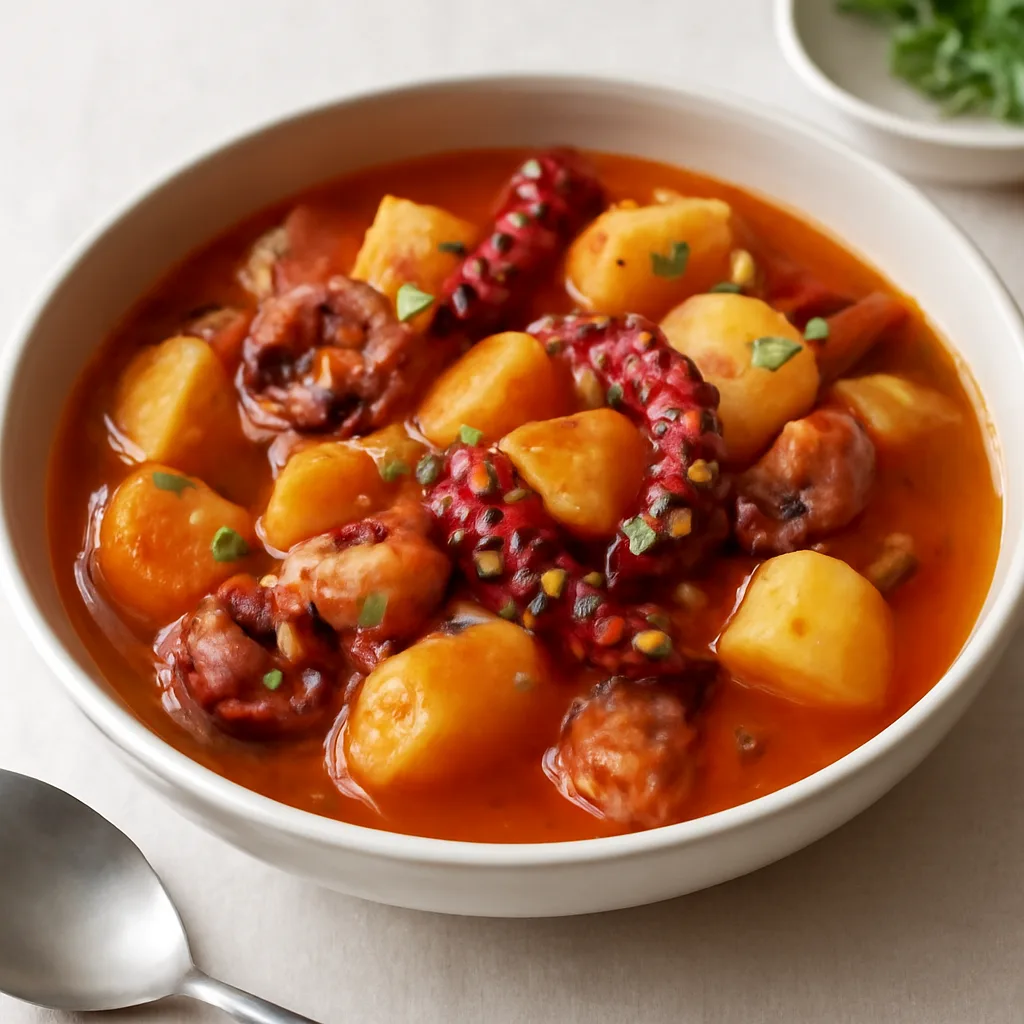
Tintenfisch-Kartoffel-Eintopf
Der Tintenfisch-Kartoffel-Eintopf zeichnet sich durch einen tiefen und intensiven Geschmack aus, wobei Tintenfisch und Kartoffeln weich garen und eine zarte Textur ergeben. Die rote Paprika verleiht Farbe und macht ihn visuell ansprechend; serviert man ihn warm, schmeckt er noch besser. Dieses Gericht bringt mediterrane Aromen gut zur Geltung und ist eine gute Wahl für ein Familienessen.
Verwandte Themen
6
Abfrage0
Gefällt mir1
AI-Empfehlung0
Habe ich gemachtÜber dieses Gericht
Oktopus potatoes stew is a warm seafood stew made by boiling cooked octopus and fried potatoes in water. Frying potatoes in oil first allows heat to reach the edges evenly, which somewhat reduces them from breaking apart during boiling, and adds the cozy texture of potatoes to the broth. Paprika is added after the potatoes are halfway cooked to enhance color and texture. Octopus is boiled until fully cooked, then sliced for use, and later returned to the stew to harmonize flavors with the potatoes. However, boiling octopus on too high heat for too long can make the texture feel firm, so after adding water, cover with a lid and maintain a steady medium-low heat. When the potatoes are soft enough to break apart easily with a spoon, taste for final seasoning, let it rest briefly, then serve. Because the base ingredients are simple, salt should be adjusted at the end for safety. If the broth is thinner than expected, uncover and boil a bit longer to reduce moisture; conversely, if the potatoes have absorbed too much moisture, gradually add water to reach the desired consistency.
Geschmack und Textur
The octopus brings a delicate seafood flavor that combines with the soft, cozy texture of potatoes, and paprika adds gentle sweetness and a fresh aroma. Since only salt and pepper season the dish, the ingredients' own flavors come through more distinctly. When well finished, the potatoes are soft but hold their shape, the octopus is chewed in bite-sized pieces, and the broth becomes slightly thickened from the starch in the potatoes. If you want a richer stew, you can simmer a bit longer until some potatoes around the edge start to loosen, but in that case the vivid texture of paprika diminishes.
Der Schlüssel zu einem leckeren Gericht
- Boil octopus first to cook thoroughly, and when the thickest part is cut and opaque all the way through, move to the next step.
- Cut the potatoes into about 1 cm pieces to ensure even cooking, and when the edges start to become slightly transparent during frying, it is a good time to add paprika.
- Paprika should be cut into pieces similar in size to the potatoes, and should not be added too early; if you don’t want it to become mushy, add it after the potatoes are halfway cooked.
- After adding 2 cups of water, cover to maintain the moisture level for potatoes to cook, and if the boil is too vigorous, lower the heat to reduce making octopus chewy.
- Taste for final seasoning after the potatoes have softened, and add salt and pepper gradually depending on how much the broth has reduced.
Häufige Fehler
- If potato pieces vary in size, smaller pieces may break apart while larger ones stay hard, so cut to uniform thickness and if you see large pieces that are not cooked, add a little water and simmer longer.
- If you boil on high heat from the start, the broth reduces quickly and sticks to the bottom, so check that there is enough liquid on the pot bottom, lower the heat, and add a small amount of water if needed.
- If octopus is added before cleaning or pre-cooking, it can release fishy odor or become chewy, so clean thoroughly and boil briefly in boiling water before use.
- If paprika loses its color and texture because it was added too early, next time fry the potatoes first to halfway cooked, then briefly fry and simmer.
- If too much salt is added early and the broth reduces too much, add a little water and re-boil, then check potato doneness and adjust seasoning at the end.
Anwendungsideen
- If you want to keep the paprika's crisp feel, add some of the stated amount at the last few minutes, though the depth of the broth’s aroma will be weaker.
- For a thicker texture, mash some cooked potato pieces along the edge into the broth, but this loses the potato chunks' shape.
- If you want a more pronounced pepper aroma, turn off the heat and grind in more pepper, reducing loss of aroma from heat.
- If you cut the octopus into large pieces, you’ll get a noticeable texture; for uniform bite-sized portions, cut it to be similar to or slightly smaller than the potato pieces.
Beilagenideen
- Let the broth come down a bit after turning off the heat, then serve in a deep bowl with the broth while still warm.
- Pair with crusty bread for dipping into the remaining broth; since the potatoes make a filling, you can reduce bread量 if you want a lighter meal.
- Dust with pepper right after serving to add a fragrant finish between the mild octopus and potato flavors.
Notwendige Zutaten
Tintenfisch
Kartoffeln
Paprika
Speiseöl
Wasser
Salz
Pfeffer
Ausgewählte Zutaten
Es gibt keine separaten ausgewählten Zutaten.
Kochanleitung
Den Tintenfisch sauber verarbeiten und in kochendem Wasser 5 Minuten lang garen, bis er weich ist.
Die Kartoffeln schälen und in 1 cm große Würfel schneiden.
Die Paprika entkernen und in ähnliche Größe wie die Kartoffeln schneiden.
In einem Topf Speiseöl erhitzen und die Kartoffeln darin bei mittlerer Hitze 5 Minuten anbraten.
Wenn die Kartoffeln halb gar sind, die Paprika hinzufügen und weitere 2 Minuten braten.
Den gekochten Tintenfisch in Scheiben schneiden und hinzufügen, anschließend 2 Tassen Wasser hinzufügen, Deckel aufsetzen und 20 Minuten köcheln lassen.
Wenn der Eintopf fertig ist, mit Salz und Pfeffer abschmecken, vom Herd nehmen und kurz ziehen lassen, dann servieren.