Gericht ansehen
Überprüfen Sie die Basisdaten des ausgewählten Gerichts.
Alleinr Reduced
Alleinr Reduced?
Verwandte Themen
7
Abfrage0
Gefällt mir1
AI-Empfehlung0
Habe ich gemachtÜber dieses Gericht
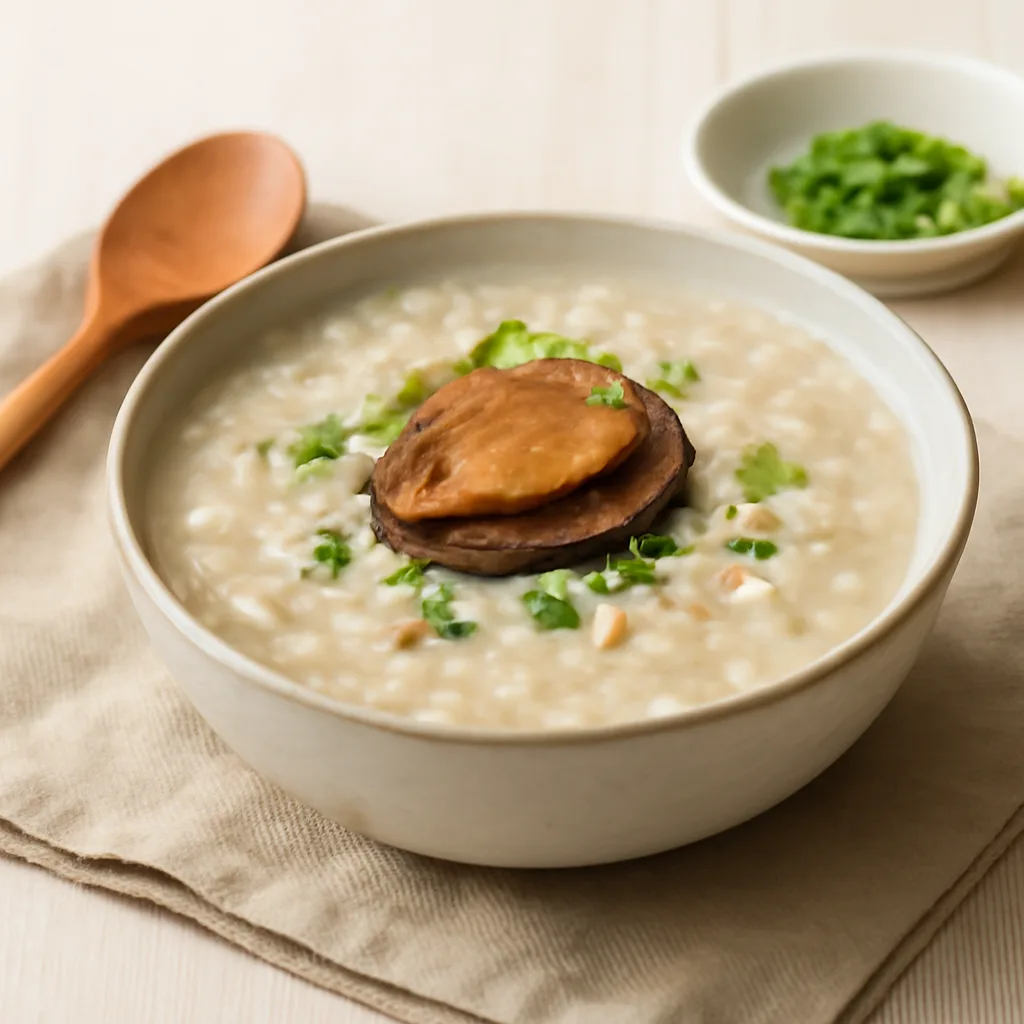
Abalone porridge is made by slowly simmering soaked rice until it softens into a smooth, creamy texture, then adding finely chopped abalone and carrots to finish in one bowl. The texture and aroma of abalone vary greatly depending on how it is prepared, so it is important to clean thoroughly after removing the shell and digestive tract to ensure no foreign matter remains. When using a knife, abalone can slip, so it is best to keep fingers away from the blade path on a stable cutting board. In this recipe, soak the rice for about 30 minutes and simmer with abalone and carrot. Soaked rice tends to spread more evenly, but if you simmer it over high heat for too long, it may stick to the bottom or the grains may break too easily. After the mixture comes to a first boil, reduce the heat and stir gently along the bottom to check the consistency. Sesame oil is added once the porridge approaches the desired thickness to finish with aroma. However, adding too much strong sesame oil can overpower the delicate flavor of the abalone, so it’s easier to balance by adding based on the recorded amount and adjusting the salt seasoning.
Geschmack und Textur
Cooked rice becomes tender at the grain boundaries without becoming too loose, creating a slightly viscous texture. The abalone is finely chopped to yield chewy bits, and minced carrot adds a subtle sweetness and color. Overall the flavor is light and warm, with sesame oil adding a nutty aroma at the end. If you want a stronger abalone aroma, the state and preparation of the abalone are especially important, but this cooking record does not include using the innards, so it leans toward a clear, light flavor rather than the clear and innard-forward taste of some other abalone dishes.
Der Schlüssel zu einem leckeren Gericht
- Soaked rice for about 30 minutes to make it fully hydrated, use while still moist rather than draining for a long time so it spreads evenly during boiling.
- After removing shells, wash the surface and edges clean and chop the abalone finely so it cooks to a bite-sized texture easily in the porridge; to prevent slipping while handling, fix the abalone with a dry kitchen towel.
- If boiling on medium heat causes large bubbles, lower the heat and stir along the bottom to reduce starch sticking to the pot.
- When the porridge becomes thick enough that a ladle lifted falls slowly, add sesame oil and mix. If you plan to cook longer, the sesame oil aroma may weaken, so it's best to add it at the end.
- If the consistency becomes too thick too quickly, gradually add hot water to adjust. Adding too much water at once can suddenly thin the flavor and texture.
Häufige Fehler
- If you don’t reduce the heat, a burnt smell may arise from the bottom or brown scorched areas, so immediately lower to a gentle simmer and transfer the untapped upper portion to another pot to continue boiling.
- If abalone pieces feel tough, the pieces may be too large or boiled too long, so in the next attempt cut them smaller and more uniformly and add them toward the end when the porridge is almost done.
- If the porridge becomes too stiff while eating, it means the rice starch has absorbed more moisture, so add small amounts of hot water and stir until the desired flow returns.
- If the sesame oil aroma dominates and the abalone flavor feels weak, the oil may be masking the ingredients; do not add sesame oil to the remaining porridge and first check the salt seasoning.
- If salt was added too early and tastes salty, it may have concentrated as the porridge reduces, so season at the end when the porridge reaches its final concentration.
Anwendungsideen
- If carrot texture feels heavy, finely mash the same amount to blend naturally between the rice grains.
- For a smoother porridge, once the grains have sufficiently dispersed, gently press the porridge against the pot wall with the spatula to crush some of the grains, but avoid crushing the abalone pieces too hard as it reduces the chewy texture.
- If you prefer the chewy bite of abalone, some abalone can be added early, with some reserved to add after the porridge thickens, but you must ensure enough cooking time for the remaining abalone.
- If sesame oil aroma is not to your liking or you want the abalone mild flavor to stand out more, reduce the sesame oil and instead finish with a nutty aroma, which will be weaker.
Beilagenideen
- Serve immediately in bowls while warm to best appreciate the porridge’s soft texture and sesame oil aroma.
- Keep salt to adjust at the table so everyone can tailor the taste.
- Portion into individual servings while still hot, and if it thickens while eating, add a small amount of hot water to loosen it.
- Stir once at the bottom of the pot before dividing to ensure abalone pieces are evenly distributed in each bowl.
Notwendige Zutaten
Abalone
Frische Abalones verwenden.
Reis
Gekochter Reis verwenden.
Möhren
Klein hacken und verwenden.
Sesamöl
Zum Abschmecken verwenden.
Ausgewählte Zutaten
Es gibt keine separaten ausgewählten Zutaten.
Kochanleitung
Die Abalones sauber waschen, die Schale entfernen und die Innereien entfernen.
Die Abalones grob hacken und die Möhren ebenfalls klein hacken und vorbereiten.
Den Reis in den Topf geben und Wasser hinzufügen, etwa 30 Minuten einweichen.
Den eingeweichten Reis in den Topf geben und die vorbereiteten Abalones und Möhren zusammen hinzufügen.
Bei mittlerer Hitze zum Kochen bringen, sobald es kocht, die Hitze reduzieren und weitere ca. 20 Minuten kochen.
Wenn der Porridge eindickt, das Sesamöl hinzufügen und gut umrühren.
Mit Salz abschmecken und in Schalen servieren.