Gericht ansehen
Überprüfen Sie die Basisdaten des ausgewählten Gerichts.
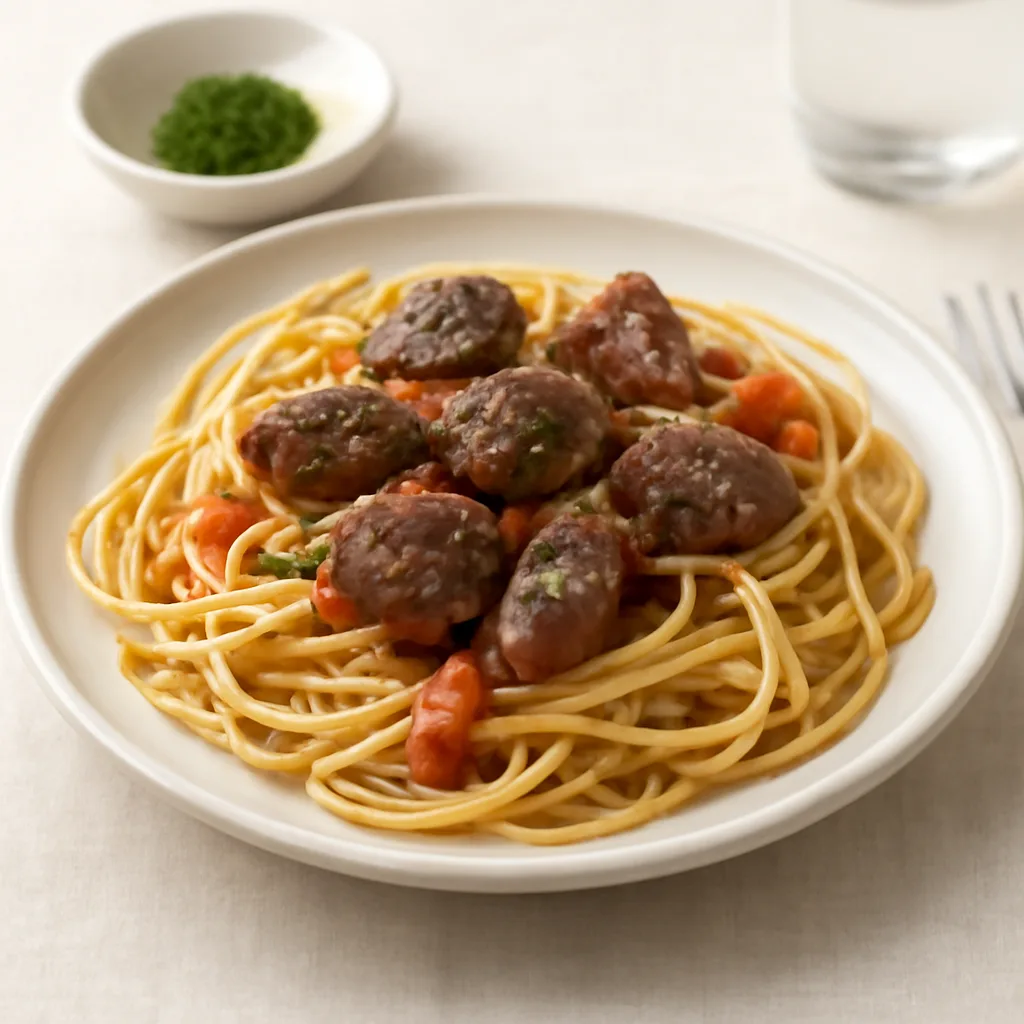
Rinderfilet Pasta
Dieses Pasta-Gericht kombiniert zartes Rinderfilet mit frischem Rucola und Kirschtomaten. Parmesan ergänzt das Aroma und macht es zu einer schmackhaften und nährstoffreichen Mahlzeit.
Hauptzutat
Verwandte Themen
6
Abfrage0
Gefällt mir1
AI-Empfehlung0
Habe ich gemachtÜber dieses Gericht
Beef tenderloin with the bright aroma of greens and the tart freshness of grape tomatoes, a pasta dish. Since the sauce is not heavy, but designed to bring out the flavors of the seared meat and ingredients, the doneness of the meat and pasta will determine the final quality. Cut the tenderloin into small pieces and sauté over medium heat until the surface browns; overcooking will reduce tenderness. Cook the pasta to al dente and finish cooking with the residual heat when mixing with the meat to prevent the pasta from oversoftening. Add the arugula and grape tomatoes at the end to maintain their fresh texture and color. The dressing is optional; if the saltiness from cheese and the acidity from tomatoes alone suffice to balance the dish, you can omit the dressing to highlight the ingredients.
Geschmack und Textur
The browned exterior of the tenderloin offers a rich, nutty flavor, and the al dente pasta retains a gentle spring in the center. Finely grated Parmigiano-Reggiano adds a savory note that complements the meat and gives the overall dish a salty, nutty impression. Arugula releases its distinctive bright aroma when not overheated, and the grape tomatoes contribute a moist acidity when bitten. If the dressing is used heavily, this fresh contrast can be softened and the flavors of cheese and meat may be masked.
Der Schlüssel zu einem leckeren Gericht
- Cut the tenderloin into pieces of similar size so they cook evenly; once one side browns, flip to create surface flavor while reducing excessive stirring.
- If the meat releases a lot of water, the pan may be overcrowded or the temperature was too low; next time cook in batches or preheat sufficiently before cooking.
- When testing for doneness, pull the pasta a strand earlier than the package time and, when those centers feel a slight chalkiness, drain to achieve an al dente texture that finishes cooking in the pan with the meat.
- Add arugula after mixing the pasta with the meat, at a low heat or off heat, to keep leaves from wilting too much.
- When serving Parmigiano, grate it finely on the plate so it softens with the residual heat but remains distinct in aroma.
Häufige Fehler
- If the tenderloin is chewy and tough, you may have cooked the small pieces too long; remove from the pan briefly as soon as browning occurs and mix with the pasta later.
- If the pasta becomes mushy or sticks, the cooking time after boiling may have been too long; brown the meat first, then boil the pasta just before serving and toss it into the pan immediately.
- If the arugula turns bitter or blackened, the heat was too high for too long; next time turn off the heat before adding or place it on top of the plated pasta.
- If the final dish is too salty, the cheese and dressing may be too salty; start with a light dressing and adjust after adding the cheese, tasting at the end.
Anwendungsideen
- If you briefly fry the grape tomatoes cut in half before adding with the meat and pasta, their juices will spread for extra moisture, yielding a more moist finish without a separate dressing, though the firmer texture of fresh tomatoes decreases.
- If the arugula’s bite is strong, reduce its amount and grate more Parmigiano cheese to soften the contrast.
- When adding dressing, start with a small amount and toss lightly; if the dressing is very acidic, it can overwhelm the balance of tomatoes and cheese, so use only half.
- If you slice the tenderloin thicker or cook it like a steak, the meat presence will be stronger, but it requires more attention to ensure even doneness.
Beilagenideen
- Spread the pasta on a wide plate, then arrange arugula and halved cherry tomatoes on top evenly to prevent leaves from wilting under heat.
- Serve extra Parmigiano at the table so guests can adjust the cheese intensity as desired.
- If using dressing, drizzle only on portions rather than mixing everything, so those who prefer a lighter flavor can still enjoy the dish without overpowering the meat and cheese.
Notwendige Zutaten
Rinderfilet
Rucola
Kirschtomaten
Parmesan
Ausgewählte Zutaten
Es gibt keine separaten ausgewählten Zutaten.
Kochanleitung
Das Rinderfilet klein schneiden und mit Salz und Pfeffer würzen.
In einer Pfanne etwas Öl erhitzen und das Rinderfilet bei mittlerer Hitze anbraten, bis es braun ist.
Die Pasta in kochendem Wasser al dente kochen und abgießen.
Brate das gebratene Rindfleisch mit der gekochten Pasta zusammen.
Rucola und Kirschtomaten hinzufügen und nach Belieben mit Dressing servieren.
Auf dem Teller anrichten und Parmesan fein darüber reiben.