Gericht ansehen
Überprüfen Sie die Basisdaten des ausgewählten Gerichts.
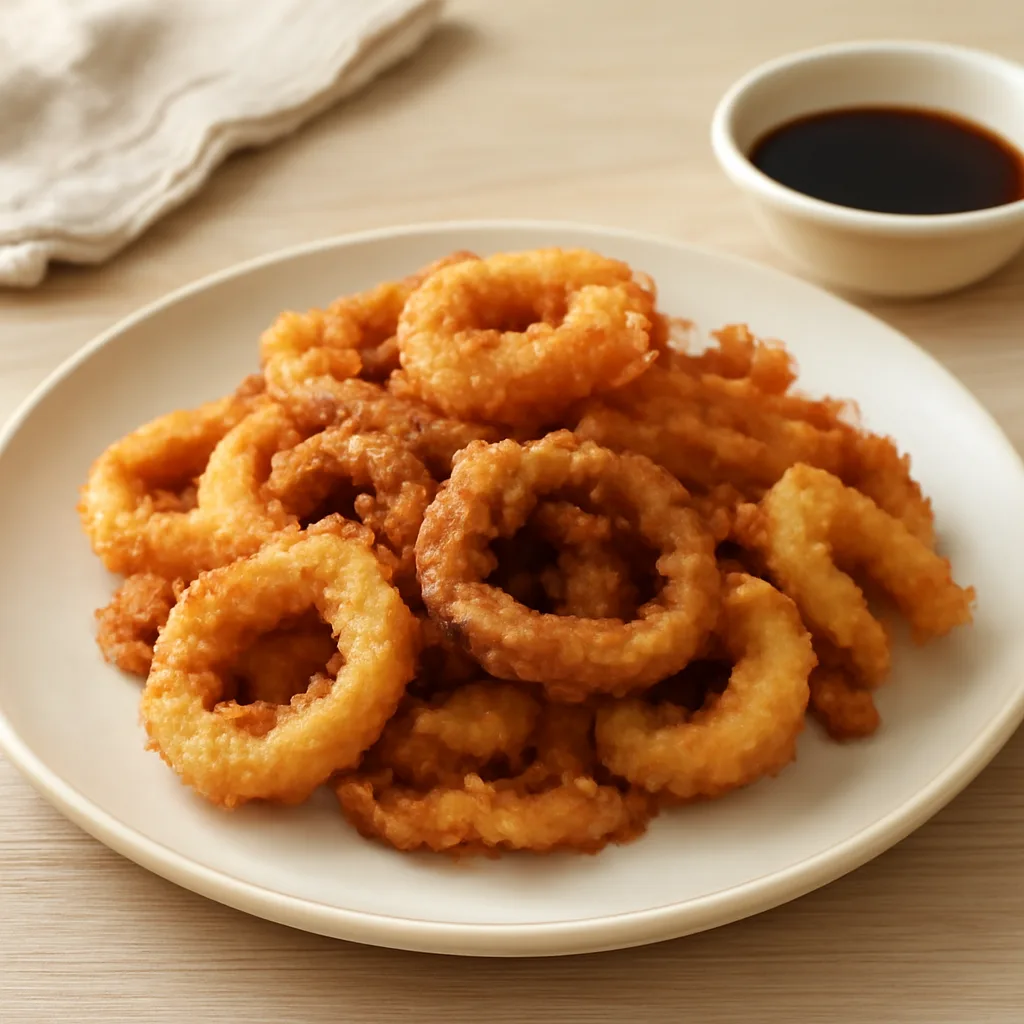
Tachai-Squid-Tempura
Knusprige und herzhafte Tintenfisch-Tempura passt perfekt als Begleitgericht zum Trinken. Die Tempurahülle knusprig zu beißen, die zähe Textur des Tintenfischs harmoniert gut mit Alkohol. Schnell zubereitet – auch ideal, wenn Gäste kommen.
Hauptzutat
Verwandte Themen
0
Abfrage0
Gefällt mir1
AI-Empfehlung0
Habe ich gemachtÜber dieses Gericht
Fried squid is a simple dish where ring-cut squid, seasoned with a batter made from flour, salt, and pepper, is lightly fried. The cooking time is about 20 minutes. The key is to dry the squid of moisture and maintain a stable oil temperature to create a thin, crispy coating. Because squid becomes tougher the longer it is heated, this method—preheating oil to 170°C and frying for 3–4 minutes until the surface is golden and firm—works well. If you add a lot at once, the oil temperature drops and the coating can soak up oil, so fry in batches according to the pan size. A savory sauce like soy sauce pairs well with the mild fried squid, while spicy gochujang adds a tangy-sweet kick. However, pouring the sauce in beforehand reduces crispiness, so it is better to serve with dipping sauce on the side.
Geschmack und Textur
Well-fried squid tempura has a lightly crispy, savory outer coating and a springy, chewy interior. A simple salt-and-pepper seasoning highlights the squid’s mild flavor. If the batter is thick, the crisp texture becomes stronger but the squid texture is less noticeable. To enjoy the squid’s chewiness, keep the batter thin and even.
Der Schlüssel zu einem leckeren Gericht
- If moisture remains on the cleaned squid surface, the batter will clump and oil will spatter excessively, so pat the rings and surface dry with kitchen towels and properly coat with batter.
- Mix salt and pepper into the batter beforehand so seasoning is distributed evenly, but avoid over-salting as it can taste salty when eaten with the sauce; adjust lightly considering the sauce’s saltiness.
- Preheat the oil to 170°C and use it when the tiny bubbles around the squid steadily rise; if the oil isn’t hot enough, reheat a bit before frying.
- Squid rings tend to stick together, so gently separate them with chopsticks or tongs as soon as they are placed in the oil. If the pan is narrow, fry in batches to minimize temperature drop.
- When the coating turns from a pale gold to a golden brown and the surface firms up, remove from the oil. If fried much longer, the squid becomes tough.
- Let the fried squid drain on a paper towel without stacking so the surface oil is removed, and serve immediately while it stays crispy.
Häufige Fehler
- If you wash the squid and immediately coat it with batter, the batter can become wet and clump, resulting in a thick, loose coating. Wipe surface moisture, coat with batter, then lightly shake off excess flour.
- Frying at oil temperature lower than 170°C makes the surface soggy and heavy before becoming crispy. If bubbling is too weak after adding squid, reheat the oil before the next batch.
- Overcrowding the pan causes the oil temperature to drop sharply, leading to uneven coloring and sticking together. Fry in a single layer with space, and fry the rest in batches.
- If fried for 3–4 minutes or more, the squid becomes hard and chewy; next time, pull it a little earlier based on the batter color and surface state.
- Stacking fried squid on a plate traps steam, making the bottom coating soggy; after draining the oil, keep pieces in a single layer and serve sauces separately.
Anwendungsideen
- If you want a stronger pepper aroma, add pepper to the batter but don’t use so much that it overpowers the squid’s flavor.
- Pair with gochujang for a tangy-sweet contrast, or with soy sauce for a milder, saltier finish. Prepare both sauces so guests can choose.
- Cut the rings to a uniform size so they cook evenly in the same time. If a mix of small and large rings is present, remove the smaller rings first to avoid overcooking.
- If you want even more presence of the batter, you can apply a second thin layer, but this may reduce the squid’s chewy texture.
Beilagenideen
- Serve soy sauce or gochujang in small dipping dishes right after frying to keep the crisp surface on each piece.
- When serving as an appetizer, lay the squid in a single layer on a wide plate to prevent steam from making the coating soggy as you eat.
- With a group, offer both sauces rather than pouring one large amount of a single sauce to let people choose different flavors.
Notwendige Zutaten
Tintenfisch
in Ringen vorbereitet
Tempuramehl
mit Salz und Pfeffer gewürzt
Ausgewählte Zutaten
Es gibt keine separaten ausgewählten Zutaten.
Kochanleitung
Den Tintenfisch sauber behandeln und in Ringe schneiden.
Das Tempuramehl mit Salz und Pfeffer würzen.
Die vorbereiteten Tintenfischringe gleichmäßig mit dem Tempuramehl bestäuben.
In einer Pfanne ausreichend Öl erhitzen und auf 170°C vorheizen.
Die Tintenfischringe in das vorgeheizte Öl geben und 3–4 Minuten knusprig frittieren.
Die frittierten Tintenfische aus dem Öl heben und mit Küchenpapier entfetten.
Auf einem Teller anrichten und nach Belieben mit Soßen (Sojasauce, scharfe Chili-Soße etc.) servieren.