View recipes
Check the reference data for the selected food.
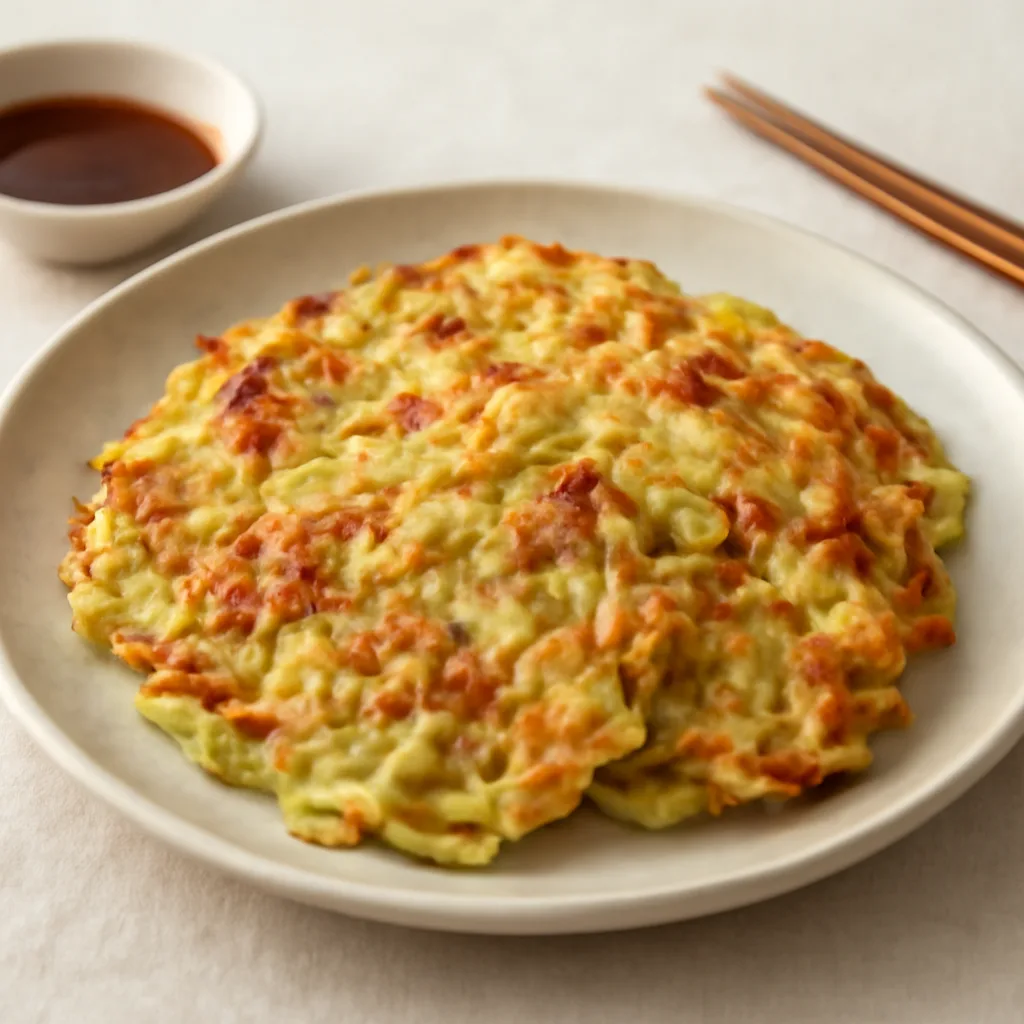
Cabbage and Bacon Jeon
The harmony of cabbage and bacon is showcased in this jeon, offering a crispy texture and a savory taste at the same time. Easy to make, making it suitable for everyday meals, with a touch of Japanese home-cooking style.
Main Ingredients
Related Themes
13
View0
Like1
AI recommendations0
CreatedAbout this recipe
Cabbage bacon jeon is a dish where the sweetness of thinly sliced cabbage and the savory, nutty flavor of bacon are bound together with egg and fried until golden in a pan. Because the ingredients are simple, water management of the cabbage and the frying temperature determine the final result. To prepare within the suggested 25 minutes, slice the cabbage not too thick, and trim the green onion and bacon to a size that fits in one bite. The dish is considered intermediate because it requires control to keep the shape when flipping the jeon and to cook the inside while making the exterior crispy. When assembling as a simple Japanese-themed meal, it’s better to divide into appropriately sized portions rather than making one very thick piece, which makes flipping easier. Conversely, if you want a thicker texture, start with a lower heat to cook the inside first, then raise the heat at the end to finish the surface.
Taste and Texture
A well-fried jeon has the edges of the cabbage and bacon crisped, while the center remains tender thanks to the eggs. As the cabbage cooks, it brings sweetness and moisture, and the bacon adds a salty, umami, rich oiliness. As green onion cooks, its aroma becomes rounder and supports the bacon’s flavor. If the cabbage is shaved very thin, the overall mixture becomes relatively smooth; if cut a bit thicker, the texture becomes more defined when chewing.
Key to making it delicious
- After slicing the cabbage, gently blot with a paper towel if there’s a lot of moisture. Too much water can cause steam that prevents the surface from browning and may make it soggy.
- Spread the bacon evenly in the pan, and once the edges start to crisp, mix with the cabbage so oil and flavor reach all ingredients. If there’s enough fat from the bacon, you can use less additional oil, but if the pan tends to stick, a small amount of oil may be needed.
- Mix the eggs evenly to coat the cabbage and bacon so that they bind the ingredients together. If the eggs collect in one spot, that section will become thick and other parts may break apart easily.
- In the beginning, avoid stirring until the bottom is set firmly on medium-low heat. When the edges lift and a spatula can slide in easily, it’s time to flip. If the center is still wet, cook a bit longer before flipping.
- If one large jeon feels daunting or you’re not confident in flipping, divide into smaller portions. However, cooking several pieces close together can drop the temperature and hinder crisp surface formation.
Common mistakes
- If the jeon tears in the pan or the center sags when flipping, the layers may not be fully set yet. Check the edges with a spatula first, then flip once the bottom is golden and firm.
- If the cabbage releases a lot of water after cooking and the surface is damp, the cabbage may still have moisture or the pan may be too weak. Next time, drain the sliced cabbage well, place the ingredients in, and avoid loading too much at once to keep from cooling the pan too much.
- If some bacon burns or the cabbage remains undercooked, the flame may be too high or the bacon pieces too small. Don’t chop bacon too finely, and when the color darkens quickly, lower the heat to give the cabbage time to soften.
- If the seasoning feels too strong, the bacon’s saltiness may be dominating the overall flavor. Adjust with minimal extra seasoning after checking the bacon flavor, and increase cabbage proportion to balance the taste.
Application Ideas
- If you shave the cabbage into very thin strips, the egg will bind more densely for a thin, tender jeon; thicker cuts will give the cabbage a chewier bite.
- Using larger pieces of bacon creates pronounced meat flavor in parts, while finely chopped bacon mixes more evenly for a relatively uniform salty flavor per bite.
- If you add plenty of green onion, it adds a fresh aroma that offsets the bacon’s oiliness, but if you want the cabbage’s mild sweetness to be the focus, use less green onion.
- Cooking with a single thick piece gives a soft interior but is trickier to manage; for crispness and easier flipping, split into thin or small jeon pieces.
Pairing ideas
- Serve immediately while the jeon is crispiest as a simple centerpiece for a meal, highlighting the contrast between cabbage, egg, and bacon.
- Small fried pieces are easy to share on a plate, and arranging the top with green onion visible makes the ingredients clearer.
- If you’ve fried one large piece, remove it from the pan and let it rest to set its shape, then cut into triangles or bite-sized pieces. If cutting right away, steam may escape too quickly, making the center feel a bit soft.
- When the bacon’s salty flavor is strong, pair with mild side dishes rather than heavy salt, to preserve the dish’s overall savoriness.