View recipes
Check the reference data for the selected food.
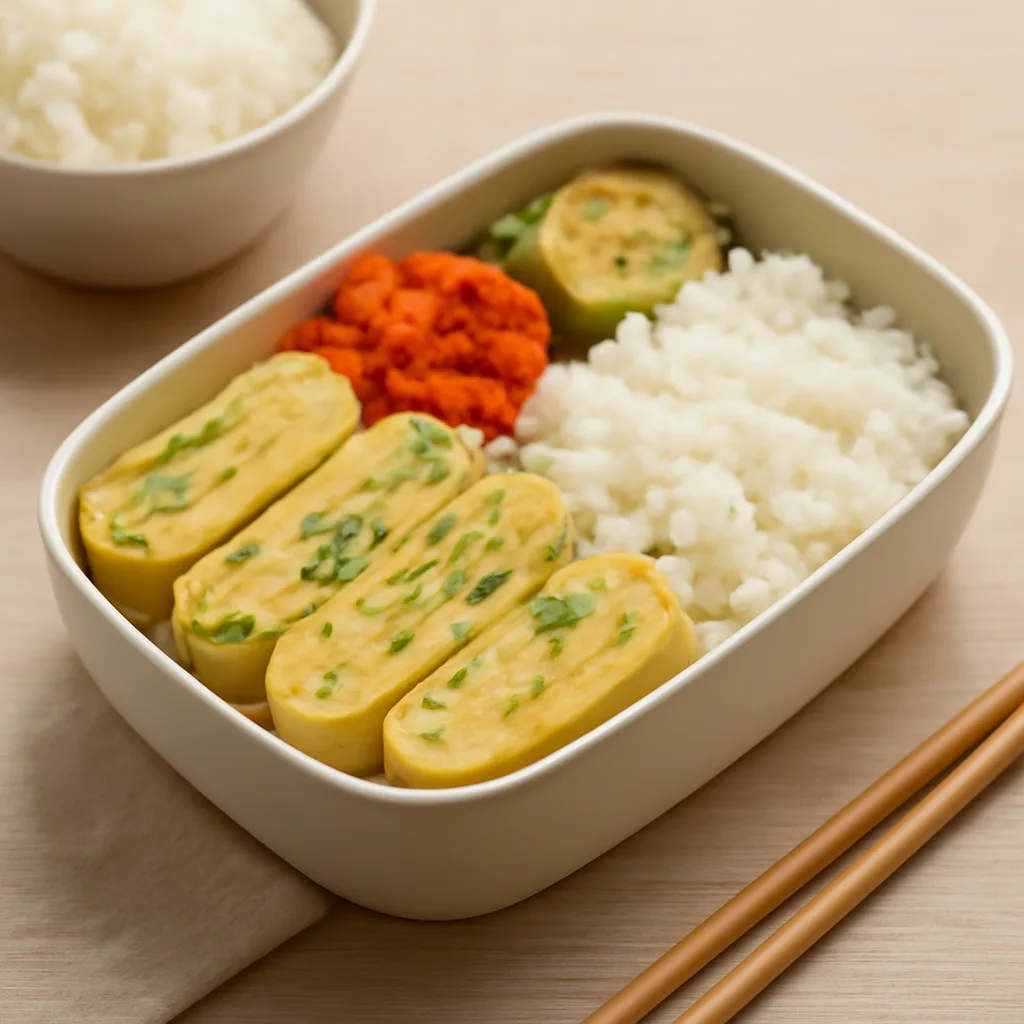
Rolled Omelette Lunch Box
A rolled omelette lunch box is a convenient meal where soft rolled omelette and rice harmonize. It is quick to make, suitable for busy mornings, and tastes even better when eaten with seaweed.
10
View0
Like1
AI recommendations0
CreatedAbout this recipe
Egg roll lunch box consists of warm rice with softly cooked rolled eggs, and because the ingredients are simple, the doneness of the eggs and the state of the rice determine the overall quality. Preparing seaweed (nori) together adds a savory, salty contrast between the bland egg and rice, making the meal feel more complete. Cooking time is about 25 minutes, and when you need to make it quickly in the morning, it is easier to cook the inner layers thoroughly by rolling thin layers in sequence rather than making the egg roll too thick. Conversely, if you need to carry the lunch box for a long time, do not seal the hot rice and egg roll right away; let the steam escape once, then pack to reduce moisture condensation. You can make it with only a frying pan, but a wide shallow pan may cause the egg mixture to spread too thin. In this case, pour the egg mixture in several portions to create layers, or use a small pan to ensure a manageable thickness for rolling.
Taste and Texture
A well-made egg roll has a smooth exterior when cooked, and the cross-section is moist without losing shape. The fluffy texture of warm rice contrasts with the soft egg, and adding seaweed enhances the savory aroma and texture through a crisp or chewy bite. If the eggs are cooked quickly over high heat, the surface may darken and the inside can become a bit firm. Rolling multiple thin layers over gentle heat helps keep the color relatively even and yields a softer texture.
Key to making it delicious
- Pour the egg mixture in thin portions that spread evenly without tearing, and divide appropriately. Start rolling when the edges set first and the center is slightly moist to help it adhere to the next layer; if rolled after fully cooked, the layers may separate.
- Preheat the pan to medium-low heat before adding the egg mixture, and coat with a thin layer of oil. If the pan is cold, the eggs will stick; if the oil is too hot, the surface will be slippery and hard to roll into a uniform cylinder.
- Focus on forming a firm center with the first layer rather than perfect shape. If the first roll is loose, it can unravel when you add the next layer, so gently press with a spatula to shape and connect to the next layer.
- Let the rolled omelet rest briefly before packing into the lunch box. When just cooked, internal steam and heat can cause the cross-section to crumble easily; cooling a bit and cutting after a light steam helps maintain piece shapes.
- Rice should be fluffy and not too sticky or watery, easy to scoop. When steam continues to rise from the rice and touches the egg roll directly, the surfaces may become soggy, so let the heat settle a bit and then portion into compartments before packing.
Common mistakes
- If the egg roll surface browns too quickly and the inside is dense, the heat is often high. Move the pan off the heat briefly and reduce to medium-low, then roll the next layer a bit earlier to finish with residual heat.
- If each roll tears or the interior leaks, the egg mixture may not have set enough or too much was poured at once. Wait until the edges and bottom set, then reduce the egg portion for thinner layers.
- If the cross-section of the sliced egg roll is rough and pieces are crushed, it may be because it was cut while hot. Let it cool slightly to stabilize inside, then wipe the blade and slice with gentle pressure.
- If moisture accumulates in the lunch box and the seaweed becomes soggy, it may be a sealed condition with remaining heat in the ingredients. Let the steam escape, then pack, and keep the seaweed separate to add just before eating.
Application Ideas
- If you want to make the egg roll more substantial, increase the amount of rice and cut the egg roll thicker to place on top of the rice. However, very large pieces can shift during transport, so pack stably in the lunchbox compartments.
- Cut the seaweed into small pieces to mix with the rice for variety, which can reduce the need for additional side dishes. If the seaweed is very salty, avoid oversalting the egg roll for balance.
- Rolling the thin batter multiple times to form a flat shape is easier to slice and pack than a cylindrical egg roll. However, the cross-sectional layering and thick texture may be reduced, so this is suitable when quick prep is a priority.
Pairing ideas
- Divide the rice and egg roll onto separate sections, and keep the seaweed in a separate compartment or small pouch to maintain its texture until just before eating.
- Slice the egg roll into bite-sized pieces and arrange on top of the rice for easy picking with chopsticks. If the rice is still hot, let it cool slightly before stacking so the egg surface isn’t soaked.
- Do not press the rice too firmly when wrapping with seaweed; if you will be on the move and contents may shift, it may be better to gently compress the rice to secure it.