Ingredient Encyclopedia
Check the characteristics of the ingredients and how to use them in cooking.
Soft tofu
1
1
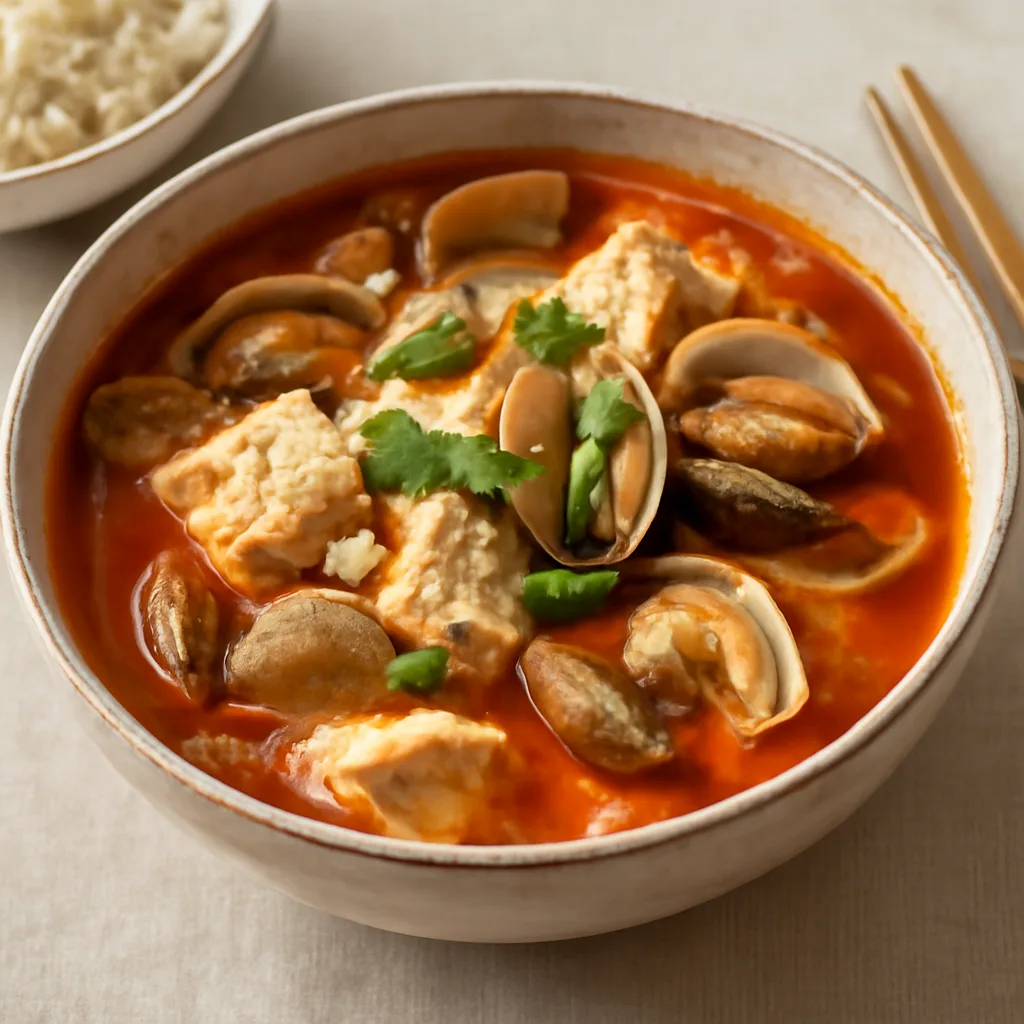
Silky soft tofu that is very high in moisture, characterized by easily breaking apart when scooped with a spoon. Rather than holding its shape like firm tofu, it acts as an ingredient that soaks up broth and seasonings, making it especially suitable for moist dishes like stews, soups, and hot pots. The flavor is mild with a gentle bean aroma, and it smoothly absorbs seasonings such as gochujang, gochugaru, doenjang, and soy sauce. For dishes where the tofu’s texture is the star, it’s better not to stir for long; it doesn’t suit frying or grilling that require a crunchy surface or firm cubes.
Taste and Texture
Soft tofu presents a nutty, non-irritating bean aroma with an extremely smooth texture. In the mouth it nearly melts like cream, but depending on the product you may feel small, bouncy curds. It pairs well with salty and spicy broths, the savoriness of seafood, and the creaminess of eggs. Conversely, adding too much strong acidity from the start can cause the texture to break more easily, so it’s better to adjust sour elements toward the end and taste as you go.
Main uses
- Add to gochujang oil or seasoned paste to soften the spiciness and saltiness of broth in 순두부찌개 (soft tofu stew). When using clams, pork, kimchi, or mushrooms together, each contributes its own umami to complement the tofu’s mildness.
- In clear soups or hot pots, scoop it in with a large spoon to use as soft chunks. If the broth is boiling vigorously, stirring for too long will break it down, so add it at the final stage if you want to keep its shape.
- It can be simmered with eggs or heated in a microwave to make a soft one-bowl dish. In this case, season the broth or sauce first rather than the tofu itself for even seasoning across the dish.
- Chilled, it can be served with seasoned soy sauce, sesame oil, seaweed flakes, and chopped green onion as a simple side dish. However, moisture-rich products can make the seasoning look runny, so it helps to pour off the liquid after placing it in a bowl.
Preparation tips
- Before opening the package, tilt the container slightly to check if contents stick to one side, and use a spoon rather than a knife to remove it to minimize breaking. If some of it has already loosened, it’s not a big issue when used in stews or soups.
- When adding to stew, first adjust the broth and seasoning to taste, then add the 순두부. After adding, instead of vigorous stirring, gently swirl the pot or ladle broth over the tofu to distribute the seasoning and preserve texture.
- If using seafood or meat with any fishy aroma, it’s stable to sauté or boil that ingredient first to refine the aroma before adding 순두부; cooking it together from the start can cause the tofu to break too much as the flavors disperse.
- When serving as a cold side dish, avoid pressing hard to remove moisture; pressing can break the smooth texture and cause it to crumble easily.
Cooking characteristics
- When heated, 순두부 becomes warm and soaks up the broth flavor, but it does not firm up like firm tofu or get grilled to brown. The edges should bubble, and the center gets hot, which is sufficient, so there’s little reason to cook for a long time afterward.
- If you keep stirring in a vigorously boiling broth, the tofu may break into small grains. If you want a soft, dispersed texture, that’s fine, but for larger soft clumps, reduce the boil and limit handling.
- When added to seasoned oil with chili pepper powder, the spice and oily richness become rounder. However, if there’s too much oil, the delicate bean aroma of the tofu may be overwhelmed, so for a milder flavor a clear broth is more suitable.
- In acidic or heavily salted broths, the surface may appear more broken. This isn’t a definite failure, but to maintain a smooth lump, add kimchi broth or vinegars in small amounts and adjust at the end.
Good combinations
- Clear, savory ingredients like clam, shrimp, or shellfish stock enhance the tofu’s mildness, while pork or minced beef adds deeper stew flavor.
- Zucchini, mushrooms, onions, and green onions pair with its soft texture, and Cheongyang peppers add a bright spicy note to the broth.
- If you top with an egg at the end, the softness complements the tofu. If you want a contrasting bite, pair with a small amount of nori flakes, toasted sesame, crispy roasted seaweed, or nuts.
- When using strong pastes like doenjang or gochujang, focus on one to preserve the soy aroma; using both heavily can make the broth feel heavy and dull.
Points to consider when substituting
- If soft, creamy texture is essential but you don’t have 순두부, silken tofu is the closest option. However, moisture and curdling vary by product, so start with a slightly reduced amount of broth or water to compensate.
- Regular firm tofu can be used in soups or hot pots where shape is needed, but it’s difficult to replicate the 순두부’s smooth, bouncy texture. When using firmer tofu, cut into large pieces and cook for a shorter time.
- Soft egg custard or eggs stirred into a broth can partly compensate for texture, but cannot replace the bean flavor and the mildness of the tofu. Therefore, when substituting in a 순두부-based stew, also readjust the seasoning and broth concentration.
Ingredients commonly used together in actual dishes
Aggregated based on the co-occurrence count of representative ingredients in public dishes registered in CookPagoda.
Dishes that use this ingredient
Shows dishes where this ingredient is a representative ingredient, sorted by view count.