Ingredient Encyclopedia
Check the characteristics of the ingredients and how to use them in cooking.
소면
1
2
Somen are ultra-thin wheat noodles that cook quickly and are good served cold or warm. After boiling, they are commonly served with clear broth or dipping sauce, and can also be used as noodle strands in soup dishes. Because the noodles are thin, they can become overcooked easily if cooked a bit longer than intended, so it's practical to remove them when they’re slightly firmer than the desired texture. In dishes like cold mixed noodles, thoroughly rinse in cold water to wash away surface starch so the noodles don’t stick together and the sauce coats more evenly. Somen are well-suited for quick, light meals, but they may not be ideal for long-simmered hot pots or dishes with thick sauces. For those, cook the noodles separately and add at the end, or choose thicker, more elastic noodles.
Taste and Texture
Somen itself has a mild flavor with a subtle wheat fragrance, which pairs well with clearly flavored accompaniments such as broth, soy sauce-based seasonings, or gochujang-based sauces. Rather than emphasizing strong aromas from spices or oil, it gracefully carries the flavors of ingredients used with it. When well cooked, somen are slender, smooth, and have a light, pleasantly chewy texture. If overcooked, they lose their elasticity and can break easily; insufficient rinsing can leave surface starch that feels slimy and clumpy.
Main uses
- Chilled, rinsed somen words with a soy-based broth or cool stock make for simple noodle dishes. Add garnishes like cucumber, nori, egg, and green onion to highlight the clean noodle flavor.
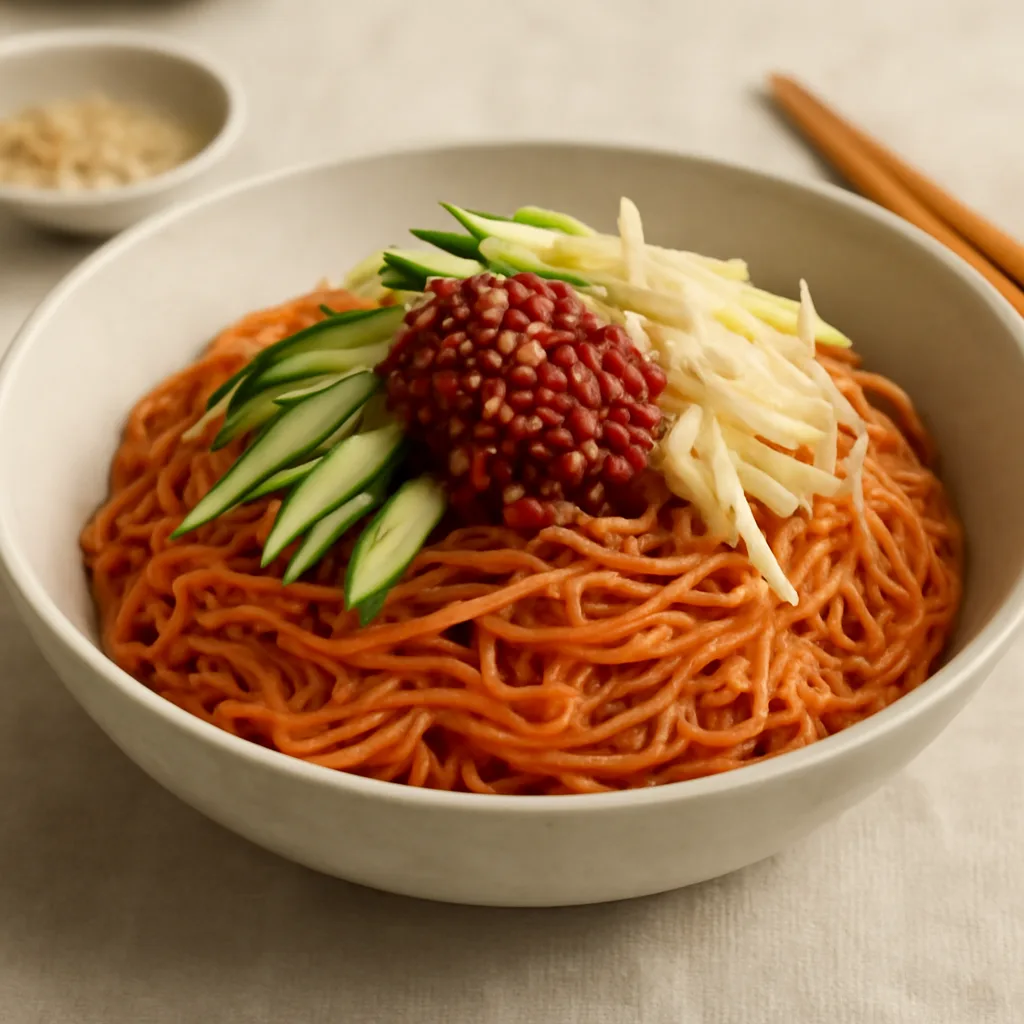
- Toss with a gochujang-based, chili powder, vinegar, and sweetened sauce to make bibim-guksu. If the sauce is too thick, loosen it with a little water or stock so the thin noodles don’t clump.
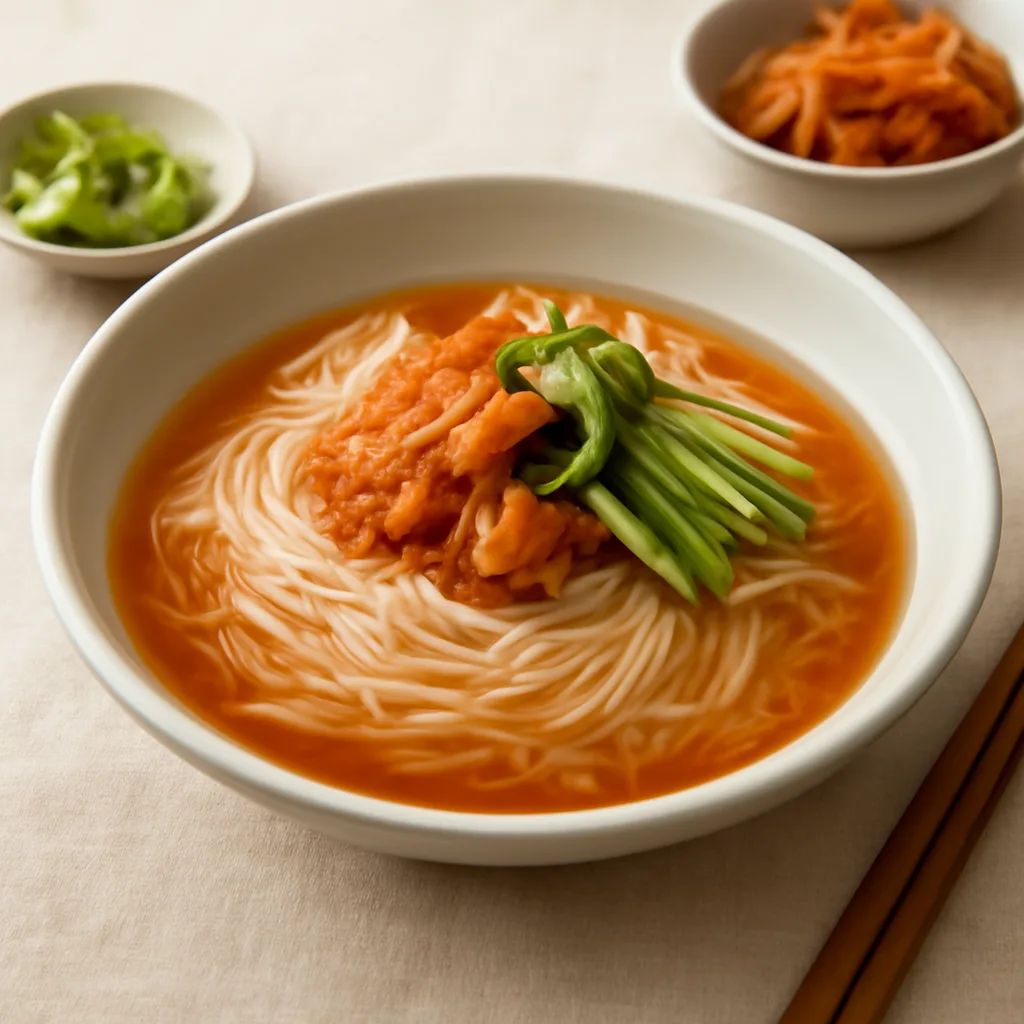
- Add to clear broth based on dried young anchovies and kelp, or soy-seasoned broth for warm guksu. In this case, if you leave the noodles in the broth too long, they will continuously absorb moisture, so it’s advantageous to combine just before eating.
- Noodles can also be used as a noodle in soups or stews, but the very thin noodles can disintegrate in long simmering dishes. When used as a noodle in a dish, boil separately, rinse, place in a bowl, and top with hot broth to finish.
- If preparing boiled somen in advance, keep them loosely separated with a small amount of water or stock to prevent sticking. However, do not keep them for too long, as the noodles’ elasticity will decline; best to boil just before serving.
Preparation tips
- Boil plenty of water and spread the noodles in, then initially use chopsticks to gently separate them to reduce sticking. If the water returns to a boil very slowly, the amount of water may be insufficient, so use a larger pot next time.
- Cook according to the package directions but test one strand near the end and remove when the center is just slightly firm. If planning to mix with sauce, keep noodles a bit firmer since they will soften during mixing.
- For cold dishes, rinse the boiled noodles under cold running water several times and drain well. If the rinsing water is cloudy or the noodles feel slimy, they may still have surface starch, so rinse once or twice more.
- Undercooked and stiff noodles can make sauces or broths thicken quickly. Strain and drain briefly, then optionally toss lightly and mix with sauce.
- If preparing boiled somen in advance, consider loosening with a small amount of water or stock so they don’t stick together. However, don’t hold too long, as the noodles’ elasticity drops; best to boil just before serving.
Cooking characteristics
- Somen absorb heat and moisture quickly due to their thinness, so cooking times are short. When the noodles noticeably thicken and become soft, that is a signal they’re near done; taste and pull them out at that point.
- Cold-water rinsing reduces surface starch, making the strands feel firmer and more elastic. In contrast, for warm noodles, rinse lightly or skip rinsing to preserve how well they integrate with the broth.
- Even after being added to hot broth, somen continue to soften. If you simmer the noodles in the finished broth for too long, the broth may become cloudy and the noodles can break easily, so season the broth separately and add the noodles just before serving.
- Grease-heavy stir-frying is not ideal for somen. The noodles are very thin and can clump or break in a pan, so if you must stir-fry, cook briefly and finish with a quick toss of sauce on high heat.
Good combinations
- With clear broths, pair somen with soft ingredients like nori, green onion, egg, or zucchini to complement its light texture.
- For bibim-style sauces, pair with crisp or tart additions like cucumber, kimchi, or lettuce. If kimchi brings strong moisture and salinity, reduce salt and liquid in the sauce first and adjust to taste.
- Sesame oil, sesame seeds, and set powders add a toasty aroma to somen’s mild flavor, but too much oil can prevent the sauce from coating the thin noodles evenly.
- When using spicy sauces, add moisture-rich ingredients such as vinegar, broth, or cucumber to balance a sharp bite.
Points to consider when substituting
- If somen isn’t available, thin wheat noodles or angel-hair pasta can be used in a similar direction, but texture and absorption rate will differ. Angel-hair may retain a distinctly Italian dried-noodle feel, so don’t expect the exact texture of Korean clear noodles; adjust the broth seasoning gradually.
- For bibim noodles, you can use medium-thick noodles with some buckwheat, but thicker noodles require more sauce and have a different chew. If you want a crisp and chewy noodle feel rather than a crunchy garnish, medium-thick may be more suitable.
- For dishes that need to sit in warm broth for longer, use thicker noodles like medium, udon, or kkakdugi noodles instead of somen. Conversely, for light, quick cold noodles, thick noodles won’t provide as fresh a feel as somen.
Ingredients commonly used together in actual dishes
Aggregated based on the co-occurrence count of representative ingredients in public dishes registered in CookPagoda.
Dishes that use this ingredient
Shows dishes where this ingredient is a representative ingredient, sorted by view count.