Ingredient Encyclopedia
Check the characteristics of the ingredients and how to use them in cooking.
Platycodon grandiflorus (balloon flower)
1
1
Doraeji (burdock) is the root plant of the bellflower, widely used in Korean dishes as a vegetable side, salad, stir-fry, and in soups. Prepared doraeji is used in long, slender strips or torn pieces, and the cooking result varies greatly depending on how much of its distinctive bitter flavor you want to retain or reduce. Usually, it is rubbed with salt to wash away bitterness, or soaked in water to adjust bitterness, then seasoned. It is good to brighten flavors with a seasoned burdock salad like gochujang or gochugaru, and also suitable for clear soups or simple side dishes to leave the root’s unique aroma with a light seasoning. If the dish is meant to showcase bitterness, avoid over-steeping for too long.
Taste and Texture
Doraeji features a gentle earthy aroma and a root-vegetable scent, finishing with a subtle, bitter bite. Rubbing with salt or soaking in water mellows the sharp bitterness, but the aroma does not disappear completely. Raw, it is firm with Fibrous texture; lightly blanching or sautéing makes it much softer while retaining some chewy texture. Overcooking can break the grain and make the texture mushy.
Main uses
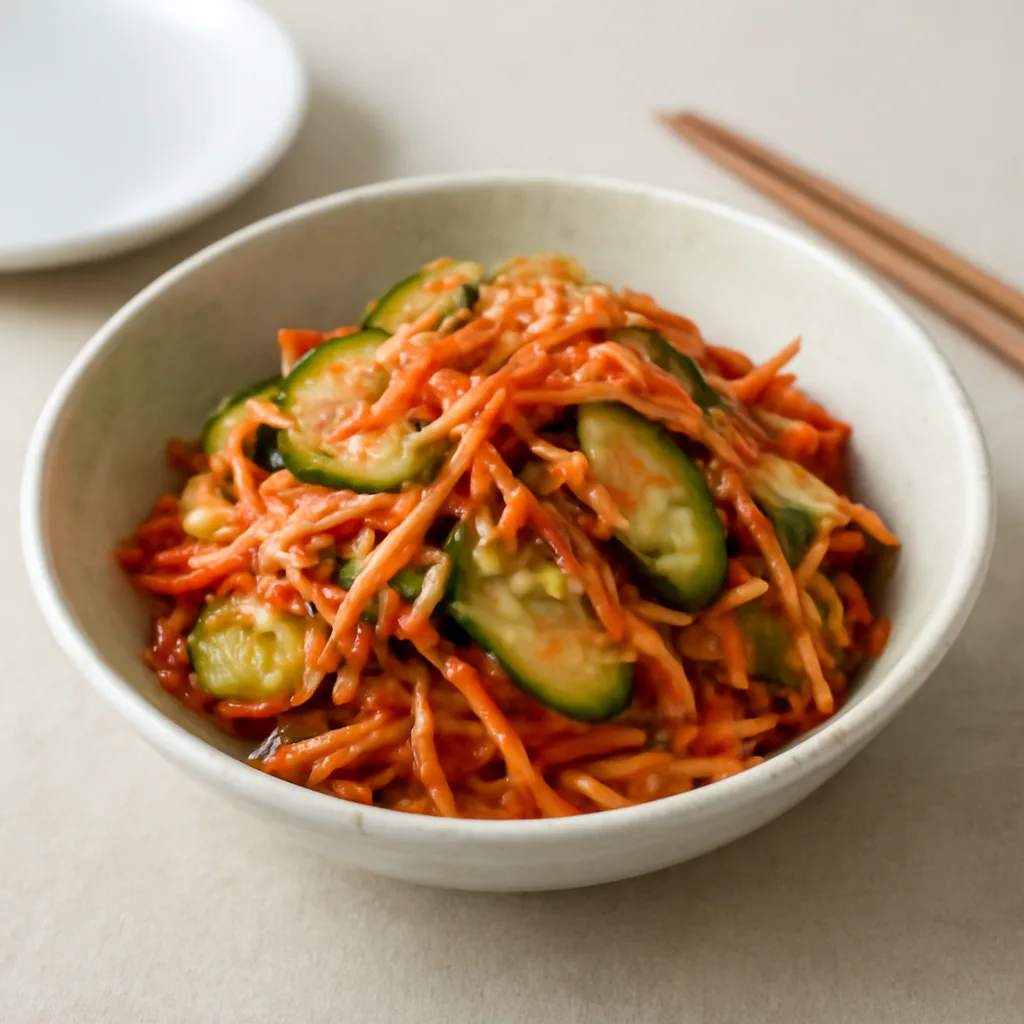
- Thinly sliced doraeji is often served as a bright, spicy-sour side with chili powder, gochugaru, vinegar, and sesame oil.
- After salting to adjust bitterness, stir-frying into a mild seasoned side dish to highlight its earthy root flavor and chew.
- Added to bibimbap or various namul side dishes to create contrast in color and texture.
- When added to clear soups or broths, keep the seasoning light so as not to mask other ingredients’ flavors, and add it at the end to prevent it from becoming too mushy.
Preparation tips
- If the skin remains or the doraeji is thick, tear along the grain or thinly slice to ensure even absorption of seasoning and ease of eating.
- When slicing into strips, sprinkle with salt and let rest briefly to draw out moisture, then rinse in cold water several times. This helps reduce bitterness, but vigorous or long rubbing can soften aroma and crisp bite.
- To further reduce bitterness, you can soak prepared doraeji in water and taste before using. If bitterness has already softened, avoid soaking longer and squeeze out excess moisture so the seasoning does not become too watery.
- For namul, be sure to squeeze out moisture after rinsing; for stir-frying, blanch briefly if needed and remove moisture. Excess surface moisture makes seasoning runny and can push the texture toward steaming rather than frying.
Cooking characteristics
- Doraeji is best kept with its grain by cooking over medium heat for a short time rather than long frying at high heat. When moisture starts to release in the pan, finishing with seasoning rather than continuing to cook helps maintain texture.
- Blanching softens the texture and mellow the bitterness. If boiled too long, the color dulls and it can break easily, diminishing the chewy characteristic in namul or stir-fry.
- Searing with a thick sauce like gochujang helps it cling to the surface, but using too much sauce from the start can mask the root flavor and bitterness. It is reliable to mix a little at first and adjust to taste later.
- Frying with oil rounds the aroma and tempers the bitterness, but too much oil makes it heavy rather than a fresh-nutty side.
Good combinations
- Garlic, green onion, sesame oil, and sesame seeds enhance the root-tinged aroma without overpowering it and provide a nutty finish.
- A combination of gochugaru, gochujang, and vinegar contrasts bitterness with a sour-spicy profile that goes well with namul.
- When cooked with umami-rich ingredients like beef or mushrooms in a broth, the bitterness of doraeji can be softened.
- Cucumber or pear, which have moisture and sweetness, balance in fresh or lightly dressed preparations, but with time the dish releases water and seasoning may become watery, so mix it just before serving.
Points to consider when substituting
- There aren’t many ingredients that can completely replace the distinctive bitterness and grain of doraeji root, so substitutions should be chosen based on the cook's purpose.
- If the goal is crisp texture in namul or bibimbap, you can use deodeok (cheonbaek radish), burdock, or shredded carrot; deodeok has a stronger aroma, burdock is fibrous and sweet, so even with the same seasoning the flavor changes.
- In broth-based dishes where a mild root presence is needed, you can consider mu or burdock, but the unique bitter finish of doraeji will not be reproduced.
- If bitterness is a concern and you want to replace doraeji, adjusting salting and rinsing time is likely more suitable to preserve the dish's original character.
Ingredients commonly used together in actual dishes
Aggregated based on the co-occurrence count of representative ingredients in public dishes registered in CookPagoda.
Dishes that use this ingredient
Shows dishes where this ingredient is a representative ingredient, sorted by view count.