View recipes
Check the reference data for the selected food.
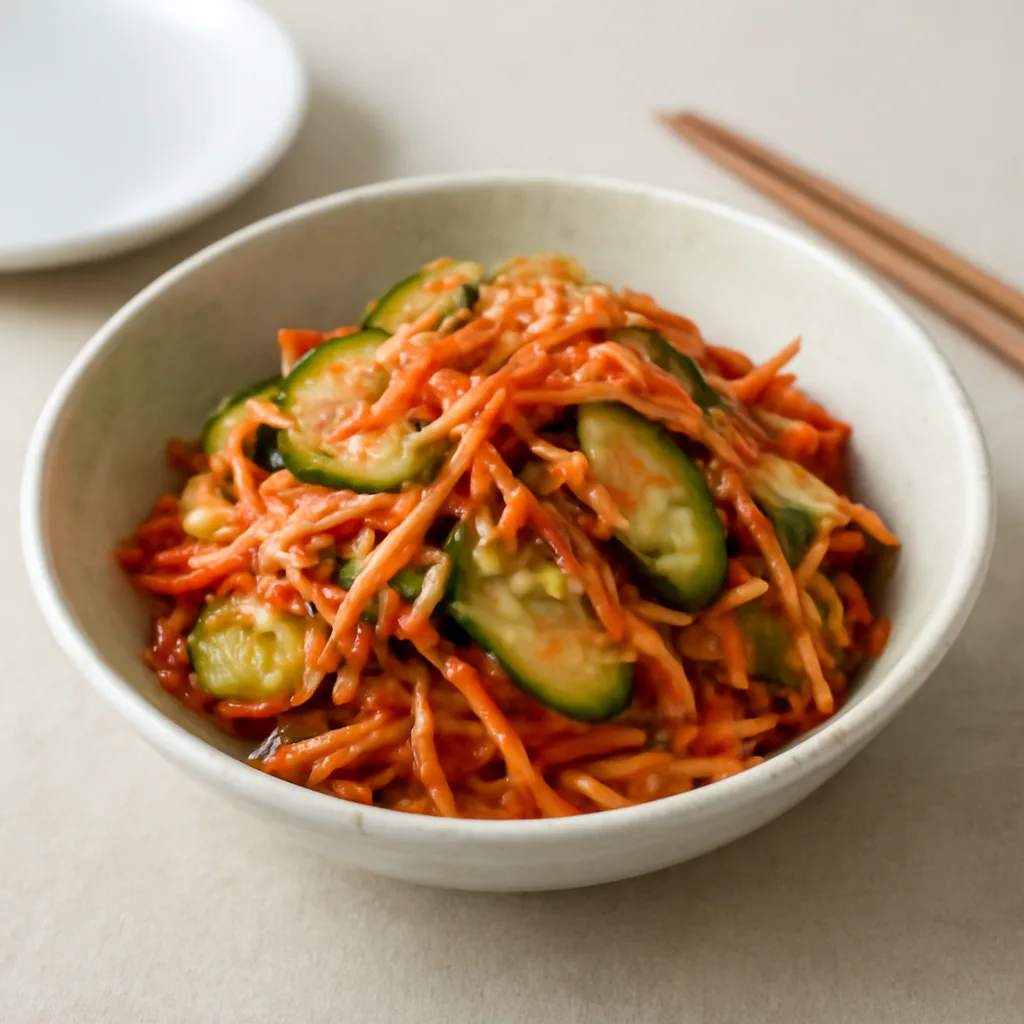
Doraji Cucumber Namul
A bright namul using bellflower root and cucumber, where the spiciness of gochujang and the nuttiness of sesame oil complement each other to enhance the flavor. This side dish is quick to make and pairs well with rice, especially refreshing in the summertime.
Main Ingredients
Related Themes
6
View0
Like1
AI recommendations0
CreatedAbout this recipe
Dora-ji cucumber namul is a simple side dish that ties together the sharp aroma of prepared doraji (balloon flower root) with the clear, refreshing moisture of cucumber using gochujang and sesame oil. Not using heat keeps the ingredients’ lively texture, making it good to accompany rice. If you use about 1 cup each of doraji and cucumber as in the provided 구성, it’s easy to adjust so the gochujang flavor doesn’t overwhelm the ingredients. Doraji should be sliced as thin and long as possible so the seasoning sticks evenly, and cucumbers should be cut thin but not so thin that they become limp. When moisture starts to come out of the cucumber, the namul may become watery, so mixing just before serving suits it well. The concentration and salinity of gochujang vary by product, so it’s safer to mix with the amount shown first and then taste rather than adding more upfront. If you increase the sesame oil, the nutty aroma becomes stronger, but the doraji and cucumber’s refreshing feel may become a bit heavy.
Taste and Texture
Crispy cucumber contrasts with the textured doraji, and the gochujang’s spicy-sweet flavor lingers with a nutty sesame aroma. The doraji’s distinctive bitter note adds a clear impression to the overall flavor rather than being masked by the seasoning. If mixed right away, the cucumber’s lively texture shines and the seasoning adheres relatively cleanly. If left to sit too long and a lot of water forms, the flavor becomes pale and the texture feels lax.
Key to making it delicious
- Slice doraji as thin and even as possible after peeling, so the fibrous parts do not stand out and the gochujang sticks evenly.
- Remove both ends of the cucumber and slice thinly while keeping a thickness that preserves shape so it doesn’t break apart easily when tossed.
- Add gochujang and sesame oil using the measured amounts first, and judge additional seasoning only after a thin, even coating of the red seasoning on the surface of the ingredients.
- When tossing, mix gently from bottom to top rather than kneading hard, so the cucumber’s structure stays intact and moisture doesn’t release excessively.
- Right before finishing, mix quickly to minimize water release from the cucumber, especially for a dry namul.
Common mistakes
- If cucumber is seasoned too early, water may pool in the bottom of the dish and the flavor becomes watery, so mix right before serving after preparation of ingredients.
- If you add too much gochujang from the start, the doraji aroma and cucumber brightness can be overwhelmed, so start with 1 tablespoon and adjust in small amounts as needed.
- Over-kneading the ingredients can make the cucumber soften and the doraji pieces clump, so mix in a wide bowl for a short time.
- Adding sesame oil too much can make the surface oily and prevent the gochujang from sticking to the ingredients, making it feel heavy; add a little more only if needed for aroma.
Application Ideas
- If you want to lower the spiciness slightly, set aside some gochujang and keep the sesame oil amount the same to let the natural flavors of doraji and cucumber stand out more.
- If you prefer the doraji’s bitter notes, slice the doraji thinner than the cucumber so its texture is felt with each bite.
- When you want a stronger seasoning flavor, you can add a small amount of extra gochujang, but don’t add a lot at once if there’s a lot of cucumber to avoid saltiness or heaviness.
- If sesame oil aroma feels heavy, reduce the amount; in this case the gochujang’s taste will come through more directly.
Pairing ideas
- Serve with warm rice to boost the spicy flavor of gochujang and doraji’s bitterness.
- Pair with fried or greasy main dishes to provide a refreshing contrast of cucumber texture on the table.
- Chill on a cold plate and serve immediately to highlight the cucumber’s cool feel, but if it’s been sitting and water forms, give it a light toss once before serving.
Essential ingredients
Doraji
Cucumber
Gochujang
Sesame oil
Optional ingredients
No separate optional ingredients.
Cooking order
Rinse the bellflower root, peel the skin, and thinly slice it.
Rinse the cucumber, trim the ends, and thinly slice.
Place the sliced bellflower root and cucumber in a large bowl.
Add 1 tablespoon gochujang and 1 tablespoon sesame oil and mix well.
Gently toss so the ingredients are evenly mixed.
Taste and adjust with more gochujang or sesame oil if needed.
Transfer the finished namul to a plate.