Ver recetas
Verifica los datos de referencia de la comida seleccionada.
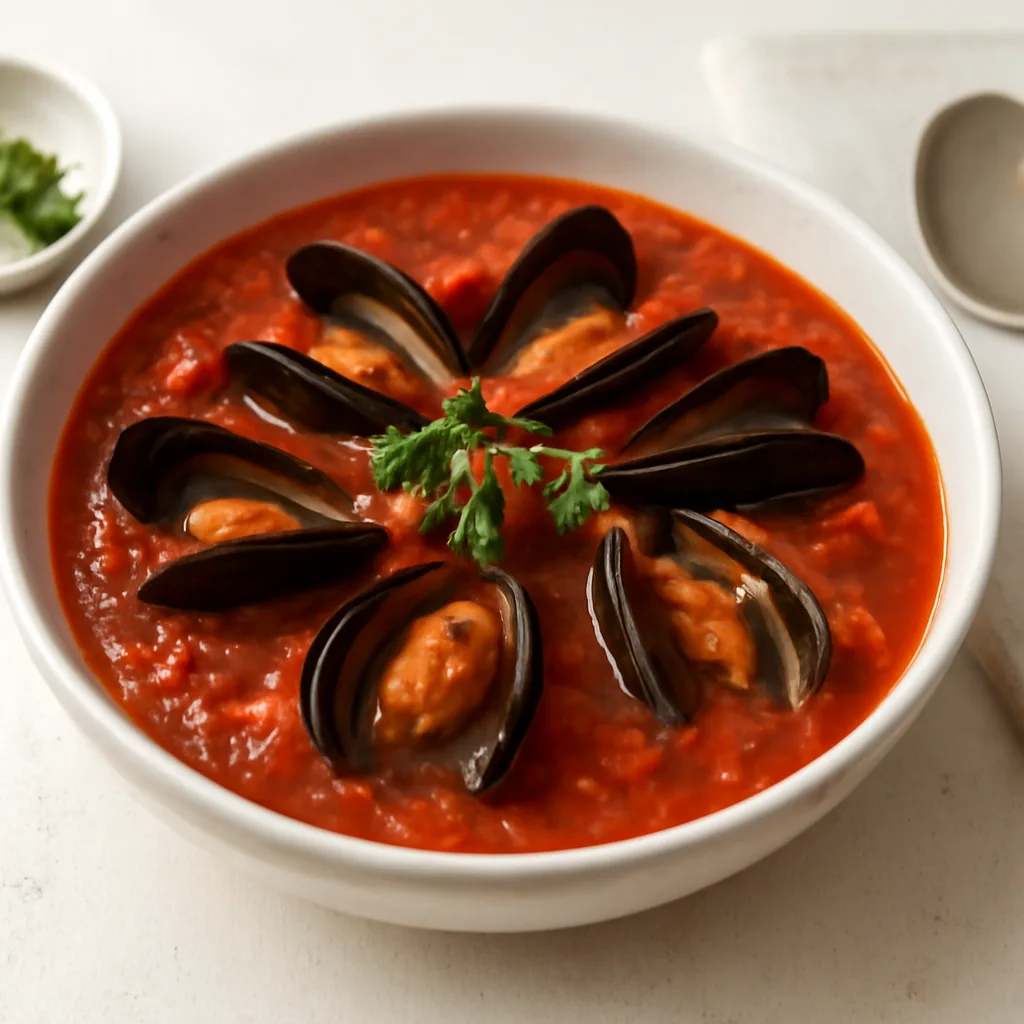
Mussels Tomatee Stew
Un estofado mediterráneo hecho con mejillones, tomates frescos, cebolla y apio. Se caracteriza por su sabor cálido y rico, ideal para disfrutar con pan.
Ingrediente principal
Tema relacionado
5
Consulta0
Me gusta2
Recomendación de IA0
HechoSobre esta comida
Honghap tomato stew is a warm broth dish that supports the sea aroma from mussels with the fresh acidity of tomatoes and the sweetness of onions. Celery adds fragrance to keep the tomato-centered flavor from feeling monotonous and to balance it. The key to perfection is the mussel condition and the thickness of the broth. Mussels tend to become firm if overcooked, so it is better to first build a flavorful base with tomato, onion, and celery, and heat the mussels only as needed. If the broth is thin, it goes well with bread, but if you simmer the tomatoes for too long and they become overly thick, the delicate mussel flavor can be buried. The cooking time is about 30 minutes, but actual prep time may vary depending on prep state; it is an intermediate-difficulty dish. It can be made in a not-so-wide pot, but if the ingredients overlap too much, the tomatoes will not cook evenly, so choose a pot that matches the amount of ingredients.
Sabor y textura
Soft acidity of well-cooked tomatoes and the subtle sweetness of onions are followed by the mussels’ distinctive savory umami. The clear, fragrant flavor of celery adds light depth to the broth. The broth may thicken as the tomato flesh breaks down, and the mussel flesh should be moist with a chewy texture as ideal. If you reduce the tomatoes too much, the flavor becomes concentrated and the acidity stands out, and the texture may feel heavy.
Claves para hacerla deliciosa
- Do not use mussels whose shells are cracked or that don’t close when touched even if open; if the state is uncertain, remove them before other ingredients to prevent clouding the broth flavor.
- If onions and celery are cooked until very soft before adding tomatoes, their sweetness and aroma will naturally melt into the broth and any astringency will decrease; if colors darken quickly, lower the heat to prevent a burnt taste.
- Tomatoes should be soft and the flesh dissolved in the broth to judge the thickness; if there is a lot of moisture and the broth is thin, simmer a bit longer; if the consistency is already thick but you need to add mussels, avoid over-simmering.
- Prepare by stopping the cooking of mussels when the flesh becomes plump and the shells start to open; if the broth boils vigorously for a long time, the mussel meat may contract and become tough.
- Since the tomato acidity varies with the ripeness of the ingredients, just before finishing taste the broth; if the taste is too sour, rather than simmering more, check whether the onions are fully cooked and balance the overall seasoning first.
Errores comunes
- If the broth has a fishy or muddy smell, it may be because the mussels weren’t cleaned well or poor-quality mussels were mixed; scrub the shells before cooking and exclude any doubtful mussels.
- If the onions and celery retain a greenish, raw taste, you may have added tomatoes and mussels too early; next time wait until the aromatics are transparent and soft before adding tomatoes.
- If the mussel meat is small and tough, overcooking is often the cause; start by checking the doneness from mussels with opened shells, and if needed turn off the heat or remove them first.
- If the broth is too sour and heavy, you may have simmered the tomatoes on high heat for too long; next time after the tomatoes are broken down, keep a gentle simmer and don’t reduce further once the thickness is right.
- If the broth tastes flat while the tomato flavor stands out, the onion and celery base may not be fully cooked; give aromatics sufficient time to cook slowly at the start.
Ideas de aplicación
- Leaving the tomatoes in larger chunks will emphasize the chewy contrast with the mussel meat, making it lighter and good for topping with bread.
- You can simmer the tomatoes longer to make the broth smooth and rich, but this should be done after adjusting thickness before adding mussels to avoid overcooking them.
- If the celery aroma is too strong, finely chop it and cook with the onions to keep the aroma while reducing the rustic texture of the stalk.
- If you want to highlight the sea aroma of the mussels, avoid over-thickening the tomato broth; conversely, thicken slightly when you want to dip with bread.
Ideas para acompañar
- Pair with warm bread to enjoy the broth fully, ensuring the broth isn’t too thin so it soaks into the bread.
- Serve in a deep bowl with opened mussels visible to enhance the seafood stew impression; remove any unopened mussels before eating.
- When serving as a light meal, keep generous broth with bread; when paired with another dish, you can simmer the tomatoes a bit more to make the sauce thicker.