Ver recetas
Verifica los datos de referencia de la comida seleccionada.
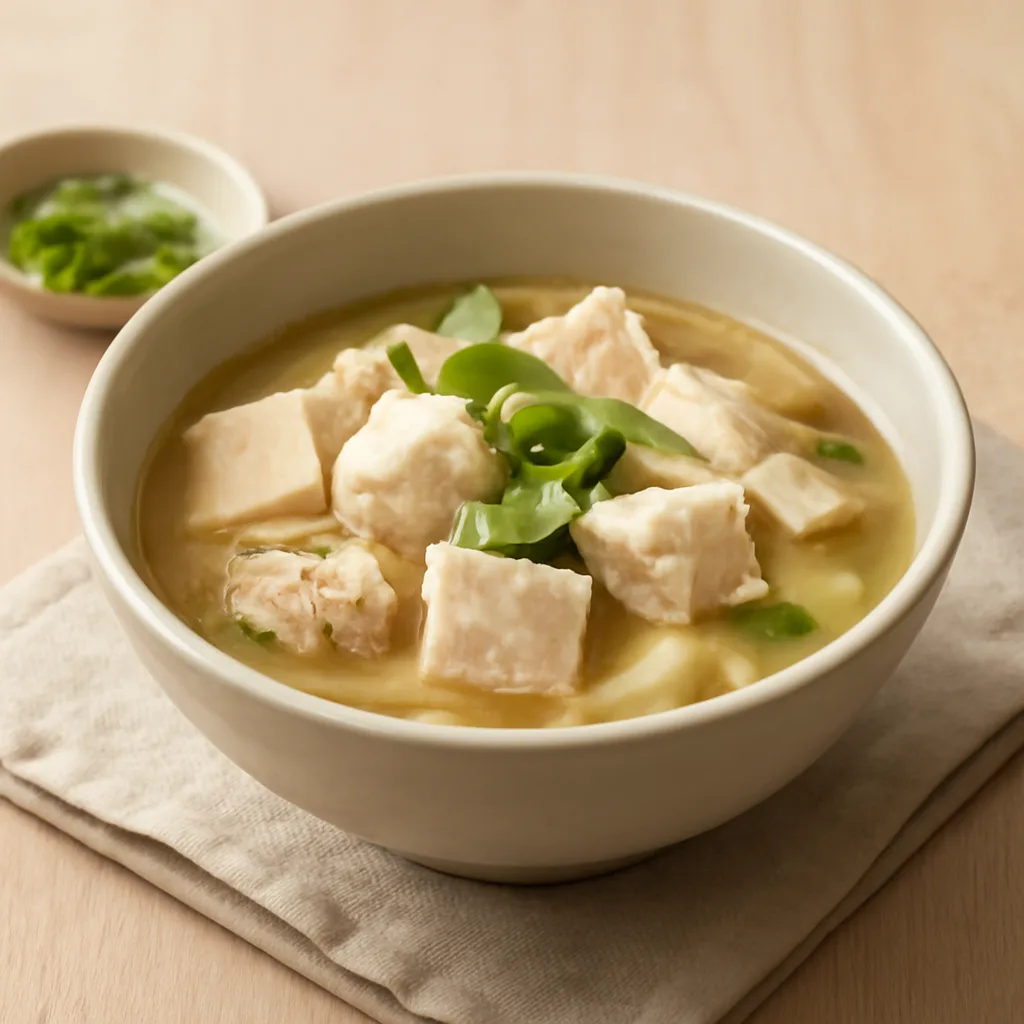
대구두부국
Es un caldo ligero hecho con abadejo, tofu y nabo, con un sabor claro y refrescante. La carne del abadejo no se deshace y el tofu se integra suavemente, aportando un sabor profundo. El cress-brásago añade aroma.
5
Consulta0
Me gusta1
Recomendación de IA0
HechoSobre esta comida
Daegu-tofu-guk is a clear broth dish where you first boil the radish to create a clear, refreshing base, then add large pieces of cod and soft tofu. Because the ingredients and seasonings are simple, the doneness of the radish and the heat control after the fish is added mainly determine the soup's impression. When the radish around the edges becomes semi-transparent, sweetness and moisture naturally seep into the broth. At this point, add the cod to cook, and add the tofu after the fish is almost cooked so that each maintains its shape fairly well. Ssukgat (baby shungiku) is added at the end without strong fragrance. Since boiling for a long time can cause the leaves to wilt easily and the aroma to fade, it pairs well to heat briefly just before turning off the heat. Conversely, if you don’t prefer the scent of ssukgat, you can reduce or omit it, and the clear cod and radish broth remains the focal point.
Sabor y textura
The broth feels refreshing with the subtle sweetness from the radish and the mild flavor of cod. Season with salt and pepper only, and it’s best to finish so that the flavor of the ingredients remains distinct when you take a spoonful rather than making it overly salty. Well-cooked cod flakes softly, tofu breaks smoothly, and the radish remains translucent with a slight bite. Ssukgat is added at the end to impart a short, fresh aroma.
Claves para hacerla deliciosa
- Slice the radish into 0.5 cm half-moon pieces and start boiling in water, but add the cod before the radish is fully tender in the center so the radish also cooks properly while the fish cooks.
- Cut the cod into large pieces after removing bones, and avoid vigorous boiling that can cause the flesh to loosen; simmer on medium heat to keep the meat intact.
- After adding the cod, gently swirl the pot rather than stirring vigorously with a ladle, so the ingredients stay submerged; add the next ingredient when the flesh becomes opaque and starts to separate.
- If tofu is added too early, the edges can split; add it after the cod is almost cooked and simmer for about 5 minutes just to heat through.
- Seasoning is best adjusted by tasting salt for ssukgat just before adding it, then adding a small amount of pepper; excessive pepper can mask the delicate flavors of cod and ssukgat.
Errores comunes
- If the broth becomes cloudy and cod meat fragments, it’s likely you boiled too vigorously or stirred too often after adding the fish; next time reduce heat to medium and don’t stir with a ladle.
- If the radish remains hard while the cod is already cooked, you likely didn’t boil the radish sufficiently first; wait until the radish edges become transparent before adding the cod.
- If tofu pieces break easily, you added it too early or bumped it during stirring; add the tofu later and handle minimally with a wide spatula or spoon.
- If ssukgat wilts and loses aroma, the cooking time was too long; boil for about 1 minute or add right after turning off the heat to retain aroma in residual heat.
- If the broth tastes heavy due to too much salt at once, consider the amount of water and the flavors from cod and radish; adjust seasoning gradually after simmering.
Ideas de aplicación
- If ssukgat aroma feels strong, reduce to less than the standard 50 g and adjust to highlight the broth’s natural savoriness.
- To make radish softer, cook the radish one step longer before adding cod; be careful not to overcook, or it will disintegrate and lessen the clarity of the broth.
- If you want larger tofu pieces, they will hold shape better in the broth; smaller pieces are easier to eat in a single bite with cod but can break apart more easily.
- If you enjoy pepper aroma, you can add a very small amount to the bowls, but adding too much during cooking can obscure the delicate aromas of cod and ssukgat.
Ideas para acompañar
- When serving, ladle carefully to keep cod and tofu intact with the radish on the side so the ingredient composition is clearly presented.
- Place ssukgat leaves and stems on the surface at the end to finish with a fragrant touch.
- Pair with warm rice for a balanced meal; pepper can be added at the table according to taste.
- If cod meat breaks easily, portion it into individual bowls first, then pour the broth over.
Ingredientes esenciales
대구
두부
무
쑥갓
소금
후추
물
Ingredientes opcionales
No hay ingredientes opcionales.
Orden de cocción
La abadejo se deshuesa y se pica en trozos grandes.
Corta la nabo en rodajas de 0.5 cm y el cress-brásago en piezas de 5 cm.
Vierte agua en la olla y añade la nabo, hiérvelo a fuego medio.
Cuando la nabo esté transparente, añade la abadejo y hierve. Ten cuidado para que la carne no se deshaga.
Cuando la abadejo esté cocida, añade el tofu y hierve unos 5 minutos más.
Por último, añade el cress-brásago y ajusta la sal y la pimienta, hierve 1 minuto más.
Apaga el fuego cuando el caldo tenga buen sabor y sírvelo en tazones.