Voir les plats
Vérifiez les données de référence des aliments sélectionnés.
À propos de ce plat
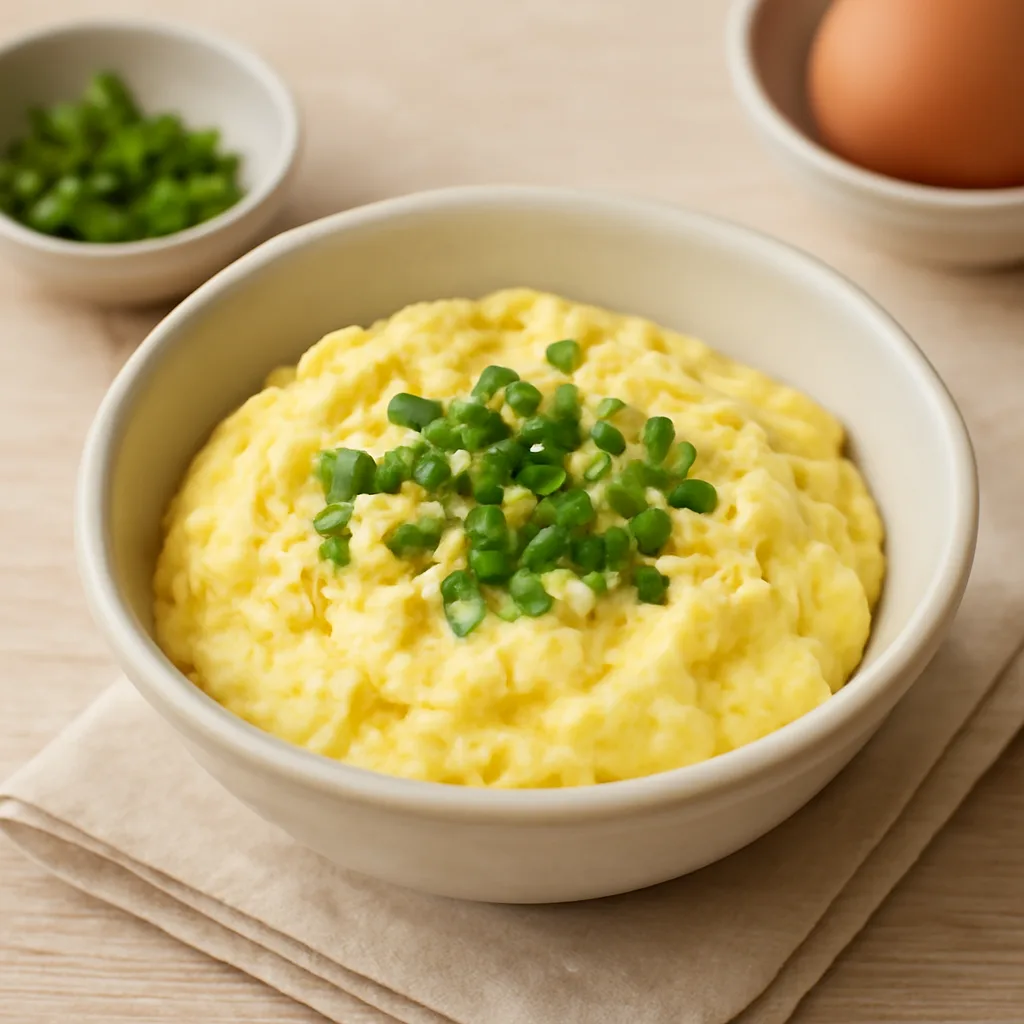
Egg custard is a mellow steamed dish where eggs are mixed with water, salt, and pepper and cooked in a steamer. This recipe includes a straining step to remove connective tissue and undercooked whites, so when finished the texture is not coarse but has a finer cross-section. The key to a soft texture is stable medium heat rather than strong heat, along with appropriate moisture. When the steamer water is boiling vigorously, place the bowl and cook so heat is distributed more evenly. If cooked too long, the surface can become firm and small bubbles may form inside, so it’s best to check doneness by shaking the center lightly around the 10-minute mark. Serving warm showcases the moisture best, making it suitable as a simple appetizer or accompaniment. The dish has no other ingredients, so the egg’s softness and saltiness are the focus; when pairing with strongly seasoned dishes, it’s fine to slightly reduce the salt for balance.
Goût et texture
When egg custard is cooked well, it spreads smoothly when scooped with a spoon and has a moist, light, slightly fluffy texture in the mouth. It is delicate in flavor because only salt and pepper are used, and the pepper aroma supports the egg flavor without being overpowering. Using strained egg mixture tends to yield a more uniform and fine texture. On the other hand, cooking quickly on high heat can cause it to puff up or form bubbles, resulting in a texture more like a sponge rather than a silky pudding.
Clé pour réussir
- Beat the eggs with salt and pepper until most of the white chunks are dissolved, but don’t whisk so hard that a thick foam forms. If there is too much foam, bubbles may remain on the surface and inside during steaming.
- Mix the eggs with water until evenly colored, then strain through a sieve. Do not press the remaining yolk strands and coagulated whites on the sieve tightly, as pressing helps maintain even texture after steaming.
- Once the steamer water boils, place the bowl in and keep to medium heat. If the steam is too forceful, the egg mixture may boil rapidly and roughen the surface, so lower the heat if the water boils vigorously.
- The intermediate stirring step is to reduce the difference in doneness between the edges and the center. If the edges are already firmed, move gently just once to avoid breaking the solid part too much.
- After 10 minutes, gently shake the bowl to ensure the center isn’t liquidy. If the center is very runny, continue steaming a little longer; if the edges are already set firmly, remove immediately and finish cooking with residual heat.
Erreurs courantes
- Overly vigorous or long whisking can leave a thick foam on the surface, making the final surface uneven. After mixing, let it stand briefly to let large bubbles subside, then strain to reduce this.
- If the steamer heat is too strong, the custard may puff up and then collapse, forming hollow spaces inside. When you see vigorous boiling, adjust to a gentler medium heat for steady steam.
- During mid-stirring, vigorously whisking already-set edges can create chunky pieces rather than a smooth lump. If stirring is needed, do it once, gently, at the bottom and edges.
- If you extend cooking time to avoid doneness issues, moisture will evaporate and the texture may become firm and dry. Remove from heat when the center is slightly jiggly and let it rest a moment with residual heat.
Idées d'application
- If you want to reduce the pepper aroma, you can omit pepper for a simple, delicate base. However, other flavorings or seasonings are not included in the provided recipe, so adjust gradually after the base cooking and seasoning are set to taste.
- For a softer impression, strain and then skim off only the large surface bubbles with a spoon. If you prefer a rustic texture with a bit of bubble, you can skip this step.
- If serving with a salty snack, consider reducing the salt in the egg mixture before adding all of the salt, since the accompanying dish’s saltiness can have a larger impact on overall flavor.
Idées d'accompagnement
- When served in a warm bowl immediately after cooking, the texture is at its moistest and softest. Handle the hot steamer safely with a handle or a dry towel when transferring the bowl.
- When serving as an alcoholic drink accompaniment, pair it with dishes that are salty or spicy to create a soft, delicate contrast. If the accompanying dishes are mild in salt, avoid drastically lowering the salt in the egg custard.
- Dividing into small bowls makes it easy for everyone to portion, but heat may transfer more quickly in smaller servings, so adjust cooking time. If using small containers, check center doneness first about 10 minutes before serving.
Ingrédients essentiels
계란
물
소금
후추
Ingrédients optionnels
Aucun ingrédient optionnel.
Ordre de cuisson
Battez les œufs dans un bol avec le sel et le poivre.
Mélangez avec de l’eau pour obtenir une texture lisse.
Passez au tamis pour obtenir une texture fine.
Portez l’eau à ébullition dans le cuiseur vapeur, puis placez le bol et laissez cuire à feu moyen pendant 10 minutes.
Remuez une fois à mi-cuisson pour une cuisson homogène.
Servez l’omelette d’œufs dans une assiette.