Voir les plats
Vérifiez les données de référence des aliments sélectionnés.
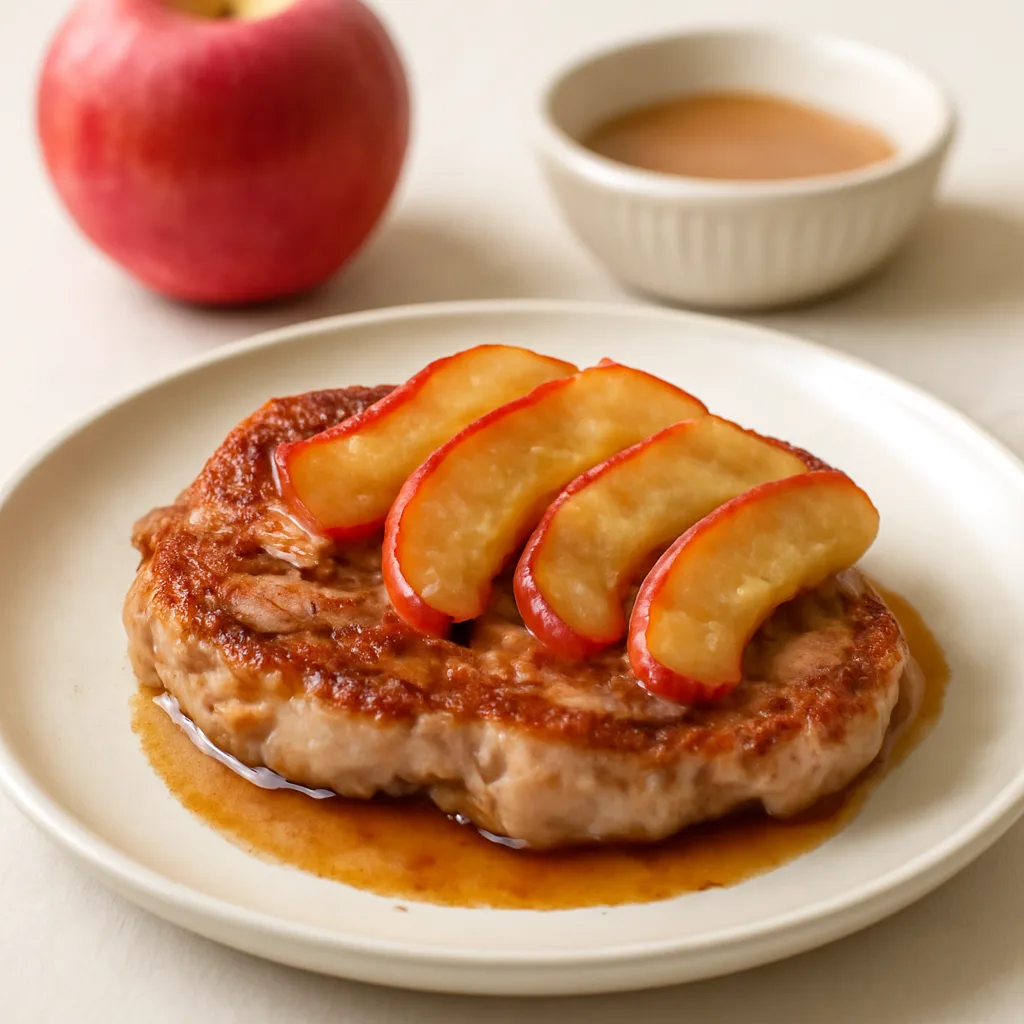
Picanha de porco com maçã
Le steak de porc et pommes est un plat où le filet mignon de porc tendre et les pommes douces se marient. Les oignons et le chou sautés ajoutent une texture croquante et une richesse de saveur. Ce plat convient pour un dîner en famille et offre une douceur subtile des pommes sans être aussi sucré qu’un dessert, pour un goût satisfaisant.
Ingrédient principal
Thèmes associés
5
Consultation0
J'aime1
Recommandation AI0
CrééÀ propos de ce plat
The Apple Pork Steak is a one-pan main dish centered on a lean pork loin, complemented by the sautéed sweetness of onions and cabbage and the bright acidity of apples. Rather than fully cooking the apples from the start, add them briefly at the end to retain their shape and acidity, allowing them to act like a sauce between the meat and vegetables. The loin is lean, so its texture varies greatly with pan temperature and doneness. After preheating the pan on medium heat, sear the exterior evenly and check that the internal temperature at the thickest part reaches at least 63°C for safety. Cooking times vary with meat thickness and pan heat, so it’s better to monitor temperature and the cut surface together rather than relying on time alone. If you cook onions and cabbage in the pan used for the meat, they pick up the existing flavors for deeper taste. If there are many burnt bits or the oil becomes very dark, wipe them away or add a small amount of fresh oil instead of continuing to fry the vegetables to reduce bitterness.
Goût et texture
Well-seared pork loin centers with the aroma of searing and a mild meaty scent, contrasted by softly cooked onions and a slight crunch in cabbage. Apples add gentle sweetness and light acidity, but the combination is not dessert-like sweet. If you sauté the apples for only 1–2 minutes, the edges stay warm and tender while retaining some crispness. Conversely, cooking them too long can cause them to soften and the pan to become moist from the released vegetable moisture, so adding them at the end is best for a crisp texture.
Clé pour réussir
- Wipe the surface moisture off the pork loin before placing it in the pan to reduce initial boiling of moisture and help form a good sear on the exterior.
- When medium heat is reached and the meat is placed in the pan, a gentle sizzle that persists indicates appropriate heat; if too much smoke appears, lower the heat to avoid burning the outside before the inside is cooked.
- If the meat is thick or the surface colors quickly but interior is not yet set, lower the heat slightly and ensure the internal temperature reaches at least 63°C before finishing.
- Sauté the onions until translucent, then add the cabbage to bring out the sweetness of onions and the crunch of cabbage; if the cabbage browns too quickly, reduce heat or shorten the sauté time.
- Slice the apples thinly and add at the end; when the edges are just barely tender and the heat is off, the balance of sweetness, acidity, and shape is best maintained.
- When using thyme or rosemary, use only a small amount as the aroma can be strong; if you want to highlight the fresh apple aroma more clearly, you can also omit the herbs.
Erreurs courantes
- If the surface of the loin looks gray and under-browned, the pan may not have been adequately preheated or the meat released a lot of moisture; in future, pat dry, heat the pan first, and avoid crowding the pan with too much at once.
- If the meat is firm and tough, it may have been overcooked due to starting with a thinner loin; in that case, reduce the time and remove from heat based on internal temperature.
- If the cabbage releases too much water and the fry becomes soggy, the pan may have been crowded or cooked on too high heat; use a wider pan or divide the amount and fry briefly.
- If the apples become mushy and the pan darkens, they were likely added too early; add them near the end and cook just 1–2 minutes.
- Charred marks on the bottom of the pan indicating bitterness suggest the heat was too high while cooking the meat; scrape off the burnt parts before adding vegetables and adjust to medium heat.
Idées d'application
- If you prefer a crisper contrast with the apples, some slices can be left uncooked and added just before serving for a warm salad with cool apples, or lightly cook all to create uniformity in temperature by ensuring they’re briefly cooked.
- Adding a small amount of rosemary or thyme makes the pork’s grilled aroma more pronounced, but since the herbal aroma can overpower the apples, start with only one herb.
- To keep cabbage crunchier, add it after onions and briefly fry; for a softer accompaniment, cut the cabbage into finer strips and cook a bit longer.
- If using apple varieties with stronger acidity, sauté the onions until they are fully translucent to draw out sweetness and balance the overall flavor.
Idées d'accompagnement
- Slice the meat against the grain and serve with the sautéed onions, cabbage, and apples for a balanced bite of meat and vegetables.
- A drizzle of the pan juices over the meat enhances the apple and onion flavors without a separate sauce.
- For family meals, plate the meat and vegetables together and finish with a light sprinkle of herbs to make the ingredients visually clear.
Ingrédients essentiels
filet mignon de porc
pomme
chou
oignon
Ingrédients optionnels
herbes
On peut ajouter des arômes avec du thym ou du romarin.
Ordre de cuisson
Divisez le filet mignon de porc pour 2 portions et assaisonnez avec du sel et du poivre.
Émincez finement l’oignon et émincez le chou.
Préchauffez une poêle à feu moyen, ajoutez de l’huile et faites cuire le filet mignon de porc de chaque côté pendant 4–5 minutes.
Pendant que la viande cuit, ajoutez l’oignon dans la même poêle et faites-le revenir jusqu’à ce qu’il soit translucide.
Ajoutez le chou, assaisonnez avec du sel et du poivre, puis faites revenir encore 2–3 minutes.
Coupez la pomme en fines tranches et ajoutez-les dans la poêle à la fin, faites revenir 1–2 minutes avec le reste des ingrédients.
Lorsque tous les ingrédients sont bien mélangés et que les pommes commencent à être légèrement cuites, éteignez le feu et servez.
Si vous le souhaitez, saupoudrez des herbes (par exemple thym ou romarin) pour la finition.