عرض الوصفات
تحقق من بيانات المعايير للطعام المختار.
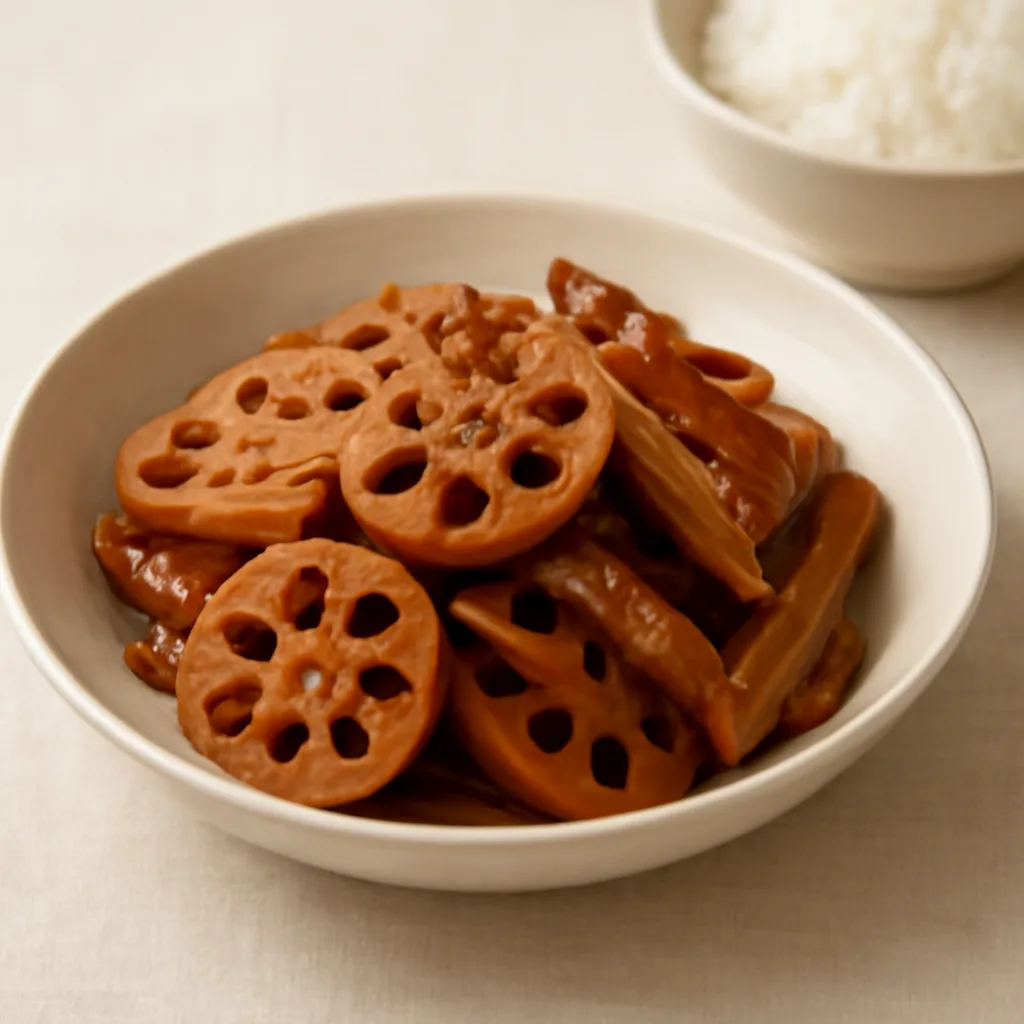
عن هذا الطعام
Root-vegetable and burdock braised dish is a savory-sweet side dish to pair with rice, where the solid root vegetables and shiitake mushrooms are braised in a sauce of soy sauce, sugar, and garlic. Slice the lotus root to a consistent thickness to keep its cross-section holes and crunch, and cut the burdock not too thick so it becomes tender within a similar time as the lotus root. The key of the braise is to gradually reduce enough water to submerge the ingredients and adjust the sauce concentration. When the liquid has reduced to about half, if the surface of the ingredients has a glossy brown, and the thickest lotus root piece is cooked through when pressed, turn off the heat and rest briefly. However, the longer you braise, the more the sweetness and saltiness intensify, so if you don’t want a rich dry braise, leave a little broth for finishing. Carrot and shiitake mushroom release more moisture and cook faster than lotus root and burdock. For recipes where all ingredients are braised together, thinly slice the carrot and shiitake mushrooms so their cooking times align with the firm ingredients.
الطعم والملمس
The braise tastes sweet-salty from soy sauce and sugar, with garlic aroma, while shiitake mushrooms softly support the umami. As the braising liquid reduces, the flavors cling more distinctly to the surface of the ingredients. Lotus root becomes crisp-tender when cooked through, burdock provides a fibrous chew, carrots add gentle sweetness, and shiitake mushrooms stay moist and chewy in contrast.
المفتاح لجعلها لذيذة
- Slice both lotus root and burdock to about 0.5 cm thickness as evenly as possible so they cook at similar rates, reducing the chance that some pieces stay hard while others become too soft.
- Start with enough water to cover the ingredients, but once it boils, maintain medium heat so the liquid reduces slowly. If the heat is too high, the sauce will reduce first while the firm root vegetables remain undercooked.
- If the braising liquid already tastes salty, do not braise further; instead, add only a small amount of water as needed until the ingredients are cooked through.
- When you turn off the heat, letting it rest briefly helps the remaining sauce soak into the surface and cross-sections, but if you want to preserve a crisp texture, don’t rest for too long and serve after it cools slightly.
الأخطاء الشائعة
- If lotus root and burdock vary in thickness, the thin pieces will break easily while thick pieces stay firm. Align to the thickest piece and reduce braising time if many pieces are thin.
- If you reduce the liquid on high heat before it reaches half, the sauce may become sticky at the bottom and the flavors may not distribute evenly. If the bottom is thickly coated with sauce, lower the heat and gently swirl or flip the pot.
- If you cut carrots to the same thick size as lotus root, the braise may leave them hard until the end. Slice carrot finely as described, or if cut thick, check earlier to remove at your desired texture.
- If you reduce the liquid almost completely, the soy sauce and sugar will concentrate more than expected and may taste salty with rice. When the gloss appears and a little liquid remains, turn off the heat and let it rest briefly to settle the seasoning.
أفكار تطبيقية
- If you want to emphasize the chewy texture of shiitake, don’t slice too thinly; cut slightly thicker than the lotus root so the shape remains after braising.
- For a lighter flavor, don’t add all the sugar at first; taste after the liquid reduces and adjust by adding only some sugar according to the vegetables’ natural sweetness.
- If you prefer a saucier dish, turn off the heat a little earlier than the point where the liquid is reduced by half and ensure the solid ingredients are fully cooked; for a stronger braise, braise briefly on very low heat and account for the faster intensification of flavor.
- If burdock’s fibrous texture feels heavy, increase the lotus root proportion and slice burdock thinner so that, within the same seasoning, it cooks more smoothly.
أفكار للتقديم
- Serve warm with small portions on a plate to enhance the sweet-salty glaze and boost the rice flavor.
- If there is leftover braising liquid, spoon a little over the lotus root and burdock to keep them moist; if the liquid is too rich, serve mainly the vegetables to avoid overly seasoned bites.
- Pair with grilled fish or mild tofu as a side dish where the braise’s soy flavor contrasts with the main course’s milder taste and the vegetables’ bite.
المكونات الأساسية
연근
우엉
당근
표고버섯
물
المكونات الاختيارية
لا توجد مكونات اختيارية منفصلة.
ترتيب الطهي
연근과 우엉은 껍질을 벗기고, 두께 0.5cm로 썬다.
당근은 껍질을 벗기고, 얇게 채썬다.
표고버섯은 기둥을 제거하고, 슬라이스한다.
냄비에 연근, 우엉, 당근, 표고버섯을 넣고 물을 재료가 잠길 정도로 붓는다.
간장 2큰술, 설탕 1큰술, 다진 마늘 1작은술을 넣고 중불에서 끓인다.
국물이 반으로 줄어들 때까지 약 15분간 조린다.
불을 끄고 잠시 두어 양념이 스며들게 한다.