Gericht ansehen
Überprüfen Sie die Basisdaten des ausgewählten Gerichts.
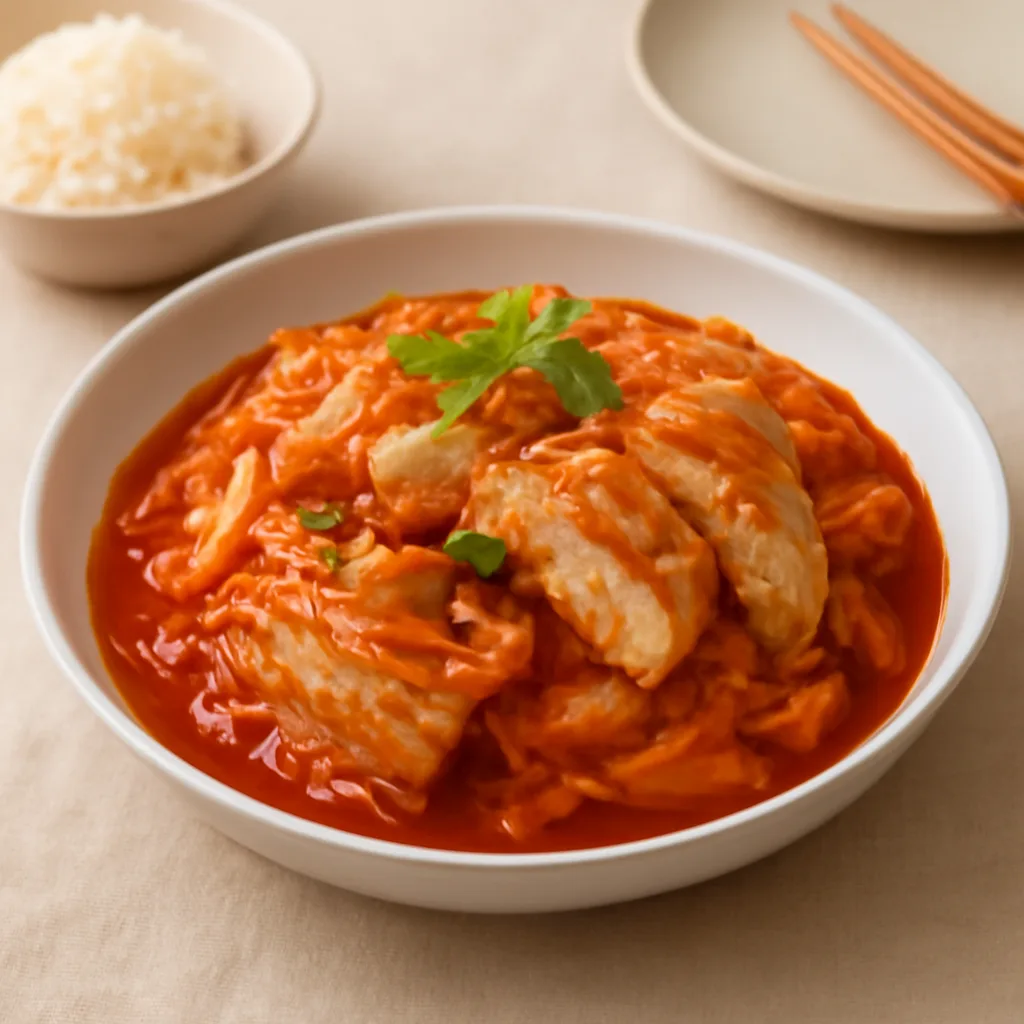
Hähnchenbrust Kimchi Dämpfen
Hähnchenbrust Kimchi Dämpfen ist ein Gericht, bei dem zarte Hähnchenbrust mit scharfem Kimchi zusammen gegart wird, um einen tiefen Geschmack zu erzielen. Die Harmonie aus Sojasauce und Gochujang verstärkt die Würze, und Essig verleiht eine frische Note, damit es noch leckerer wird.
8
Abfrage0
Gefällt mir1
AI-Empfehlung0
Habe ich gemachtÜber dieses Gericht
Chicken breast and kimchi braise is a simple Korean stew that gently cooks tender chicken breast with the sour kimchi and a spicy sauce, keeping it moist. Soy sauce and gochujang in the broth add a salty, rich flavor, and the kimchi flavors soak into the chicken, pairing well with rice. Since overcooking chicken breast makes the grain tighten and become dry, once the water boils, keep it at a low heat with the lid on. Since kimchi saltiness and sourness vary by product, it is more stable to taste the broth after cooking and adjust salt rather than adding a lot from the start. Finally, add the vinegar just before turning off the heat to keep the aroma and brightness. If the kimchi is already very sour or it is aged kimchi, reducing or omitting vinegar can help the balance feel more natural with the seasonings.
Geschmack und Textur
Well-cooked chicken breast shreds tenderly along the grain, and with kimchi you’ll taste a subtle balance of mildness, spiciness, saltiness, and umami. The broth is rich from the soy sauce and gochujang, yet not heavy thanks to the kimchi’s acidity. If kimchi is relatively chunky, it enhances chewing texture; if finely chopped, the seasonings and broth cling more evenly to the chicken. Vinegar leaves a bright finish, but too much can mask gochujang and the chicken’s mildness.
Der Schlüssel zu einem leckeren Gericht
- Cut the chicken breast into pieces that are slightly thicker than bite-sized to ensure even cooking through without drying out during a short cook time.
- After adding kimchi, gochujang, and soy sauce, add just enough water to cover the chicken breast; if the broth looks too thin, briefly open the lid and simmer on low to reduce.
- When the broth starts to boil again, reduce to low and cover to minimize moisture loss; continuing to boil hard can firm up the chicken surface quickly.
- 15 minutes is the stated cooking baseline; check that the thickest part of the chicken is opaque white throughout and if undercooked, cook a little longer.
- Add vinegar at the end and stir evenly once to leave aroma; if the kimchi’s sourness is strong, reduce the amount or omit vinegar.
Häufige Fehler
- If the broth is too salty from the start, this may be from adding kimchi, soy sauce, and gochujang all at once; do not add more salt and instead add a little water to mellow the flavor and reboil.
- If the chicken breast becomes dry and the texture is rough, it’s possible it was simmered on high heat for too long; next time reduce to low from the boiling point and turn off heat as soon as doneness is confirmed.
- If the final taste is too sour, this may be from using very sour kimchi or too much vinegar; add vinegar sparingly or omit and adjust with gochujang or water gradually.
- If the broth is bland and the seasoning doesn’t stick well to the chicken, the water amount may be too high; uncover and simmer a bit longer on low to reduce the broth, then adjust the seasoning.
Anwendungsideen
- Chop kimchi finely to help the seasoning cling more evenly to the chicken and create a side-dish-friendly texture with the broth.
- To reduce spiciness, decrease gochujang and avoid overloading the kimchi broth; adjust saltiness at the end with a little soy sauce as needed.
- If you want a brothier braise, add a bit more water, but don’t immediately increase gochujang or soy sauce; taste after simmering and adjust gradually.
- If using a different cut that requires more cooking time, apply the same 15-minute baseline but extend the time by checking the thickness and doneness of the piece.
Beilagenideen
- Serve with warm rice and spoon the broth over for a comforting combination of kimchi and gochujang flavors.
- Shred the chicken along the grain and mix with kimchi so every bite has a balance of chicken and kimchi.
- If there is extra broth, dribble a little over rice to mix, but avoid additional salt since kimchi and seasonings may already be high in salt.
Notwendige Zutaten
닭가슴살
김치
고추장
간장
식초
소금
Ausgewählte Zutaten
Es gibt keine separaten ausgewählten Zutaten.
Kochanleitung
닭가슴살을 적당한 크기로 썰고, 소금으로 밑간을 해둡니다.
냄비에 닭가슴살과 김치를 넣고, 간장과 고추장을 넣습니다.
물을 닭가슴살이 잠길 정도로 부어줍니다.
중불에서 끓기 시작하면 불을 약하게 줄이고 뚜껑을 덮습니다.
약 15분간 조리하여 닭가슴살이 익을 때까지 끓입니다.
마지막에 식초를 넣고 잘 섞어줍니다.
완성된 찜을 접시에 담아냅니다.