Zutaten-Enzyklopädie
Überprüfen Sie die Eigenschaften der Zutaten und wie sie in der Küche verwendet werden.
Kimchi
10
16
Kimchi is a fermented side dish made by salting and seasoning vegetables such as napa cabbage and radish, and cooking it. In cooking, it is used to add sourness, umami, and spiciness all at once. Because the direction of flavor changes greatly depending on the type and degree of fermentation, milder kimchi is often better for light broths, while well-fermented kimchi works well for rich dishes like stir-fries and stews. Besides serving it as is, you can use kimchi in kimchi stew, kimchi fried rice, jeon, stir-fries, and noodle toppings. Kimchi broth adds color and acidity, but can be salty, so it’s easier to adjust by tasting first and adding gradually rather than dumping a lot in from the start. Because kimchi’s seasoning and fermentation aroma are the main characters, adding it to delicate fish or clear broth can mask the original flavor. In such cases, reduce the kimchi amount or use only a small amount of broth to add a refreshing aftertaste.
Geschmack und Textur
Kimchi is salty, sour, and has a sharp aroma from seasonings like red pepper flakes and garlic. When not fully fermented, it retains the fresh sweetness and crunch of the vegetables, and when fully fermented, the acidity and fermented aroma become more pronounced. Texture varies with the ingredient and fermentation stage. Napa cabbage kimchi has soft leaf parts and relatively crunchy stems, and if boiled for a long time, the tissue breaks down and it can contribute to the flavor of the broth or sauce.
Hauptverwendungszweck
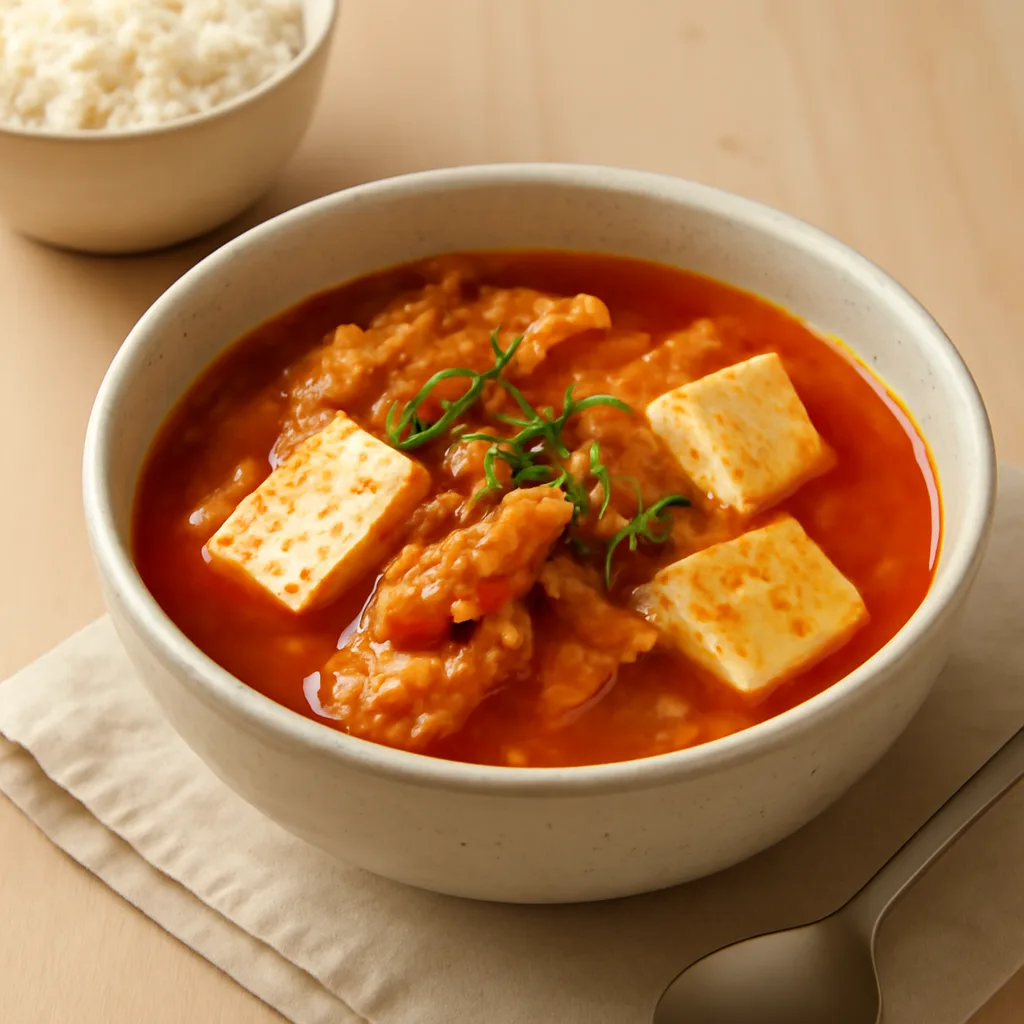
- Well-fermented kimchi is good for making a deep, sour broth in stews with pork, tofu, and stock. If kimchi is too sour, rather than adding more sugar or sweet onions, you can sauté it in oil first to mellow the sharp sourness.
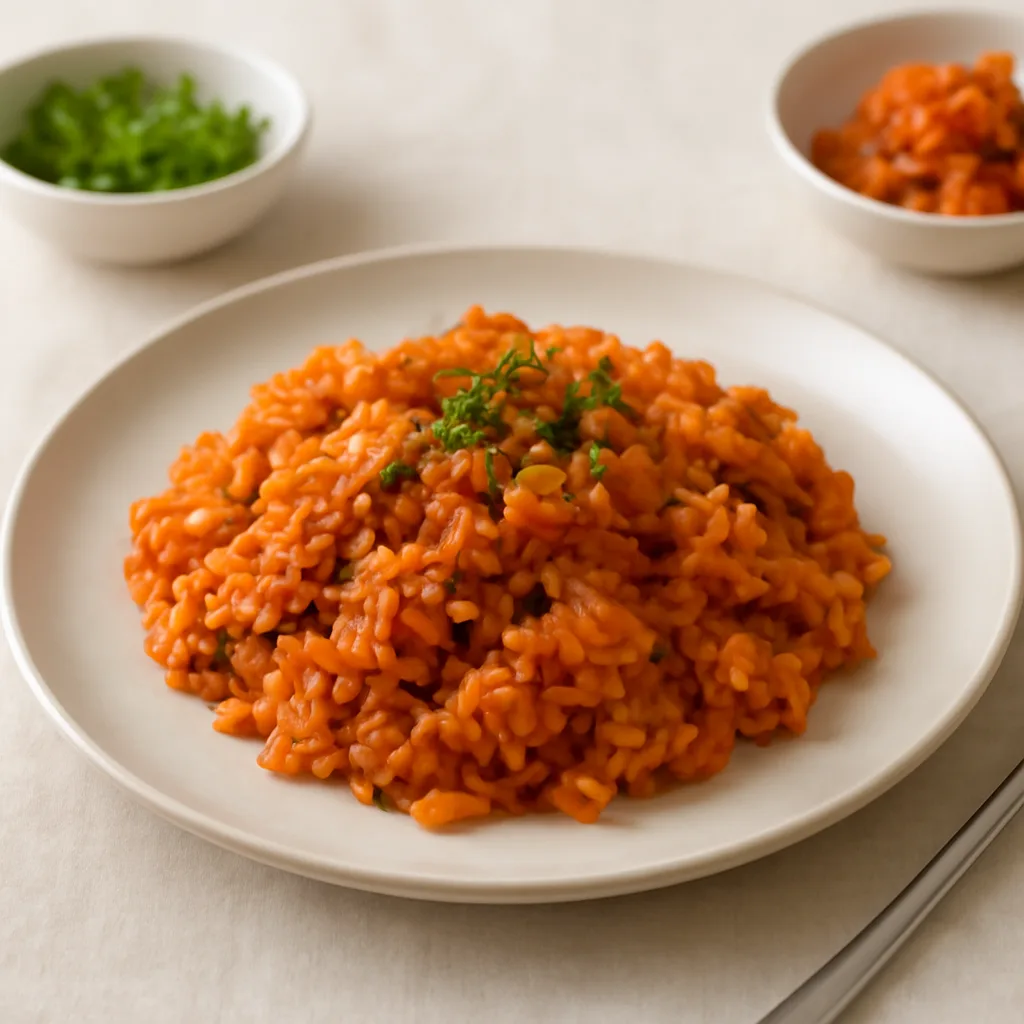
- Chopped kimchi can be fried with rice to make kimchi fried rice. Since kimchi is high in moisture, adding a lot of it directly can make the rice mushy, so it’s advantageous to first fry the kimchi to reduce moisture and then add leftover rice.
- In kimchi pancakes, you can use finely chopped kimchi and kimchi broth to add color and flavor to the batter. If the batter is too thin and edges don’t crisp, reduce the liquid or broth and spread wider, cooking over medium heat until fully cooked.
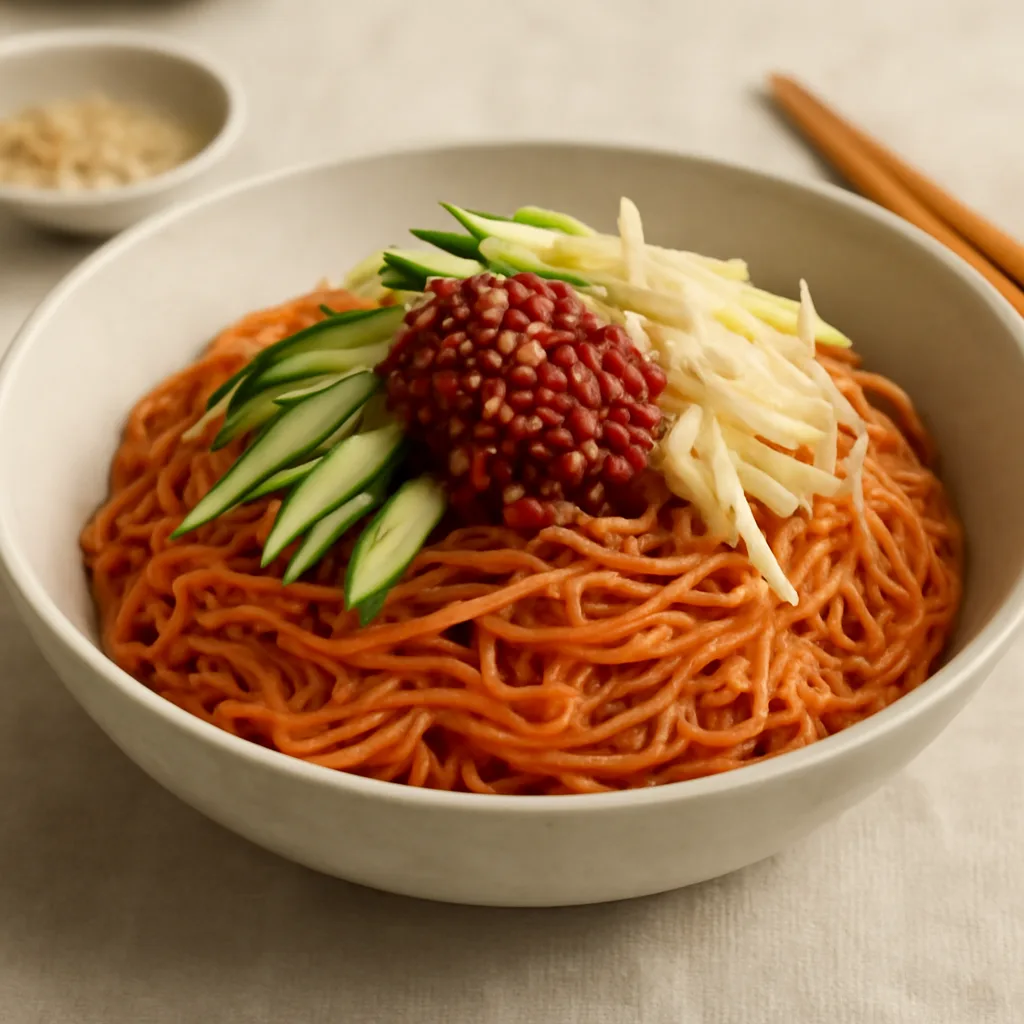
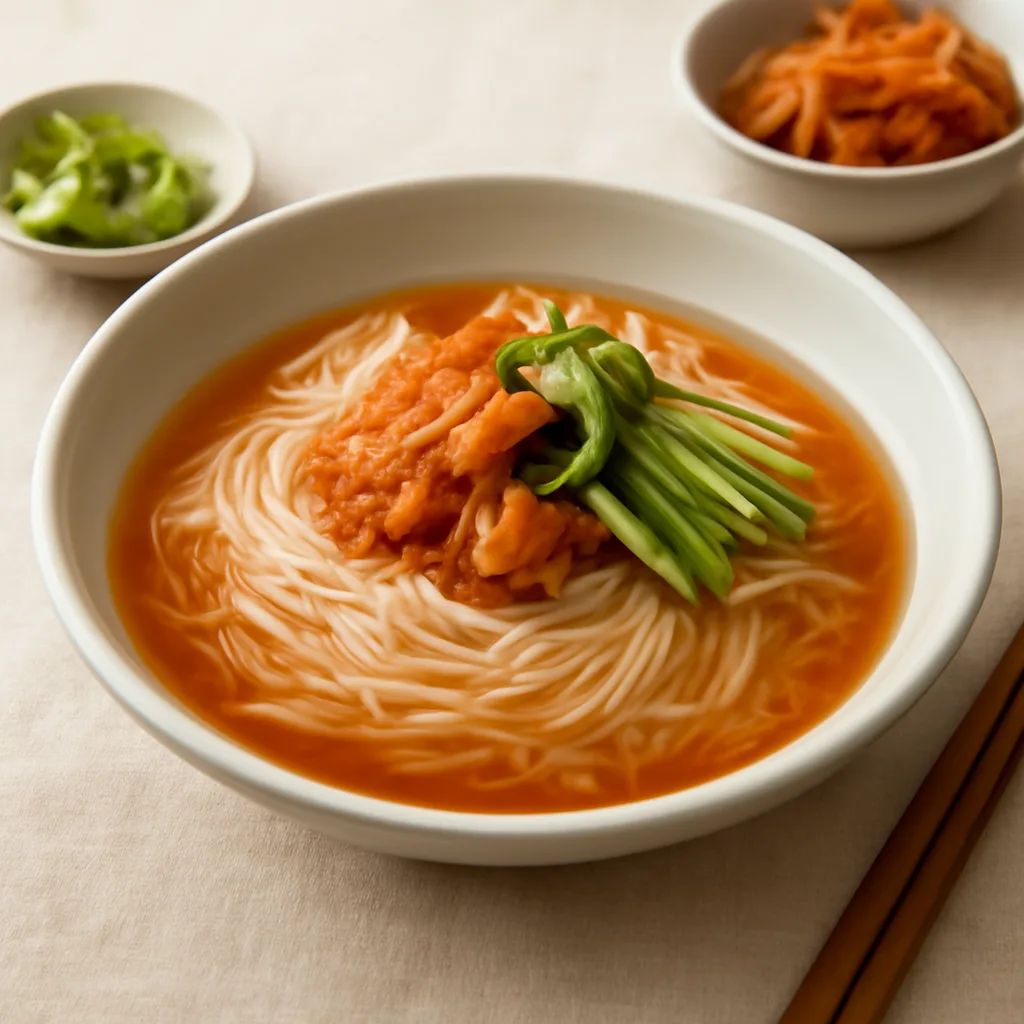
- Noodles such as ramen, kalguksu, and bibim-guksu can be topped or used as a garnish to cut through richness. If the soup is already salty, serve kimchi separately or use only a small amount to avoid over-seasoning the dish.
Vorbereitungstipps
- Taste kimchi before chopping to check sourness, saltiness, spiciness, and moisture content. If the sourness is strong, it’s better to place it in dishes that use heat and oil like stews or stir-fries; if the crispness is strong, pairing it fresh or with a quick cook suits.
- For kimchi used in broth, chop it into bite-sized pieces, not too thin if you plan to simmer long. Small pieces can break apart easily, so leave a slightly larger piece of the stems if you want chewing texture.
- Strain or squeeze the solids lightly to adjust the broth texture using only the necessary amount of kimchi broth. For jeon or fried rice, some seasoned solids can contribute to the flavor.
- Salted kimchi can be rinsed briefly and wrung out, but this weakens both fermentation aroma and seasoned flavor. Choose this mainly for stir-frried dishes where other seasonings are abundant, rather than stews or pancakes where the kimchi flavor should shine.
Besonderheiten beim Kochen
- If you sauté kimchi in oil first, the aroma of the seasonings spreads and moisture decreases, giving a more concentrated flavor. If there is a lot of water on the pan bottom, rather than lowering the heat, cook in a wider pan on medium-high to evaporate moisture and bring out the roasted aroma.
Gut passende Kombinationen
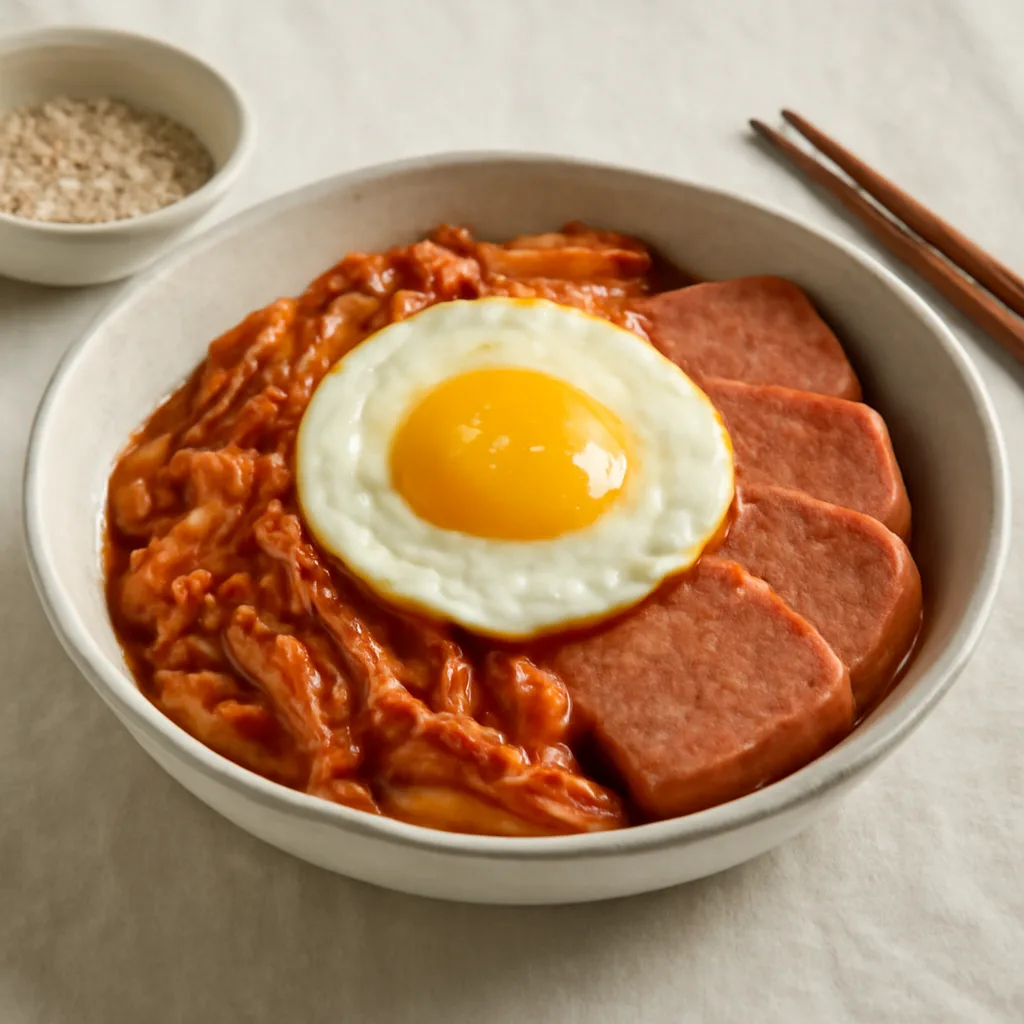
- Fatty ingredients like pork or pork belly suit the acidity of kimchi, helping balance the dish. If you don’t use fatty meat, add tofu, mushrooms, or eggs to soften the texture and temper the spiciness.
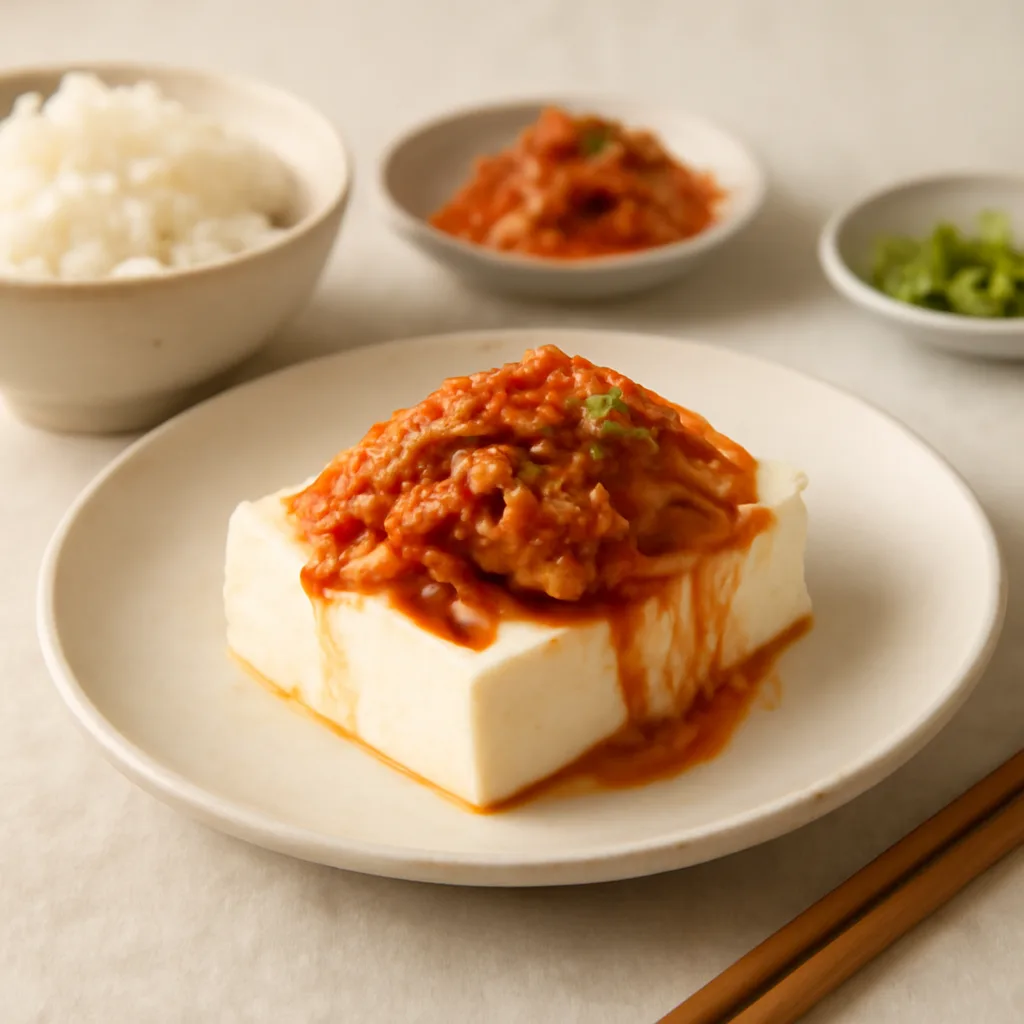
- Tofu and kimchi are often used together in stews, stir-fries, and as a side; the tofu will absorb kimchi’s strong flavor. Since tofu itself is not heavily seasoned, judge whether extra seasoning is needed later if the kimchi is salty.
- Sesame oil, vegetable oil, scallions, and onions help round out the sharp aroma and acidity of kimchi. However, layering too many strong aromatics can wash out kimchi’s distinctive fermentation aroma.
- Starch-based neutral carriers like rice, noodles, or potatoes are good at absorbing kimchi’s saltiness and acidity, making kimchi especially useful in fried rice, jeon, and noodle dishes.
Hinweise zum Ersetzen
- There are few single ingredients that can replace all the sourness, spicy seasoning, and fermentation aroma of kimchi. Depending on what role is needed in the dish, a practical approach is to split into pickled vegetables, spicy seasoning, and acidity to complement.
- If you mainly need kimchi’s sourness in a stew or stir-fry, you can add finely chopped pickled cabbage or sauerkraut with a small amount of red pepper powder or gochujang. Since products vary in salt and aroma, add gradually and adjust salt later.
- For dishes where kimchi is the main ingredient, such as kimchi-jeon, substitute ingredients can drastically change flavor and texture. A spicy vegetable pancake using cabbage or chives with gochugaru, minced garlic, and a bit of acidity can be a natural alternative.
- If you need less ripe kimchi, substitutes with strong acidity may not be suitable. Even when using pickled vegetables, add vinegar at the very end in very small amounts to avoid excessive acidity.
Zutaten, die häufig zusammen in echten Gerichten verwendet werden
Basierend auf der Häufigkeit der gleichzeitigen Verwendung von Hauptzutaten in den bei CookPagoda registrierten öffentlichen Gerichten.
Gerichte, in denen diese Zutat verwendet wird
Wir zeigen Ihnen die Gerichte, in denen diese Zutat als Hauptzutat enthalten ist, nach Aufrufzahlen sortiert.