Gericht ansehen
Überprüfen Sie die Basisdaten des ausgewählten Gerichts.
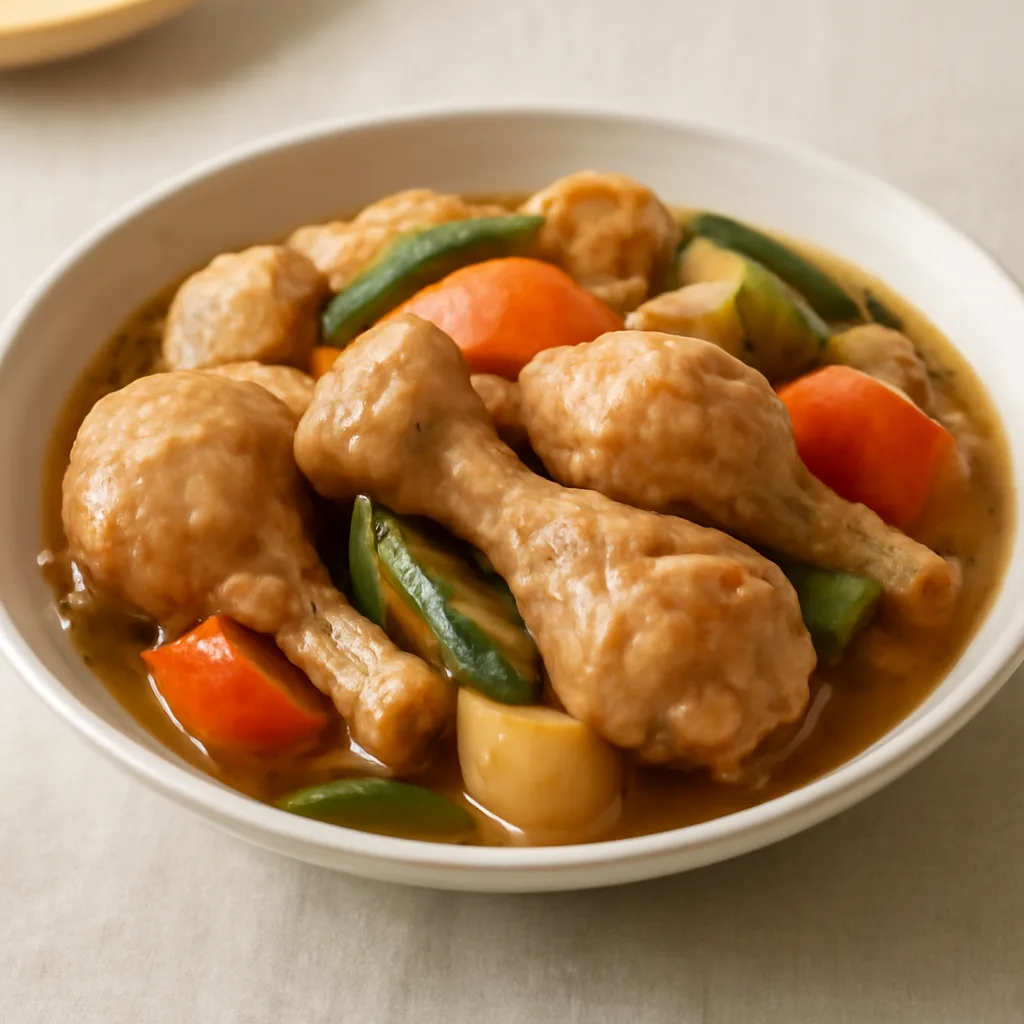
Hähnchenkeulenfleisch Gemüse Dämpfen
Hähnchenkeulenfleisch-Gemüse-Dämpfen ist ein gesundes Gericht, bei dem zartes Hähnchenfleisch und knackiges Gemüse harmonieren. Durch das Dämpfen werden die natürlichen Aromen der Zutaten bewahrt, und es ist eine gute One-Pot-Mahlzeit zum Teilen mit der Familie.
11
Abfrage0
Gefällt mir1
AI-Empfehlung0
Habe ich gemachtÜber dieses Gericht
Chicken thigh meat and vegetable steaming is a one-bowl dish that lets you enjoy the tender texture of chicken thigh with the mild sweetness of cabbage and carrots. In about 25 minutes of cooking time, it’s important to adjust the ingredient sizes and addition timing so the meat cooks through without vegetables getting too soft. When making in a frying pan, spread the ingredients to cook evenly over a wide bottom, and steam with the lid on. If you want a light finish without much broth, avoid adding too much moisture, but since the juices from the chicken and vegetables can cause the bottom to dry out, check the progress during cooking. When serving for a family meal, prepare bite-sized pieces for easy serving with chicken and vegetables.
Geschmack und Textur
Well-cooked chicken thigh is relatively soft and moist, with cabbage taking on some sweetness and still retaining a light bite if not cooked too long. Carrots are firmer than the other ingredients, so slice thinly or chop small so they soften around the same time as the chicken. Covering with a lid yields a mellow mingling of flavors, but this method is not suitable for dishes expecting strong fried aroma or deep browning flavors. For a crisper texture, it’s better to pace the timing so that hard and soft ingredients reach doneness at different stages rather than steaming all vegetables together for a long time.
Der Schlüssel zu einem leckeren Gericht
- Cut the chicken thigh into pieces of similar size, since a lot of variation in thickness can cause the thinner parts to dry out first; ensure the thickest parts are opaque through the center.
- Carrots take longer to cook than cabbage, so slice them into thin half-moons or thin strips and add first to start heating, so cabbage doesn’t cook too long.
- If the ingredients are piled too high in the pan, the bottom can become soggy while the top remains undercooked, so use a pan with a wide surface or cook in batches when the amount is large.
- Steam moisture from condensation on the inside of the lid becomes the cooking liquid, so don’t add a lot of water from the start; add a small amount only when the bottom looks dry or starting to brown.
- If the fat and juices released by the chicken pool in the pan, the vegetables may become more like boiled than steamed, so if there seems to be too much moisture, briefly lift the lid to vent steam.
Häufige Fehler
- If you cut the chicken thigh into large lumps, the outer vegetables may become translucent before the inside is cooked, so cut into bite-sized portions or flip thick pieces partway through to finish cooking.
- If cabbage and carrot are the same size and added at the same time, carrots may stay firm while cabbage becomes too soft, so slice carrots thinner or cook them first and add cabbage later.
- Boiling on high heat too long can cause moisture to evaporate quickly from the pan bottom, causing the chicken and vegetables to stick and develop a rough aroma; once boiling starts, reduce heat and cover to finish gently.
- Opening the lid too often to check doneness can let heat and steam escape, increasing cooking time; check the chicken’s center only when needed.
Anwendungsideen
- If you prefer a crisp bite over the cabbage’s soft sweetness, add some of it at the end and finish quickly, after the chicken is cooked separately.
- If the carrot texture is too firm, cut them even thinner so they soften within the steaming time, but very thin pieces may fall apart easily.
- To increase the meal’s satiety, serve with rice so the moisture from chicken and vegetables can accompany the dish; if you don’t want more moisture, lift the lid briefly to finish.
- If you want a more seasoned flavor without making the dish heavier, add a small amount of seasoning toward the end once the chicken and vegetables are nearly cooked to match the moisture changes of the ingredients.
Beilagenideen
- Serve with the chicken thigh centered and surround with cabbage and carrot for easy portioning.
- With warm rice, you can enjoy a complete meal where the mild juices from the chicken and vegetables also come along.
- When serving as a family meal, place on a large platter with the chicken pieces not buried under the vegetables to make doneness and portions easy to check.
- If you’ve kept the vegetables crisp, serve immediately; if you prefer them soft, let the dish rest briefly in the pan to meld flavors more.