Gericht ansehen
Überprüfen Sie die Basisdaten des ausgewählten Gerichts.
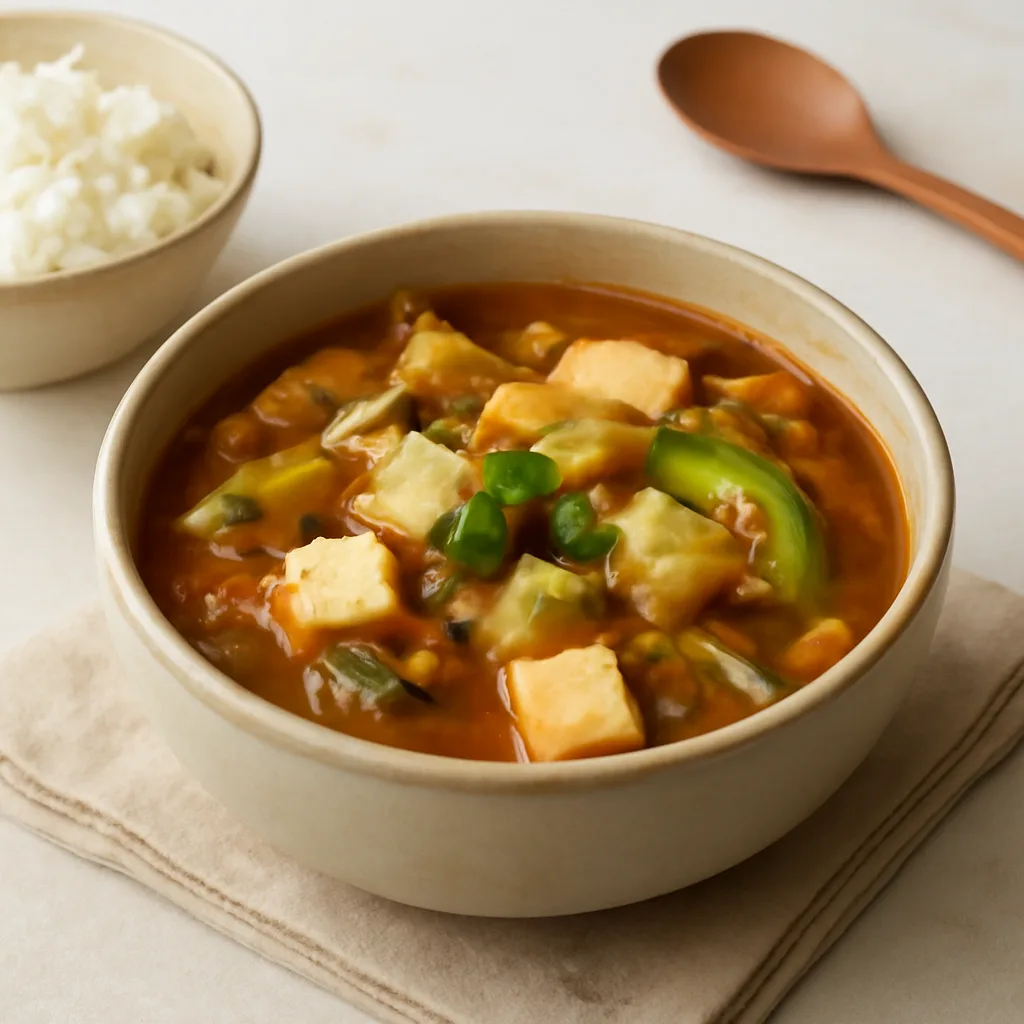
된장찌개
된장찌개 ist ein in Korea traditioneller Eintopf, der durch seinen tiefen, reichen Geschmack hervorsticht. Weicher Tofu und knackiger Chinakohl verbinden sich zu einer reichen Textur. Langsam köchelnd passt er gut als Hausmannskost, besonders zusammen mit Reis.
5
Abfrage0
Gefällt mir1
AI-Empfehlung0
Habe ich gemachtÜber dieses Gericht
Cabbage, pork, soft tofu, and doenjang are the focus of this soybean paste stew. As the cabbage softens, its released water and natural sweetness gently balance the hearty flavor of the doenjang, while pork adds a substantial savor to the broth. Because the ingredient list is simple, the overall saltiness of the doenjang and the degree to which the cabbage is cooked largely determine the dish’s finish. The method is to add cabbage and tofu to water and dissolve the doenjang, simmering on medium heat, which makes the cooking relatively easy. However, since the timing for adding pork isn’t specified in the provided steps, add it with the cabbage and simmer until fully cooked through before serving. Neck meat yields a relatively clean broth, while pork belly pairs with a richer, oilier broth. Tofu can break easily if boiled vigorously for a long time, so add it carefully after the broth comes to a boil and reduce the heat if the pot is boiling too hard. Just before finishing, taste the broth first and add a small amount of salt only if needed to prevent the salty taste of the doenjang from becoming overpowering.
Geschmack und Textur
The savory, salty base of doenjang blends with the softened, natural sweetness of the cooked cabbage and the nutty flavor of pork. A final sprinkle of gochugaru adds fragrance and a sharp note. When cabbage is sufficiently cooked, it becomes tender to chew, and tofu delivers a smooth, delicate texture. If using pork belly, the surface of the broth may have a bit more oil, which is suitable when a richer flavor is preferred; for a lighter broth, neck meat is more suitable.
Der Schlüssel zu einem leckeren Gericht
- Dissolve doenjang by scooping some broth first rather than dropping the chunks in boiling water, which reduces lumping and ensures even seasoning throughout the broth.
- Because the stalk part of the cabbage is tougher than the leaves, check whether the stems soften first if they are large; if still stiff, simmer a bit longer over medium heat.
- Add the pork at the time you add the cabbage and simmer until the color changes completely and the center is cooked through. If the thickness of neck meat or pork belly is thick, cut into bite-sized pieces to reduce differences in doneness.
- Once added, gently swirl the pot or ladle broth over the tofu because vigorous stirring can cause the soft tofu to break.
- Maintain medium heat, but if foam and broth rise to the edge of the pot quickly, lower the heat. Strong boiling can cause overflow and disturb the shape of the tofu.
Häufige Fehler
- If the broth is too salty, it may indicate that more doenjang was added after already adding salt, so next time dissolve one tablespoon of doenjang first and taste at the end, adjusting with remaining doenjang or salt in small amounts.
- If the cabbage remains tough, it may be due to large pieces or insufficient simmering; cut stems and leaves into similar sizes and continue cooking until stems are tender.
- If the tofu crumbles, it may be due to vigorous boiling or frequent low simmering; add 1 cm thick slices of tofu carefully and maintain a gentler boil.
- If the broth looks cloudy and greasy, the fat from pork belly may have melted into the broth; for a lighter flavor, use neck meat or skim off the fat as needed during simmering.
- If there are undercooked red parts in the pork, do not serve immediately; separate the meat to check and continue cooking until fully cooked.
Anwendungsideen
- If you want a spicy finish, as described in the serving method, sprinkle gochugaru in the serving bowls to enjoy the aroma, but omit it if you want to keep the doenjang flavor distinct.
- For a milder broth, choose neck meat for pork; for a richer, nuttier flavor, use pork belly.
- If you want to preserve some crisp bite of cabbage, consider dividing the quantity and adding some cabbage earlier for thorough cooking and some near the end for lingering bite. Note this will differ from the soft cabbage texture in the base method.
- To highlight the tofu, cut it slightly larger than 1 cm; too large a piece can make it inconvenient to eat spoonfuls of broth with it.
Beilagenideen
- When warm, serve with rice for a hearty meal with the doenjang broth.
- Gochugaru can be sprinkled into each person’s bowl separately to customize the broth’s base savor and spicy note.
- Because cabbage and tofu tend to sink, scoop out ingredients from the bottom of the pot with a ladle before dish-up to distribute evenly with the broth.
- The broth is very hot, so serve into generous bowls and present after it cools slightly from the vigorous boil.
Notwendige Zutaten
배추
돼지고기
목살 또는 삼겹살 사용 가능
두부
부드러운 두부 사용
된장
Ausgewählte Zutaten
Es gibt keine separaten ausgewählten Zutaten.
Kochanleitung
배추를 적당한 크기로 썰고, 두부는 1cm 두께로 깍둑썰기 합니다.
냄비에 물을 붓고 끓입니다.
물이 끓으면 썰어 놓은 배추와 두부를 넣습니다.
된장을 한 큰술 넣고 잘 저어줍니다.
중불에서 10분 정도 끓여 배추가 부드러워질 때까지 익힙니다.
간이 부족하면 소금을 조금 추가하여 간을 맞춥니다.
완성된 찌개를 그릇에 담아내고, 원한다면 고추가루를 뿌려서 마무리합니다.