View recipes
Check the reference data for the selected food.
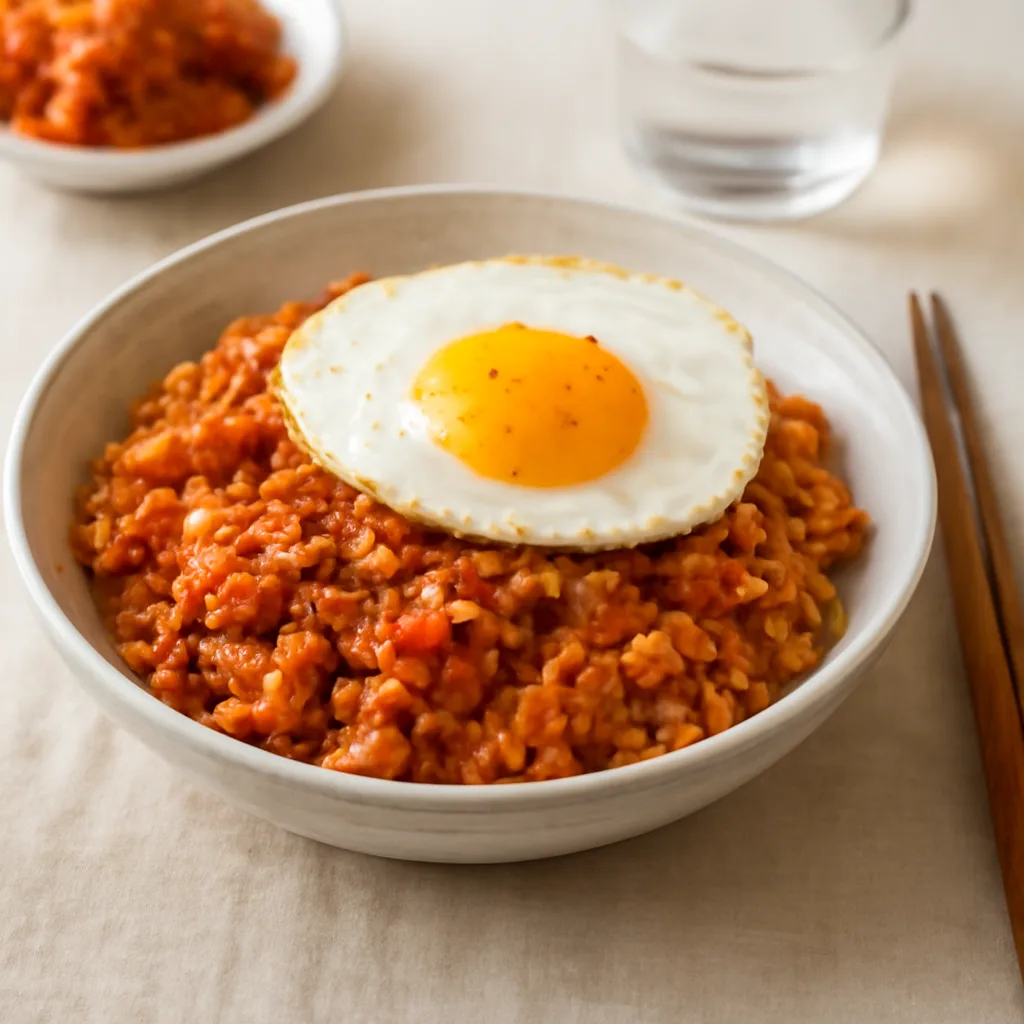
Kimchi Egg Rice
Kimchi egg rice is a tasty meal where spicy kimchi and soft eggs come together in harmony. Easy to make, suitable for busy mornings or lunch.
Related Themes
9
View0
Like1
AI recommendations0
CreatedAbout this recipe
Kimchi egg fried rice is a quick one-dish meal that combines the mildness of rice with the spicy-sour flavor of kimchi and the softness of eggs. Because the main ingredients are simple, the water content of kimchi, its seasoning, and how fully the eggs are cooked greatly affect the finished dish. The cooking time is about 15 minutes, and using warm rice helps the ingredients blend more naturally. Although you can prepare it with a single frying pan, you may choose to first heat the kimchi sufficiently to control moisture or keep it moist, depending on the texture you want for the rice. When preparing for a lunch box, it is easier to handle if you cook the eggs through more so that moisture does not flow out too much, rather than leaving them overly undercooked. Conversely, when eating right away, a softer-cooked egg that tones down the strong kimchi flavor pairs well.
Taste and Texture
The tartness of kimchi and its spicy umami spread through the rice, and the egg softly and smoothly envelops them. The more kimchi you use, the more pronounced and moist the flavor becomes, and the rice flavor becomes relatively subdued. If you fry the kimchi long enough to remove moisture, the rice grains feel relatively fluffy and the flavor concentrates. If heated briefly, kimchi’s characteristic crunch or moistness can remain.
Key to making it delicious
- If the kimchi releases a lot of liquid when you first put it in the pan, remove some moisture before adding the rice. If too much moisture remains, the grains will clump and the overall dish can become mushy.
- Rather than using cold, hard rice, use warm or fully separated rice for easier mixing. If you must use cold rice, pre-dissolve the clumps so that you don’t heat a large lump for too long in one area of the pan.
- Decide doneness of the eggs according to your preferred final form. If you’re eating right away, leaving the yolk soft is good for mixing; for lunch boxes, it’s more stable if the white and yolk don’t run when cut.
- Because the kimchi’s saltiness and spiciness vary by product and fermentation level, taste after mixing with the rice and adjust the kimchi amount. If you add kimchi from the start too much, the soft taste of the eggs can be overwhelmed.
Common mistakes
- If the finished rice is mushy and sticks to the pan, you may not have drained the kimchi moisture enough. Next time, fry the kimchi first until the water in the pan reduces before adding the rice.
- If the eggs crumble and lose presence, you may have stirred the rice and kimchi too vigorously or for too long. Alternatively, cook the eggs separately and add on top just before serving, or mix only as much as needed after adding.
- If one side is cold and the other too hot, the rice may have cooked in a way that didn’t loosen into grains. As soon as you add the rice, spread it out and use a spatula to break up large chunks evenly and heat.
- If the kimchi flavor is too strong, the kimchi amount may be too high relative to the rice and eggs, or the kimchi itself is particularly salty. Increase the proportion of rice or eggs to balance the flavor + adjust.
Application Ideas
- If you want kimchi to stand out, chop it less and keep some larger pieces during roasting. Note that for lunch boxes large pieces can be hard to mix, so trimming to a convenient size is better.
- Instead of mixing the eggs throughout the rice, top with half-cooked or fully cooked eggs to clearly separate the kimchi rice in color and texture. Leaving the yolk soft is more suitable for immediate eating.
- If you want a spicy kimchi-centered dish, increase the kimchi proportion; if you want a milder meal, raise the eggs proportion. If the kimchi is very sour or salty, increasing the amount may not be suitable.
Pairing ideas
- After cooking, transfer from the pan while still warm to best appreciate the soft texture of the eggs and the aroma of kimchi.
- When packing for a lunch box, spread the rice thinly and let it cool a bit before packing to reduce clumping. In this case, ensure the eggs are fully cooked to stabilize shape.
- When the kimchi and egg flavors are strong, instead of adding another strong sauce, increase the rice ratio a little to balance the flavors.