View recipes
Check the reference data for the selected food.
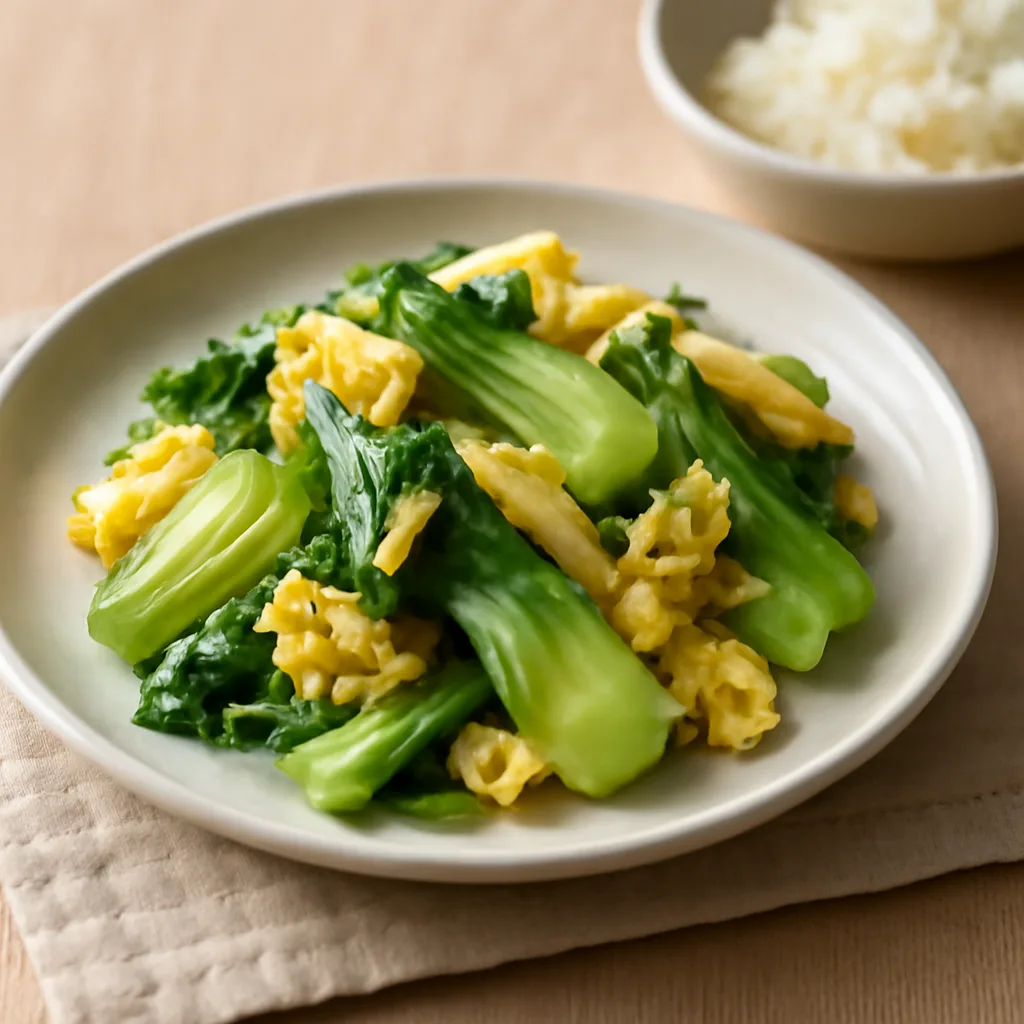
Egg Bok Choy Stir-Fry
Egg bok choy stir-fry is a simple sautéed dish where soft eggs harmonize with crisp bok choy. It can be cooked quickly, making it easy to enjoy even on忙 busy days.
Main Ingredients
Related Themes
6
View0
Like1
AI recommendations0
CreatedAbout this recipe
Egg Bok Choy Scramble is a simple stir-fry that preserves the moisture of bok choy and the aroma of scallions while gently cooking the eggs. With about 15 minutes of cooking time, it pairs well with rice and is a good way to use leftover scallions in the freezer. What determines the final result is the order of adding ingredients and controlling the heat. Bok choy stems and leaves cook at different speeds, so cook the stems first and briefly stir-fry the leaves to keep their crispness. If the eggs are overcooked they become hard, so cook them about halfway, then combine with the bok choy, or add at the end to adjust the texture. If you don’t have a wok, you can use a wide, thick-bottomed pot, but when ingredients overlap, water can form easily. If you only have a small pot, either divide the bok choy to fry in batches or turn the heat up enough to evaporate moisture quickly.
Taste and Texture
The eggs are soft and savory, with the bok choy stems remaining fresh and crisp, and the leaves becoming tender with brief heating. Sautéing the scallions in oil first provides a subtle onion aroma that forms the base of the overall flavor. Lightly seasoning with only salt lets the ingredients’ natural savoriness come through. If bok choy releases a lot of moisture, the flavor may taste watery, so at the end, stir-fry on high heat briefly to check moisture state.
Key to making it delicious
- Wash the bok choy and thoroughly blot the moisture from between the stems. If many water droplets remain on the surface, the pan temperature drops and the texture will be more boiled than fried, so when moisture is high, lightly press with a paper towel to remove.
- Divide the bok choy stems and leaves to add at different times to control doneness. When the stems start to become transparent, add the leaves; when the leaves maintain a bright green and the moisture subsides, add the next ingredient.
- Add scallions after the oil is sufficiently heated, but only fry until just before they brown. When the aroma rises and the edges become slightly translucent, add the eggs or bok choy to prevent bitterness.
- If you want the eggs to be softer, cook until there are just a few larger curds, then set aside briefly and mix in at the end. Conversely, if you want the eggs to coat the vegetables evenly, add the beaten eggs after the vegetables are almost cooked and stir quickly.
Common mistakes
- Adding too much bok choy at once makes moisture accumulate in the pan, softening the vegetables and dulling the seasoning. If moisture is visible, don’t cover the pan and spread them out over high heat, or cook in batches next time.
Application Ideas
- If you want a stronger onion aroma, sauté the white parts first and add the green parts at the end to release aroma and color separately.
- If you prioritize the crisp texture of bok choy, briefly fry only the stems first, then finish with the leaves and eggs quickly. Conversely, if you prefer soft vegetables, increase the stems’ heating time a little, but overcooking the leaves can dull the color.
- If you want the eggs to coat the vegetables more evenly, beat the eggs well and fold in when bok choy is nearly cooked. For larger egg pieces, cooking the eggs first and keeping them separate is more suitable.
Pairing ideas
- Serve with warm rice; the mild eggs and bok choy moisture naturally pair with rice.
- If other side dishes are strongly seasoned, keep this dish’s saltiness light to balance the meal as a side vegetable dish.
- When served immediately, the bok choy stems’ crunch and the eggs’ softness are most pronounced. If moisture builds up over time, rather than continuing to fry, briefly reheat on high heat to evaporate moisture.