View recipes
Check the reference data for the selected food.
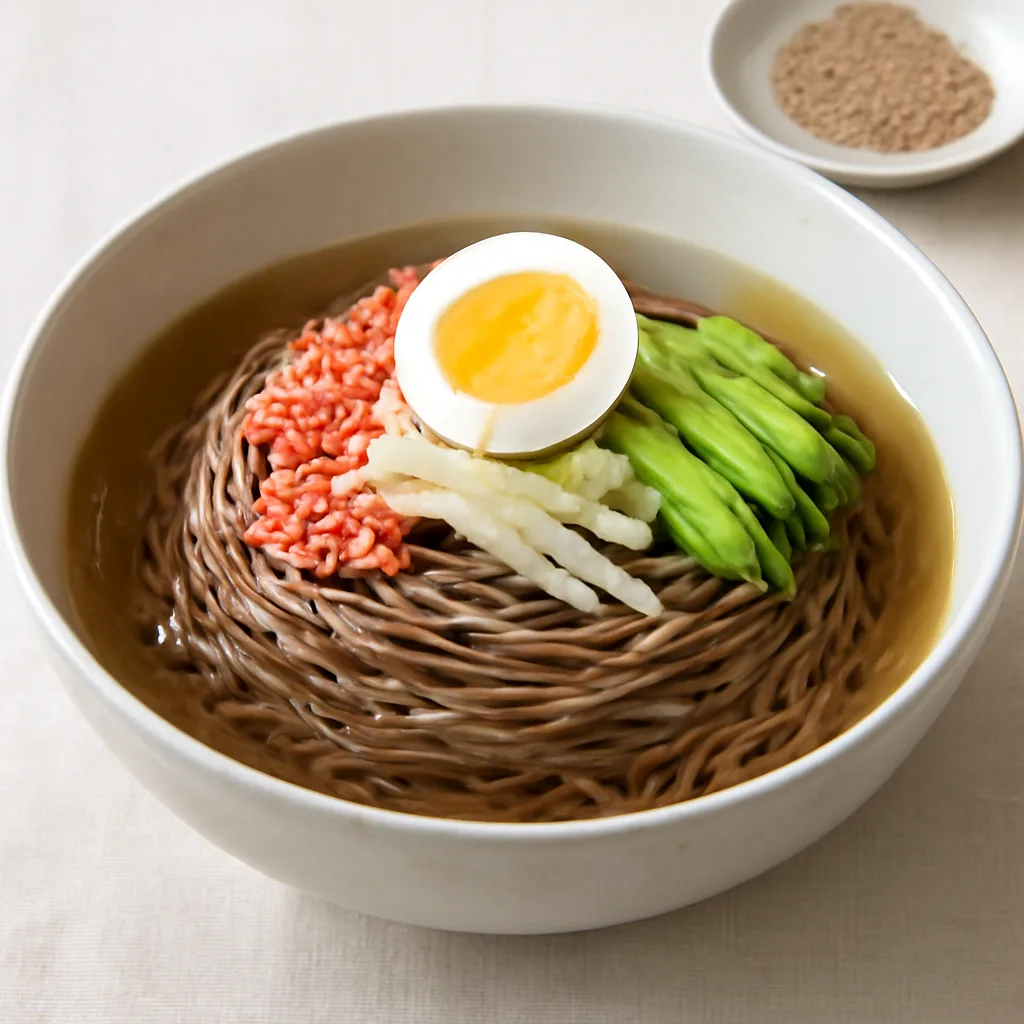
Buckwheat Noodle Cold Noodles
Buckwheat noodle cold noodles is a Japanese-style noodle dish characterized by a cool and light flavor. Fresh cucumber, soft tofu, and fragrant seaweed come together to deliver a refreshing taste. Especially suitable as a quick meal in summer, it is best enjoyed with a chilled broth.
Main Ingredients
Related Themes
8
View0
Like1
AI recommendations0
CreatedAbout this recipe
Memil-myeon naengguksu is a light one-bowl dish that places buckwheat noodles in a chilled broth with cucumber, tofu, and seaweed. The mild aroma of the noodles forms a contrast with cucumber’s refreshing moisture, tofu’s softness, and the savory flavor of seaweed.
Taste and Texture
The cold broth feels clean and refreshing, and the buckwheat noodles have a mild grain aroma with a chewy yet soft texture. Cucumbers add a crisp bite, and tofu provides a smooth, gentle texture that cushions the noodles’ stretch. Seaweed offers a toasty aroma before it sits in the broth, but it softens if soaked longer. If you want a crisp contrast, add it just before eating.
Key to making it delicious
- Rinse the boiled buckwheat noodles under cold water until the surface starchiness is almost gone, which helps prevent the noodles from sticking together.
- After rinsing, drain the noodles well so the broth won’t be diluted; as soon as the noodles start to dry, transfer them to the bowl.
- Slice cucumbers thinly and evenly so they stay crisp in the cold broth; if they are thick and watery, trim them thinner.
- Gently remove excess moisture from the tofu before adding it to prevent thinning the broth; if tofu breaks easily, scoop it with a spoon into large pieces rather than slicing.
- To preserve aroma and crunch, add seaweed at the last moment; if you prefer a softer texture, you can add it a bit earlier.
Common mistakes
- If the noodles become limp and break easily, the boiling time may have been too long or they didn’t drain well after cooling; next time, remove them while they still have bite and rinse with cold water immediately.
- If the broth tastes flat, liquid from the noodles, cucumber, and tofu might have been released; drain them further and chill the broth before tasting again.
- If the noodles clump into a single mass, rinsing may have been insufficient or you left them too long after draining; wash away the starch thoroughly and combine noodles and broth just before serving.
- If the seaweed loses its aroma and becomes slimy, add it right before eating rather than letting it sit in the broth.
Application Ideas
- If you want to emphasize the tofu’s gentle flavor, cut cucumber and tofu a bit larger so each texture is clearly distinct.
- For a fresher impression, increase cucumber; if the broth becomes too watery, pat the cucumber slices dry before using.
- If you want more seaweediness, use more nori; but if you dislike cloudy broth, don’t add all at once and add gradually while eating.
- To highlight the noodles, don’t pile toppings too high; if there’s too much tofu covering the noodles, the mild flavor of buckwheat may be diminished.
Pairing ideas
- Combine the cold broth and noodles just before eating to best enjoy the contrast in texture and temperature.
- Arrange cucumber, tofu, and seaweed on top separately for tasting each ingredient before mixing with the broth.
- On hot days, chill the serving bowl in advance to keep the broth cool longer, but wipe the bowl dry to prevent water from making the table slippery.