View recipes
Check the reference data for the selected food.
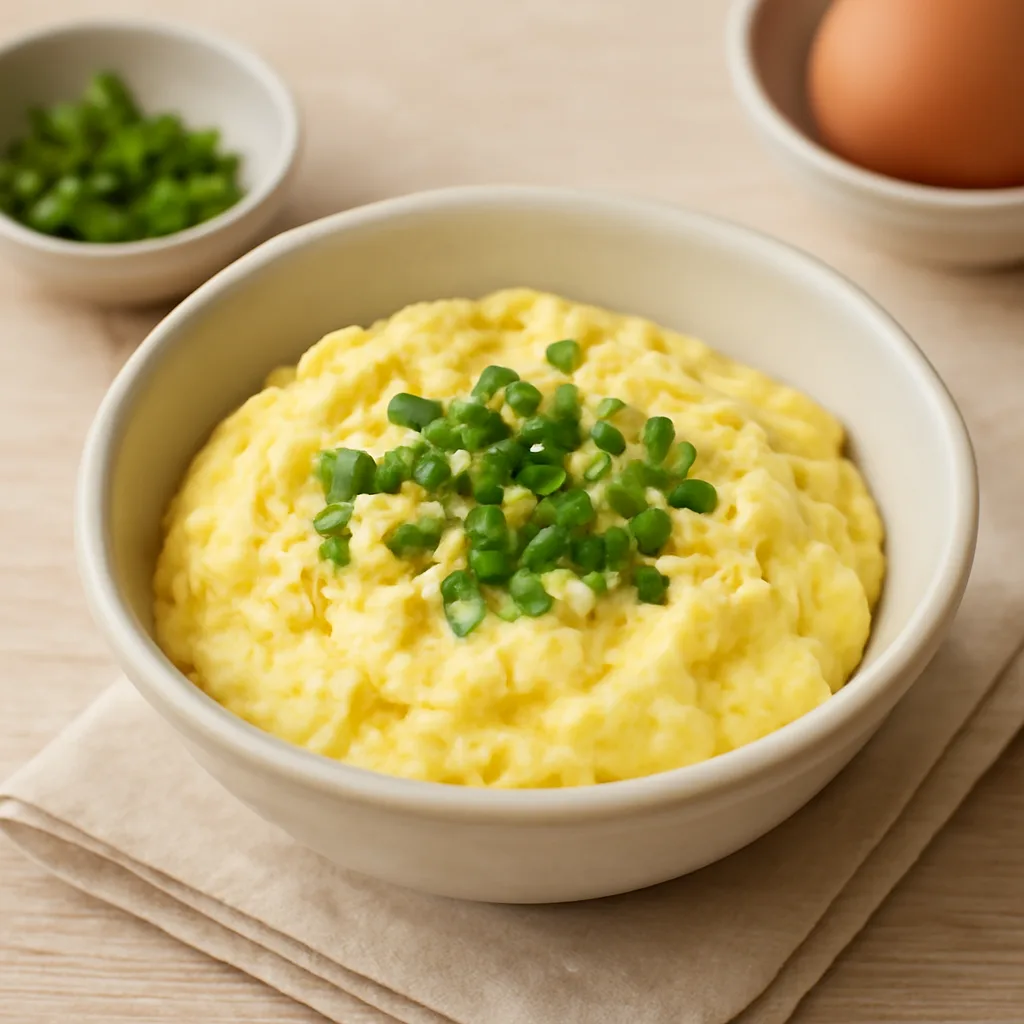
Gyeranjjim
Gyeranjjim is a simple dish characterized by its soft, moist texture. It is suitable as a drinking snack and can be enjoyed warm.
Related Themes
9
View0
Like3
AI recommendations0
CreatedAbout this recipe
Egg custard is a mild steamed dish made by mixing eggs with water, salt, and pepper and then cooking in a steamer. This recipe includes a sieving step to remove any stringy bits or undercooked whites, so when finished the texture will be smoother and a finer cross-section. The key to a soft texture is stable medium heat and proper moisture, rather than strong heat. When the steamer water is fully boiling, place the bowl on top and cook so heat distributes relatively evenly. However, overcooking for too long can harden the surface and create small bubbles inside, so it’s best to check doneness around the 10-minute mark when the center wobbles slightly. When served warm, the moisture is most apparent, making it a good simple snack or accompaniment. With no additional ingredients, the focus is on the egg’s tenderness and the salt level; if served with strongly seasoned dishes, reducing the salt a little helps balance it out.
Taste and Texture
A well-cooked egg custard slides out smoothly with a spoon, and the texture is moist and lightly melt-in-your-mouth. Since only salt and pepper are used, the flavor is mild, and the pepper aroma supports the egg’s rich taste without being overpowering. Using sieved egg mixture tends to yield a more uniform and fine texture. Conversely, cooking on high heat quickly can cause puffing or bubbles, resulting in a texture more spongy than the smooth custard.
Key to making it delicious
- Beat the eggs with salt and pepper until the white lumps are nearly gone, but avoid beating so vigorously that thick bubbles form. If there are many bubbles, they can leave marks on the surface and interior during steaming.
- When the water and eggs are well mixed and color is uniform, strain the mixture through a sieve. Do not press the residue of yolk and coagulated whites on the sieve; forcing it through helps maintain a consistent texture after steaming.
- After the steamer water boils, place the bowl and maintain medium heat. If the steam rises too vigorously, the egg mixture will boil quickly and the surface may become rough, so lower the heat if the water is splashing violently.
- Intermediate stirring helps reduce the difference in cooking between the edge and the center. If the edges have already started to firm, a brief, gentle stir once is best to avoid breaking the set portions.
- After 10 minutes, gently shake the bowl to check that the center is not wobbly like liquid. If the center is very runny, steam a bit longer; if the edges are already firm, remove immediately and let residual heat finish cooking.
Common mistakes
- If the eggs are beaten too hard or for too long, a thick layer of air bubbles may remain on the surface, resulting in a rough finish after steaming. Let the mixture rest briefly after mixing to let large bubbles subside, then strain to reduce this.
- If the heat in the steamer is too strong, the custard may puff up a lot and then collapse, forming holes inside. If you see vigorous boiling, adjust to a gentler simmer to cook with steady steam.
- During mid-stirring, if you whisk the already-set edges too hard, you can end up with crumbly pieces rather than a smooth mass. If stirring is needed, do it once, lightly, near the bottom and along the edges.
- Overcooking to extend time can lead to moisture loss and a firmer, drier texture. Remove from heat when the center is slightly unsettled and let it rest briefly with residual heat to finish cooking.
Application Ideas
- If you want to reduce the pepper aroma, you can omit the pepper and make it purely mild with the basic ingredients. However, since this method does not include additional spices or seasonings in the recipe, it is safer to first balance doneness and seasoning with the basic cooking, then adjust cautiously.
- For a softer impression, sieve and then skim off only the large surface bubbles with a spoon. If you prefer a rustic texture with some bubbles, you can skip this step.
- If serving with a salty accompaniment, consider reducing the salt before adding all of the one teaspoon of salt to the egg mixture. The balance of seasoning when eaten solo may be less influential than when served with sides.
Pairing ideas
- When served immediately in a warm dish, the moist and soft texture is best highlighted. Carefully transfer the dish from the steamer using a handle or dry rag while still hot.
- When served as a snack, pair with something salty or spicy to create a soft, mild contrast. If the accompanying dishes are on the milder side, avoid overly reducing the egg custard’s saltiness.
- Dividing into smaller bowls makes it easy for everyone to serve themselves, but dampens heat transfer and may alter cooking time compared to a larger dish. If using small portions, check the center’s wobble about 10 minutes in.
Essential ingredients
Egg
Water
Salt
Pepper
Optional ingredients
No separate optional ingredients.
Cooking order
Break the eggs into a bowl and mix with salt and pepper.
Mix with water to make it soft.
Strain through a sieve to achieve a fine texture.
Boil water in a steamer, then place the bowl in and steam over medium heat for 10 minutes.
Stir once in the middle to ensure even cooking.
Serve the completed gyeran jjim on a plate.