View recipes
Check the reference data for the selected food.
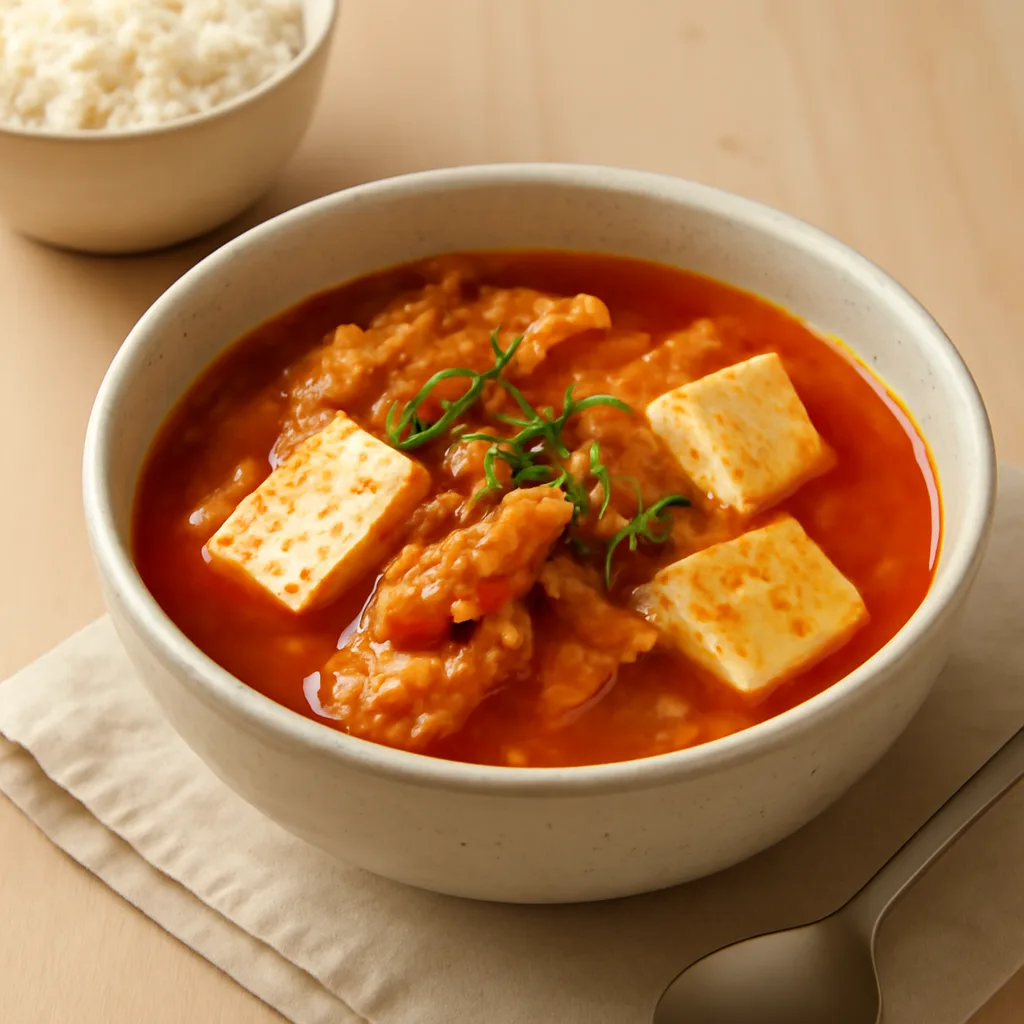
Kimchi Tofu Soup
Kimchi tofu soup is a refreshing and spicy broth dish where tofu and kimchi blend to create a deep, savory flavor. The aroma of green onions and onions adds richness, and it is simple to make, making it perfect for home-cooked meals.
Main Ingredients
Related Themes
13
View0
Like1
AI recommendations0
CreatedAbout this recipe
Kimchi-tofu soup is a simple soup dish that balances the sourness and umami of well-fermented kimchi in the broth, with soft tofu added for clean, concise flavor. Scallions and onions mellow the kimchi’s strong aroma, creating a bright yet comforting impression. Because the main ingredients are simple, the taste direction is greatly influenced by how fermented the kimchi is and when you add the tofu. If you use kimchi with strong sourness, the broth will be more refreshing; if you use kimchi that is less aged, the acidity may be milder and a grassy aroma may remain, so it’s good to simmer it enough to settle the aroma. Since the provided information does not include detailed quantities or steps, it is safe to adjust seasoning at the end by checking the kimchi’s saltiness and the amount of broth. This is a low-difficulty home-cooking soup that can be prepared in about 20 minutes and pairs well with rice.
Taste and Texture
The broth centers on the savory, salty umami from kimchi and a refreshing acidity, with scallions and onions adding a touch of sweetness. The level of spiciness depends on the seasoning of the kimchi used and whether additional flavorings are added. Tofu has a moist texture that gently absorbs the broth’s palate. If you boil for too long, the tofu edges can become rough or break easily, so avoid excessive boiling to maintain shape.
Key to making it delicious
- If the kimchi’s sourness feels strong, first simmer the broth enough to soften the sharp acidity, and if it’s still too stimulating, dilute with a little water or stock to mellow the consistency.
- If onions are cut too thick, they may not release enough sweetness in a short cooking time, so cut them to a size that cooks quickly in the broth to balance the kimchi’s saltiness.
- Tofu should be added after the broth has picked up some flavor so the outer layer won’t taste strongly salted; after adding, avoid vigorous stirring with a spoon and gently swirl the pot instead.
- If you want the aroma of scallions to stay bright, add them toward the end of cooking; conversely, if you find the onion aroma too strong, add some earlier to let it simmer with the broth.
Common mistakes
- If you don’t check the kimchi’s saltiness and season heavily from the start, the broth may reduce and become overly salty; taste after the kimchi has mellowed and adjust the seasoning as needed.
- After adding the tofu, stirring vigorously while the broth is at a full boil can break the pieces and make the broth look cloudy; instead, heat gently on medium heat and only move if necessary.
- If you boil less-ripe kimchi briefly, it can leave a grassy smell and harsh acidity; it’s better to boil until the kimchi softens and its aroma blends into the broth.
- If you boil both onions and scallions for a long time from the start and the aroma becomes hardly noticeable, try reserving some scallion to add at the end for layered aroma.
Application Ideas
- If you want the kimchi to stand out more, cut it relatively larger and avoid adding too much kimchi so the broth doesn’t become too thick.
- To emphasize the tofu’s soft contrast, use larger dice and avoid very small pieces so that each spoonful contains a bit of kimchi and tofu.
- If you need more onion sweetness, you can increase the onion proportion slightly, but to keep the kimchi’s cool acidity clear, don’t add onions too heavily.
- To soften the spicy impression, reduce the amount of strongly seasoned kimchi and adjust the broth volume. In this case, the kimchi flavor may become milder.
Pairing ideas
- Serve with warm rice, letting the broth’s saltiness and acidity complement the rice for a satisfying meal. Since tofu can crumble easily, spoon into individual bowls using a ladle to lift both tofu and broth together.
- If you want to keep the scallion aroma, place the remaining chopped scallion on top of each bowl right after serving so it gently cooks in the hot broth.
- When kimchi has strong spice or acidity, keep side dishes simple and pair with rice rather than adding many other dishes, so you can more easily judge the broth’s flavor.