View recipes
Check the reference data for the selected food.
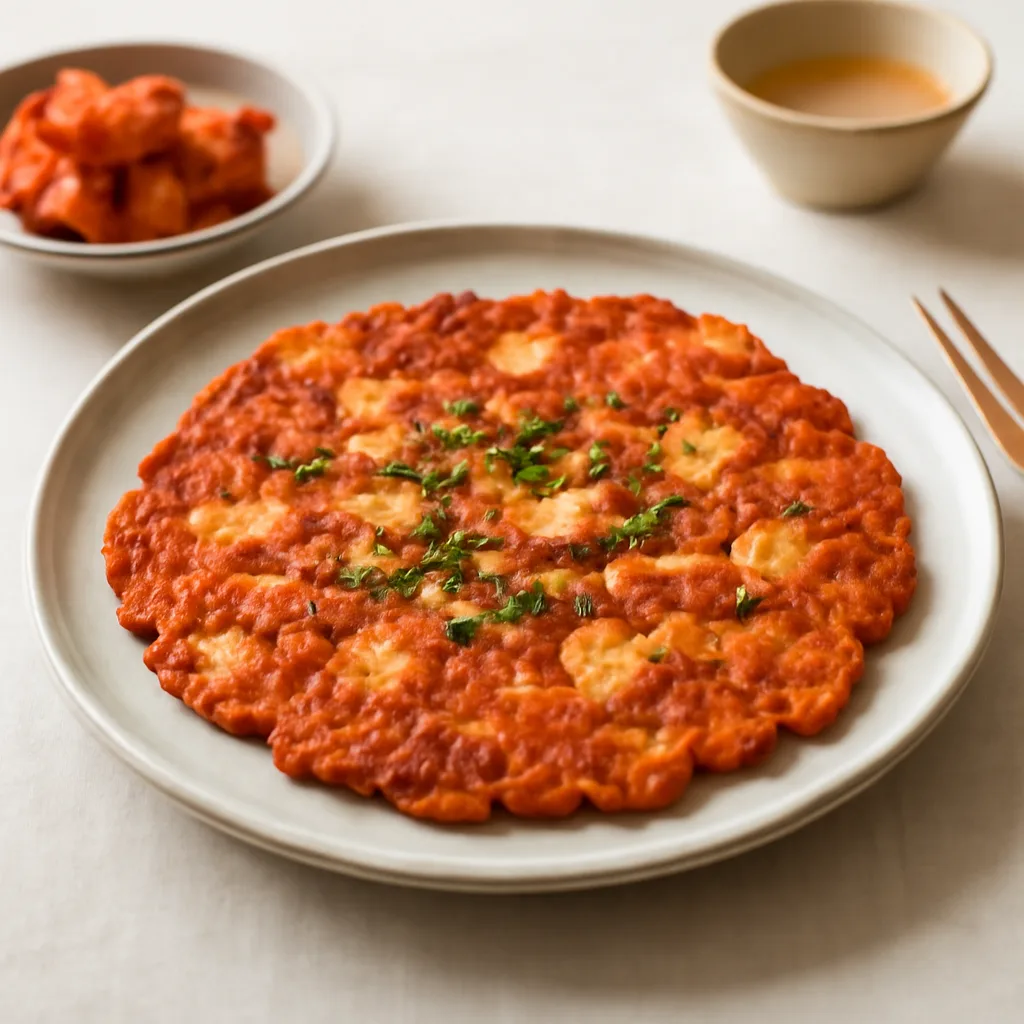
Kimchi Tofu Jeon
Kimchi tofu jeon is a jeon featuring the harmony of tofu and kimchi, offering a nutty and spicy flavor. The crispy exterior complements the soft inside, making it a great simple snack or appetizer.
Main Ingredients
Related Themes
10
View0
Like1
AI recommendations0
CreatedAbout this recipe
Kimchi tofu jeon is a pan-fried pancake made by finely chopping kimchi and mixing in mashed tofu, scallions, and onions. It pairs kimchi's fresh spiciness with tofu's mildness. The key is to achieve a crispy exterior while keeping the inside moist; it’s suitable as a simple snack, an appetizer, or a home-cooked side dish. Both tofu and kimchi are high-moisture ingredients, so it’s important to first adjust the batter’s thickness. If kimchi juice is plentiful or the tofu isn’t well squeezed, the batter can spread in the pan or tear easily, so after mixing the ingredients, check that the shape holds and adjust moisture as needed. Cooking time can be about 30 minutes, but it varies depending on how finely kimchi is chopped and how much water is squeezed from the tofu. The provided cooking tools show only a pot, but to fry the jeon crispy you’ll need a wider pan or skillet in addition.
Taste and Texture
The kimchi’s spicy and sour notes blend with the tofu’s rich, creamy flavors to feel more rounded. Scallions and onions add a gentle sweetness and aroma as they cook. If spread thin, the edges become crispy, and if not too thick, the inside stays moist and light. Conversely, making it thicker increases the softness inside, but the center may take longer to cook and the outer surface may color more.
Key to making it delicious
- Make sure to remove as much moisture from the tofu as possible before mashing. When squeezed, it should release almost no water so the batter won’t become too loose even with kimchi moisture.
- Chop the kimchi finely, and if there is a lot of juice, avoid adding all of it to the mixture at once. After mixing, check that the batter holds its shape when lifted with a spoon; only adjust with kimchi juice if needed for flavor and moisture.
- Preheat the pan over medium-low heat and oil it well before frying so the surface sets relatively quickly. If the pan is not hot enough, the jeon will absorb oil and the crust will form slowly.
- Turn when the edges harden and the bottom is golden. If the center is still unstable and the surface looks wet, cook a bit longer and flip once with a wide spatula to reduce tearing.
- For a crisper texture, making smaller, thinner portions is advantageous, but if you want to emphasize the soft interior of the tofu, a slightly thicker piece and lowering the heat to cook slowly is a better option.
Common mistakes
- If the batter spreads wide as soon as it hits the pan and tears when flipped, it may be too watery. Squeeze more moisture from the tofu or reduce kimchi juice, then fry a small test piece to check the shape.
- If the exterior browns deeply while the inside remains cold or damp, the heat may be too high or the jeon is too thick. Roll out the next piece thinner and cook over medium-low heat to ensure both sides are cooked.
Application Ideas
- If you want less heat, reduce kimchi juice and increase the proportion of tofu. However, greatly reducing kimchi will also lessen its distinctive sour and spicy impression.
- Finely chop the scallions and onions to brighten the aroma and contrast; if the onions release a lot of water, don’t cut and leave them for long before mixing into the batter.
- Making bite-sized pieces makes flipping easier and increases the crispy edges. If serving as a larger side dish, you can fry a bigger jeon, but ensure it’s cooked enough so it doesn’t break when flipping.
Pairing ideas
- Serve kimchi tofu jeon in a single layer on a plate to highlight the crisp edges.
- Because scallion and onion aroma remains, pair with plain rice or a clear broth to balance the kimchi’s spiciness.
- When serving as a snack or appetizer, fry into bite-sized pieces for easy sharing. Since smaller jeon can brown quickly, avoid too high heat.
- The kimchi’s saltiness and flavor can stand on its own, so taste a piece first and only season further if needed.