View recipes
Check the reference data for the selected food.
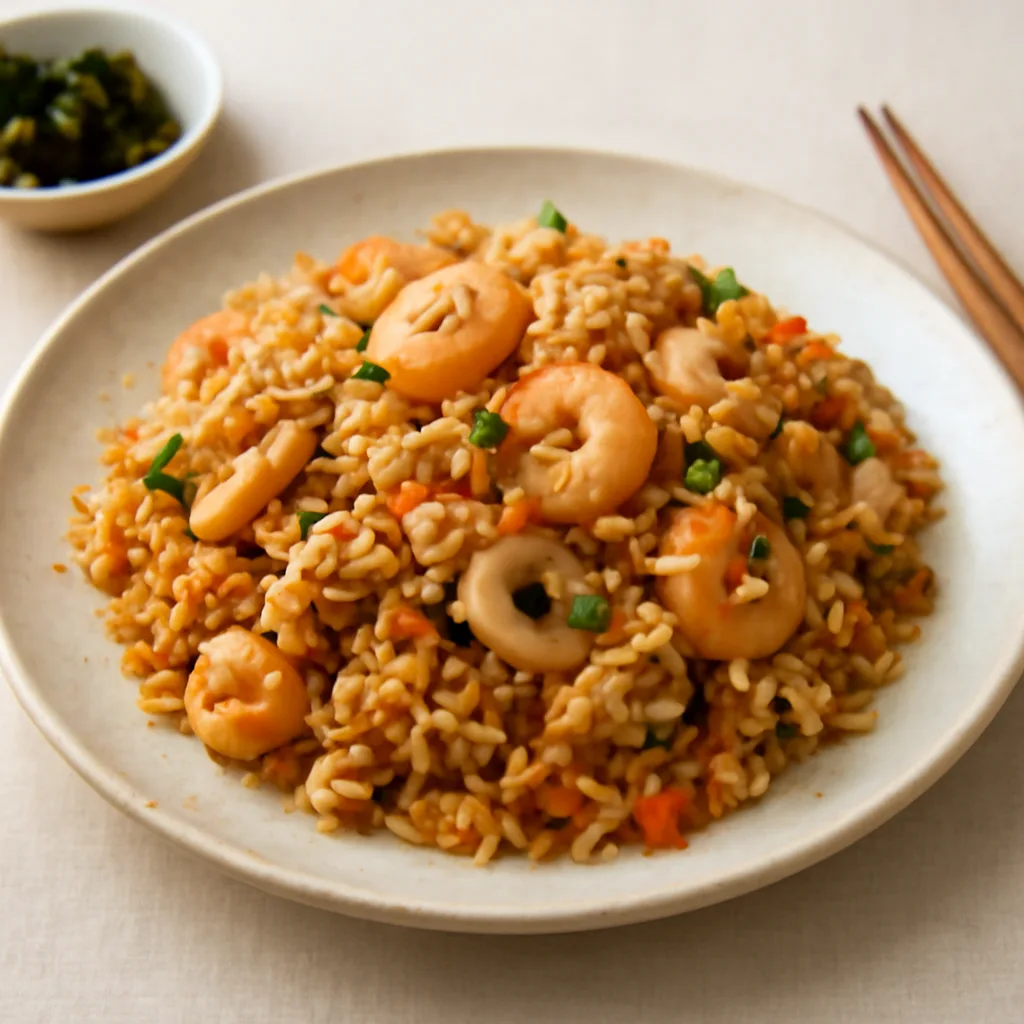
Seafood Fried Rice
Seafood fried rice is a dish featuring a variety of seafood and fresh vegetables, offering rich flavors. It pairs a crispy texture with a nutty savoriness.
Main Ingredients
Related Themes
13
View0
Like1
AI recommendations0
CreatedAbout this recipe
Seafood fried rice is a practical dish that uses frozen seafood, cabbage, green onions, and rice cooked in one pan. Because the moisture of the seafood and the doneness of the rice largely determine the final quality, it’s important to control the order of adding ingredients and the pan temperature. It takes about 20 minutes and is rated as intermediate difficulty. In particular, when using frozen seafood, manage the water released during thawing so it doesn’t remain in the pan, which helps the rice fry and separate, and ensure cabbage and green onions don’t become mushy. When serving as an accompaniment, it’s better to fry quickly over high heat to keep the rice from getting too moist, bringing out a toasty aroma and light pressing at the edges. However, if the seafood is small or pre-cooked, long frying can make it tough, so this method isn’t suitable.
Taste and Texture
The savory flavor of seafood, the aroma of green onion, and the gentle sweetness of cabbage combine to create a dish where well-fried rice is fluffy with some crisp edges. The description emphasizes a crispy texture, but actual crispness only comes when the pan is well preheated and moisture is well managed. If you overcook the cabbage it will become soft and sweet rather than crisp, and overcooking the seafood will reduce its bounce. Therefore, adjust cooking time to balance the vegetable texture and the elasticity of the seafood.
Key to making it delicious
- After thawing frozen seafood, press out the excess moisture with a paper towel to reduce sudden temperature drop in the pan and prevent the rice from becoming soggy.
- Heat the pan well, then sauté the green onion first to release its aroma into the oil, then quickly cook the seafood and cabbage to manage each ingredient’s required heat time.
- If the rice is clumped, loosen it before adding to the pan and spread it out to fry. When moisture evaporates and the grains start to separate, fold it gently to minimize clumping.
- When the seafood turns opaque and the surface moisture nearly disappears, avoid prolonged frying. If it’s pre-cooked frozen seafood, just heat briefly to mix with the rice to prevent a tough texture.
- If you want crispy portions, let the rice touch the bottom of the pan briefly at the end, then flip immediately when a burnt smell starts. If the pan is thin or heat is very strong, this method may burn, so it may not be suitable.
Common mistakes
- Adding a lot of seafood to the pan at once causes moisture to accumulate, leading to steaming rather than frying and making the rice wet. If moisture appears, move the ingredients to the edge of the pan to evaporate it first, then add the rice, or further remove moisture from the seafood in the next cooking attempt.
- Placing cold clumps of rice into the pan all at once lowers the pan temperature and prevents even heating, resulting in a cold center and a burnt exterior. Rice should be loosened in advance, and if you’re frying a large amount at once, do it in batches.
- If you add cabbage too early and fry too long, it releases too much moisture and becomes soggy. Keep the time short so the edges become slightly soft before the cabbage becomes fully transparent and mix with the rice.
- Over-frying at high heat without considering the seafood’s doneness can make the meat firm and tough. If packaged as cooked, adjust by warming it at the final stage.
- Stirring the pan too often prevents the rice from contacting the pan bottom enough to crisp. Try spreading the rice, letting it sit briefly, then folding it over with a large motion to mix.
Application Ideas
- To keep the cabbage crunchy, partially fry it with the seafood, then fry the rest with the rice to create differing textures.
- If you want a stronger green onion aroma, sauté the white parts early and add the green parts at the end. However, too much green onion can mask the seafood flavor, so don’t overly increase the amount if you want the seafood to stand out.
- For a crunchier rice, spread the rice out and press lightly on one side, then mix. If you’re using a lot of moisture-rich seafood or cabbage, first dry it well before applying this technique.
- For a more snack-like effect, reduce the amount of rice and increase the proportion of seafood and cabbage. In this case, a wide pan is advantageous because crowded ingredients tend to steam rather than fry.
Pairing ideas
- Spread the finished dish on a wide plate immediately to minimize trapped heat and steam, helping keep the grains fluffy.
- When serving as a snack, portion small amounts and serve hot to enjoy the chewy texture of the seafood and the slightly pressed rice.
- Pair with a light pickle or a light broth to complement the cabbage sweetness and green onion aroma, creating a contrast of flavors.
- If you want to keep the crispy parts, don’t keep it hot in the pan after frying; serve right away. Leaving it in the pan can soften the rice with residual heat and steam.