View recipes
Check the reference data for the selected food.
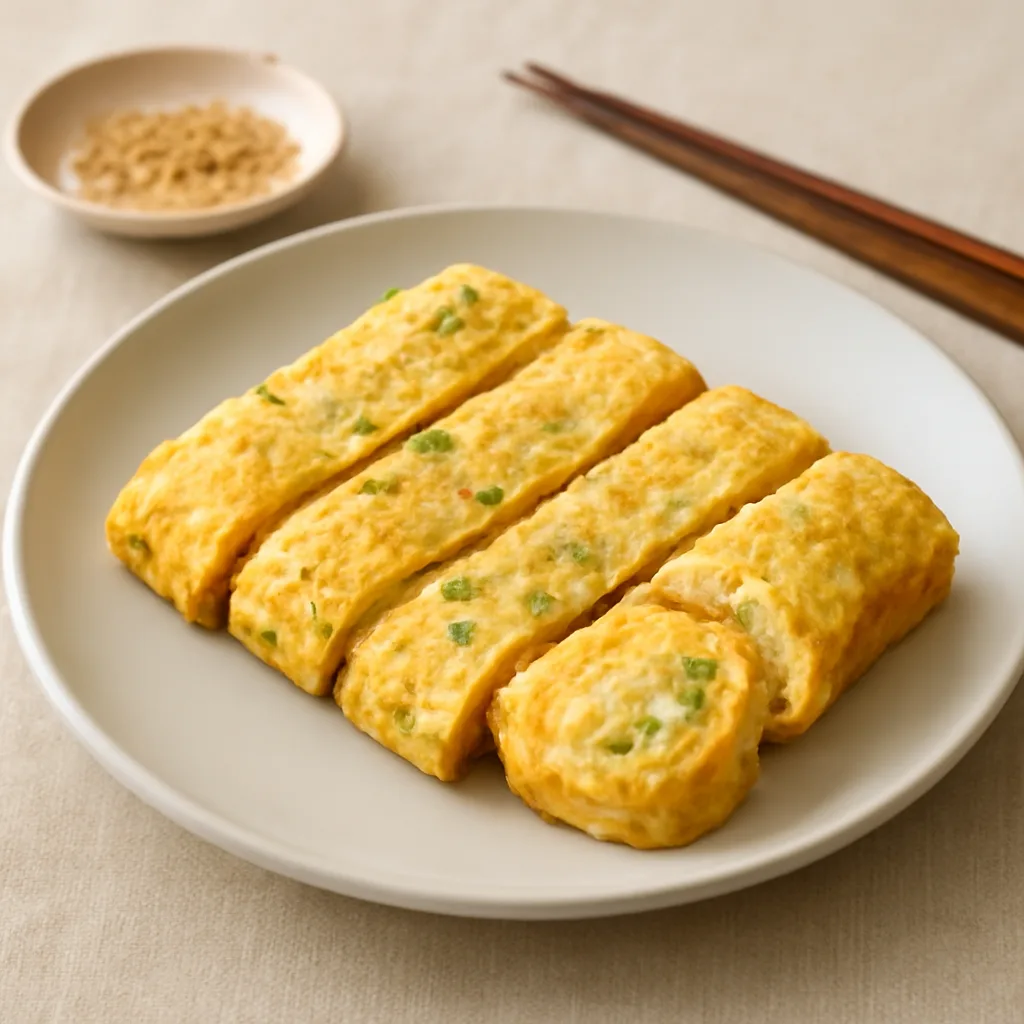
Rolled Omelette
Rolled omelette is a simple snack characterized by its soft and savory taste. It is easy to enjoy at drinking occasions, and tastes best when served warm.
Main Ingredients
Related Themes
11
View0
Like1
AI recommendations0
CreatedAbout this recipe
Rolled omelette is a simple snack made by thinly cooking salted beaten eggs and rolling them into multiple layers. Because ingredients are limited, how evenly the eggs are beaten and how you maintain the pan’s heat determine the soft, smooth finish. Finely chopped scallions add a subtle aroma and a bit of bite. In a preheated pan over medium heat, you should roll when the edges start to set; this keeps the inside moist and the outside smooth. Too high heat will brown the surface quickly and may crack when rolled, so if you want a softer texture rather than a golden color, it’s not ideal. Right after cooking, enjoy while steaming hot; refrigerating briefly and slicing helps the cross-section look more stable. The total cooking time is about 15 minutes; it’s easier to shape by rolling thin layers sequentially rather than pouring a thick layer at once.
Taste and Texture
A freshly made rolled omelette is mild and savory, with multiple layers that feel fluffy and moist. If you add scallions, you get a fresh green onion aroma between the soft eggs. If the pan is too hot or cooked too long, the savory flavor remains but moisture decreases, making it firm and dry. If the center is undercooked, the cross-section may be uneven when sliced, so it’s better to roll it and let it set a little longer to shape.
Key to making it delicious
- Beat the eggs with a pinch of salt until the yolk and white are completely mixed, but avoid too many bubbles, which can leave bubble marks on the surface when cooked; stir gently rather than vigorously with chopsticks.
- Preheat the pan with a thin coating of oil over medium heat. If the egg batter turns brown immediately after dropping, the heat may be high, so lower the flame briefly before starting.
- When the edges of the egg batter have set and the center is still moist, roll with a spatula so layers adhere. If the surface is completely dry, the parts that fold may crack.
- Move the rolled eggs to one side of the pan and add a little more egg batter in the empty center so the next layer naturally soaks below the previous roll.
- If you add chopped scallions, mix evenly into the egg batter so they don’t clump on one side. If the scallion pieces are too large, they may push up the surface when rolling, resulting in an uneven cross-section.
Common mistakes
- If the omelette surface browns quickly or emits a burnt smell, the pan temperature is likely high. Remove the pan from the heat briefly to lower the temperature, and cook the next batch on medium-low heat.
- If the eggs tear when rolled, the first layer may have been too thin or lacked moisture from overcooking. For the next layer, pour just enough to cover the pan bottom and roll when the edges set.
- If the slices collapse after slicing, the interior may still be hot and soft. Let it sit after removing from the pan to settle the heat and moisture, then slice once with a knife.
- If the center is loose and the cross-section is pale, you added too much batter at once or did not cook the final roll enough. Roll it while turning to finish cooking the center.
Application Ideas
- Adding chopped scallions to the basic rolled omelette gives aroma without extra seasonings; if a strong leek aroma feels heavy, reduce or omit the amount.
- For a thicker shape, rather than pouring very thin layers multiple times, keep each layer slightly wider and roll sequentially. But if it becomes too thick, the center may not cook before the outside dries, so keep the heat low.
- If you want a smooth yellow cross-section, omit scallions and use only eggs and salt. Conversely, if you want variation in color and aroma when sliced, add chopped scallions.
Pairing ideas
- Cut the finished rolled omelette into bite-sized pieces and stand them on a plate to show the cross-sections from multiple layers; they pair well as a warm snack with a drink. When serving at a gathering, let it cool slightly to help shape rather than slicing while very hot. It’s best when still warm for a tender texture.
- With scallions, the aroma is present, so pair with relatively mild accompaniments to prevent overpowering the egg’s savoriness.
Essential ingredients
계란
Optional ingredients
대파
다져서 넣으면 풍미가 더해집니다.
Cooking order
계란 4개를 그릇에 깨고 소금 한 꼬집을 넣어 잘 풀어줍니다.
프라이팬에 식용유를 두르고 중불에서 예열합니다.
계란물을 팬에 붓고 가장자리가 익기 시작하면 주걱으로 살살 말아줍니다.
계란을 말아가며 중간중간 팬의 중앙으로 계란물을 추가합니다.
계란이 모두 익으면 팬에서 꺼내어 식혀준 후 먹기 좋은 크기로 썰어줍니다.