View recipes
Check the reference data for the selected food.
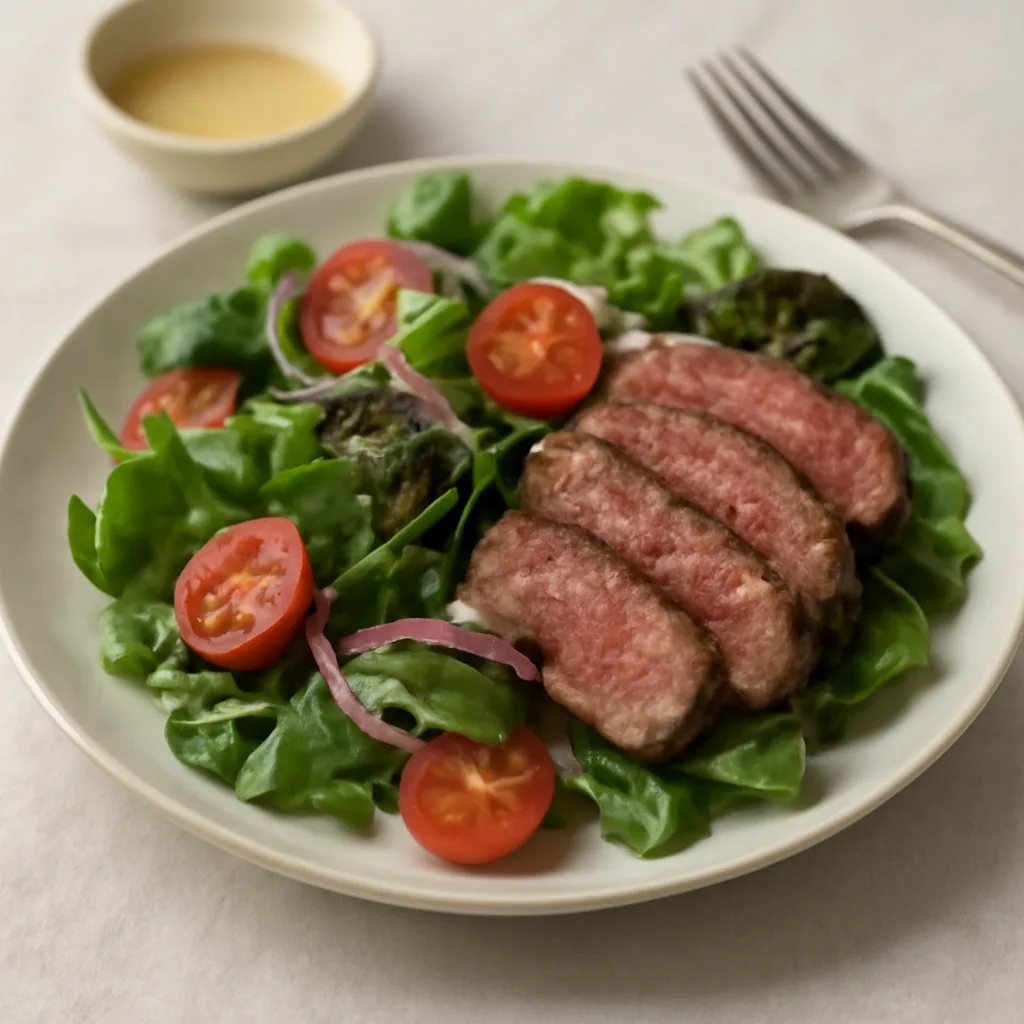
Beef Tenderloin Salad
A salad topped with grilled beef tenderloin on fresh arugula and cherry tomatoes, with parmesan cheese. Rich yet mellow flavors are balanced, and a tangy dressing enhances the palate.
Main Ingredients
Related Themes
8
View0
Like1
AI recommendations0
CreatedAbout this recipe
Beef tenderloin salad features a tenderly grilled tenderloin complemented by the sharp aroma of arugula, the bright juices of cherry tomatoes, and the savory umami of Parmesan cheese. With a modest number of ingredients, how you brown the meat and manage the moisture of the vegetables greatly determines the final quality. For the tenderloin, cut it about 1.5 cm thick, brown on both sides in a medium heat pan, then rest briefly to reduce excessive juices from flowing onto the plate when sliced. However, if you overcook thinner slices over high heat, the tender texture unique to the tenderloin can quickly become firm, so it’s better to monitor the surface color and adjust time. For the dressing, a simple combination like olive oil and balsamic vinegar helps bring out the ingredients’ flavors. Conversely, using dressings with strong sweetness or aroma can overwhelm the balance of arugula and Parmesan cheese, so start with a small amount and add just before serving.
Taste and Texture
Searing the exterior to a golden brown gives a nutty aroma and clean meat flavor, while arugula provides a fresh yet slightly bitter contrast. Halved cherry tomatoes add juice when bitten, lightening the overall sensation. Parmesan cheese, when sliced thin, adds a firm yet crumbling texture and a salty savoriness. The acidity of balsamic vinegar tightens the flavors of the meat and cheese, but if overdone it can accentuate the tomatoes’ natural acidity too strongly.
Key to making it delicious
- Dust the surface moisture off the tenderloin before placing it in the pan so browning is relatively even; if meat releases a lot of juices, raise the heat slightly or reduce the amount being cooked at once.
- Preheat the pan on medium heat well, then add oil and place the meat, avoiding frequent moving right after placing to allow one side to form a brown surface.
- The guideline of about 3 minutes per side is based on a 1.5 cm thickness; if pieces are thinner or the pan has strong heat, shorten the time and check the color and texture of the cross-section to match doneness.
- Rest the cooked tenderloin for 5 minutes, then slice against the grain; this makes chewing easier, and the juices released during resting should be kept modestly with the meat rather than poured over the salad to preserve the vegetables’ texture.
- Rinse the arugula and cherry tomatoes and thoroughly dry them; wet greens will cause the dressing to thin, so especially ensure arugula leaves are free of droplets and moisture.
- When adding dressing, do so after plating the vegetables and meat, or apply minimally to the arugula if pre-tossing is required, to avoid crushing the greens and dulling their texture.
Common mistakes
- If the pan isn’t hot enough before adding the meat, juices will be released rather than browning, causing the surface to look pale; wait until the oil is slightly runny and shimmering before cooking.
- If you let the meat sit after flipping, the center may overcook quickly, becoming dry or tough; observe the color of the first and second sides and remove the pieces early according to thickness, letting them rest.
- If you slice meat immediately without resting, juices will flow from the cut surfaces and make the salad soggy; rest for about 5 minutes before slicing.
- Adding too much dressing to wet arugula can pool at the plate and dilute flavors, so fully dry the greens and start with a small amount of dressing, adding more as needed.
- If Parmesan is too thick and large, the saltiness may concentrate in a single bite; shave thinly or break into small pieces and scatter evenly.
Application Ideas
- If the arugula’s sharpness feels strong, substitute some arugula with milder leafy greens while adjusting the dressing’s acidity to not overpower the meat flavor.
- If you keep cherry tomatoes roasted or raw, the fresh juice remains lively; if a temperature contrast with cold ingredients feels uncomfortable, let the tomatoes sit at room temperature briefly before using.
- If the aroma of balsamic is too strong, increase the proportion of olive oil to soften it, and accordingly minimize added salt considering Parmesan’s saltiness.
- Slice the meat even thinner and spread it out more; this makes it easier to eat with vegetables but can quicken cooling, so slice the meat just before serving.
Pairing ideas
- On a wide, flat plate, spread arugula first, then arrange cherry tomatoes and thinly sliced tenderloin on top in a way that doesn’t pile them, making it easy to pick up meat and greens in one bite.
- Finish with a final thin shaving of Parmesan so it softens slightly with the meat’s warmth, but add more after the meat has cooled if you want a crunchier texture.
- Serve dressing separately or in a small vessel so each person can adjust the acidity; this also helps keep any leftover salad from getting soggy.
- If serving warm tenderloin with not-chilled arugula, the flavor tends to be more pronounced; if the greens were just taken from the fridge, let them stand a moment before plating to bring down the temperature.
Essential ingredients
Beef tenderloin
Arugula
Cherry tomatoes
Parmesan cheese
Optional ingredients
No separate optional ingredients.
Cooking order
Slice the beef tenderloin to 1.5 cm thickness and season with salt and pepper.
Preheat a frying pan over medium heat, add oil, and grill the beef until both sides are browned, about 3 minutes per side.
Remove the grilled beef from the pan and rest for 5 minutes.
Wash arugula and cherry tomatoes; halve the cherry tomatoes.
In a bowl, place the arugula and cherry tomatoes, then top with the sliced beef.
Thinly slice the parmesan cheese and sprinkle over the salad.
Drizzle your preferred dressing (olive oil, balsamic vinegar, etc.) and toss well.