Ingredient Encyclopedia
Check the characteristics of the ingredients and how to use them in cooking.
udon noodles
1
2
Udon noodles are thick, springy wheat noodles suitable for both broth-based dishes and stir-fries. The noodle itself has a relatively mild flavor and readily absorbs sauces from soy sauce, miso, and bonito-based broths to spicy seasonings. Commercial udon noodles come in refrigerated, frozen, and dried forms, which affect cooking times significantly. For already cooked refrigerated or frozen noodles, it is best to briefly blanch to loosen them; boiling too long can cause surface starch to leach out, making the broth cloudy or the noodles overly soft. Conversely, dried noodles should be boiled until the centers are soft before use. When adding to hot broth, it helps to heat the noodles separately and add the broth to the bowl to maintain chewyness. For nabemono or thick stews where you want more of the noodle flavor and starchiness in the broth, you can cook everything in one pot, but this may not be suitable for clear broths.
Taste and Texture
Udon noodles have a subtle wheat aroma and mild taste, with a smooth surface and a thick, chewy bite when cooked properly. Even with strong sauces, the noodles tend to stand out, making them suitable for dishes with many ingredients. Overcooking reduces the chewiness and causes the outer surface to spread and break apart. In contrast, under-softened frozen noodles may feel cold or firm in the center, so aiming for a state where the noodle strands flex are recommended as the mark of doneness.
Main uses
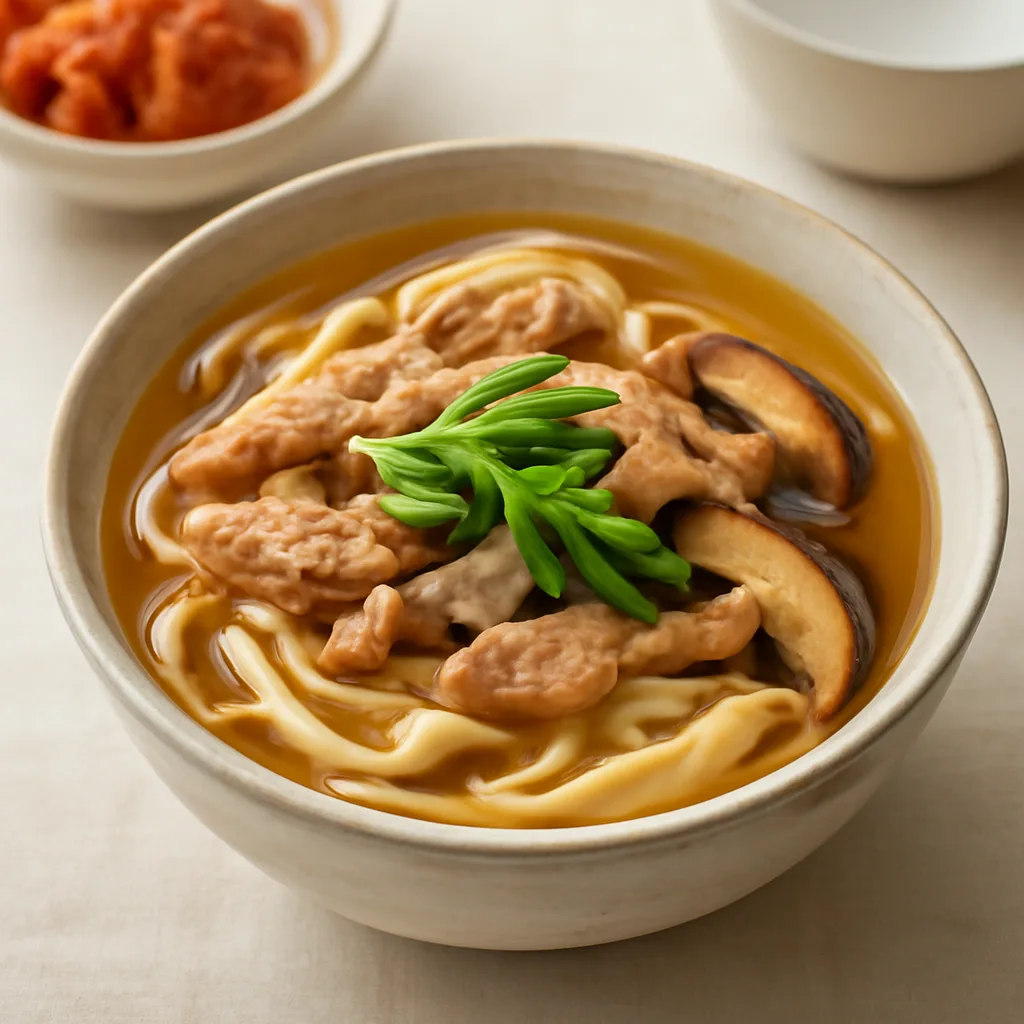
- Cook udon in hot broth with scallions, mushrooms, fried tofu, fish cake, and egg for a one-bowl noodle dish.
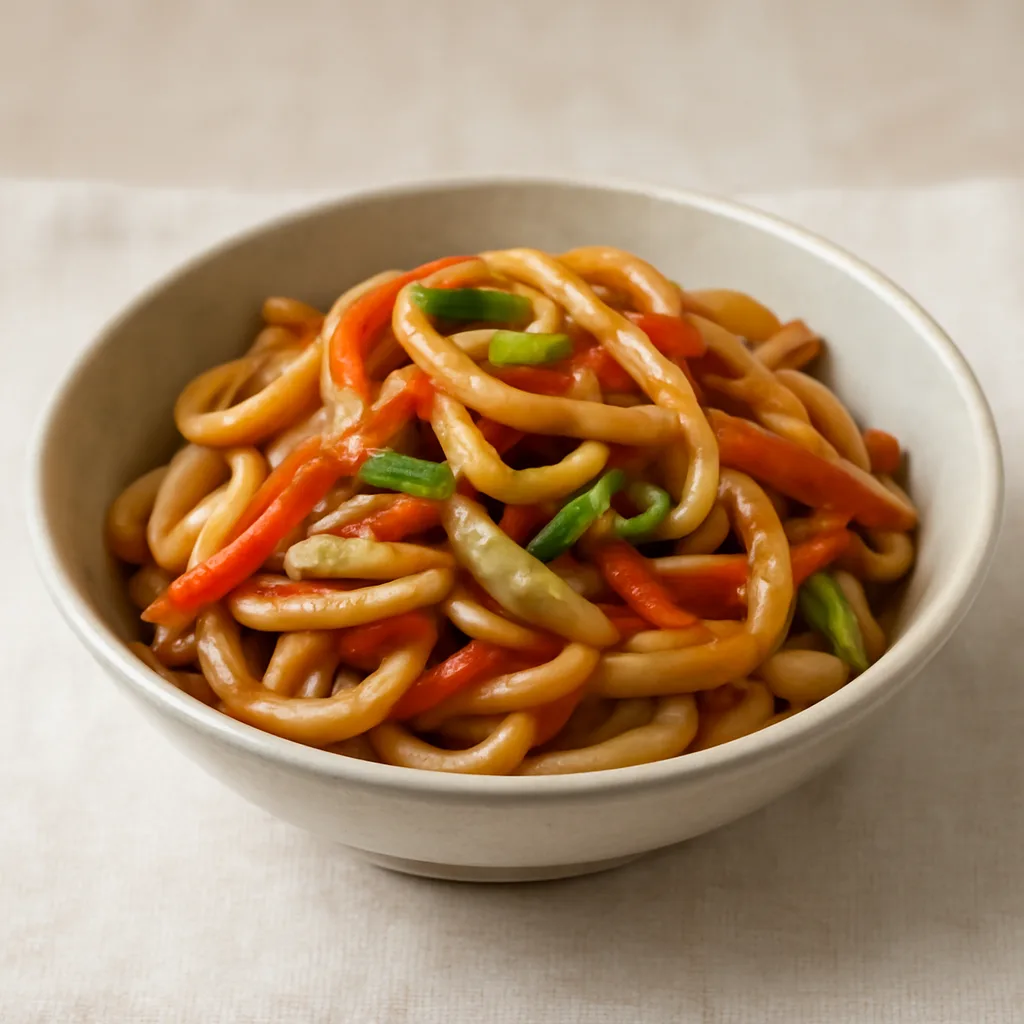
- Stir-fry with thick sauces like soy sauce, butter, gochujang, or oyster sauce to make yaki-udon or spicy fried udon. If vegetables release a lot of water, the sauce can become thin, so quickly stir-fry on high heat or pre-cook vegetables to evaporate moisture.
- Add to nabemono or stews as a finishing noodle to be eaten with the broth. However, long-simmered nabemono can cause noodles to puff up, so adding just before eating is more suitable.
- Chilled udon noodles pair well with soy-based dipping sauces or sesame/spicy dressings. For cold dishes, be sure to drain the noodles well to prevent the sauce from becoming too watery.
Preparation tips
- For refrigerated udon, gently massage the package or briefly blanch in hot water to loosen the noodles. Forcing them apart can break the noodles and create many short pieces when stir-frying.
- For frozen udon, heat evenly through in boiling water or microwave until centers are heated through. If noodles are sticking together or the middle feels hard, heat a bit longer to fully separate before adding sauces.
- For broth udon, either discard the boiling water used for blanching or lift the noodles out to keep the broth relatively clear. If a richer, thicker broth is required, do not rinse and season based on the water released from the noodles at the end.
- For stir-fried udon sauces, mix them beforehand. Once you add the noodles to the pan, adding sauces one by one can make the frying time longer and cause the noodles to spread.
Cooking characteristics
- Udon noodles soften quickly with a short heating time, so for cooked refrigerated or frozen products, think of reheating as the main step. When the noodles become smooth and hot throughout, move to the next step.
- When stir-frying, a wide pan and high heat are advantageous. If the pan is narrow or there is a lot of moisture from ingredients, the noodles may steam rather than fry, so either divide the ingredients for stir-frying or pre-cook high-moisture vegetables first to evaporate moisture.
- If left in the broth too long, the noodles will absorb more liquid, increasing in size and losing chewiness. For dishes prepared in advance, keep noodles and broth separate and combine just before serving.
- Strongly flavored sauces cling to the noodle surface, but if reduced too much, the saltiness will become prominent quickly. Turn off the heat when the sauce only lightly coats the noodles, and add any missing salt at the table as needed.
Good combinations
- Green onions, scallions, onions, mushrooms, and leafy cabbage-type vegetables to add sweetness and aroma help highlight the mild udon flavor.
- Soft or savory ingredients like fried tofu, tofu, eggs, fish cake, chicken, and shrimp pair well with the noodles for balance in thickness and savoriness.
- Soy sauce and bonito-flavored broth pair well with scallions and fried tofu, while spicy stir-fries benefit from vegetables that add moisture and crispness like cabbage, onions, and bean sprouts.
- Aromatic fats like butter or sesame oil should be used sparingly to distribute through the noodles. In clear broths, too much fat can mask the broth aroma, so they are more suitable for fried dishes where a rich taste is desired.
Points to consider when substituting
- If the texture of udon is important for broth-based dishes, fresh noodles or frozen udon are the closest substitutes. Since thickness and doneness vary by product, adjust timing by watching the noodle’s texture rather than following package instructions.
- Instant noodles or Chinese-style noodles can be used in a pinch, but they are thinner and have different flavors, which can cause the dish to become mushy or change the broth flavor. This is more noticeable in milder udon broths; flavors may differ.
- Soba or rice noodles have different preparation methods and flavors, so they are not direct substitutes for udon. They may work for cold, dipping-style dishes with lighter compositions, but will yield a different bite with the thicker noodle.
Ingredients commonly used together in actual dishes
Aggregated based on the co-occurrence count of representative ingredients in public dishes registered in CookPagoda.
Dishes that use this ingredient
Shows dishes where this ingredient is a representative ingredient, sorted by view count.