View recipes
Check the reference data for the selected food.
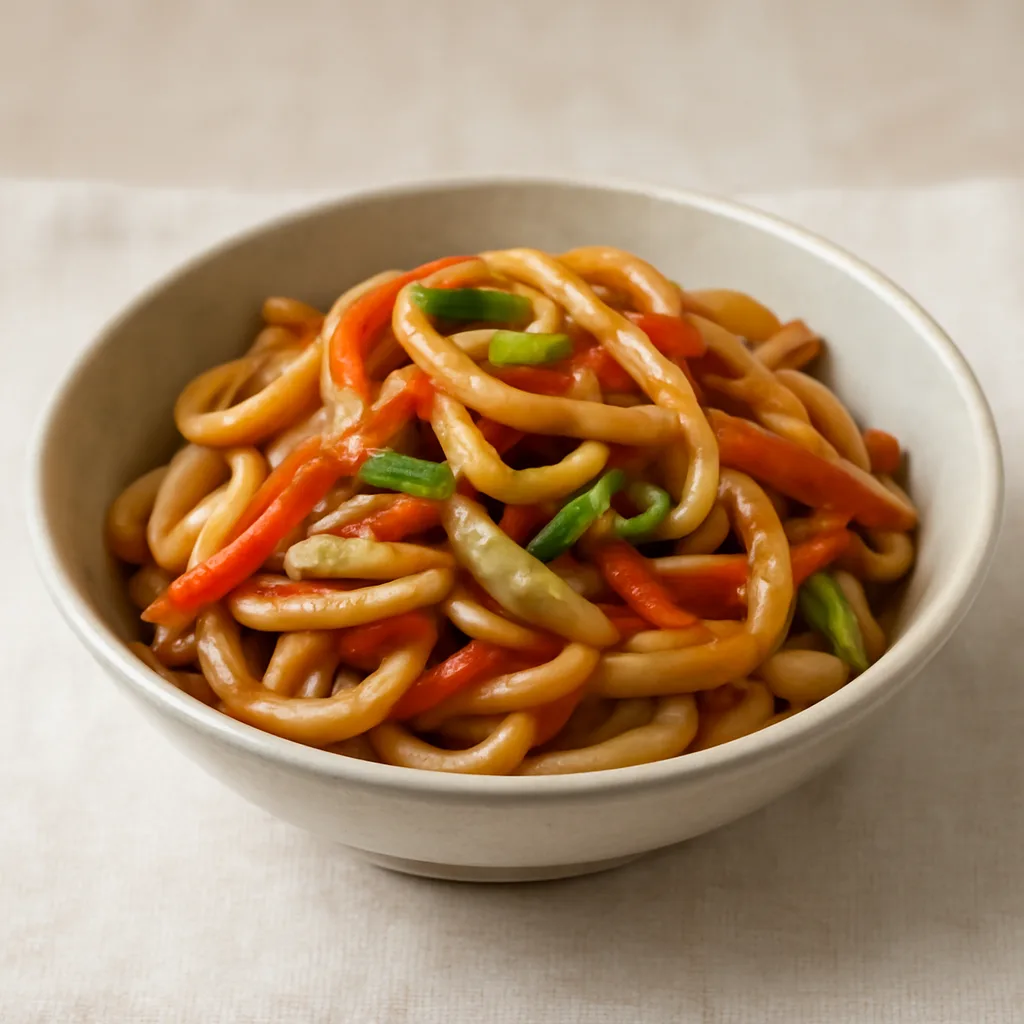
Udon Noodles Stir-fry
A simple dish where soft udon noodles pair with crunchy cabbage and sweet onions, enhanced by pork for a satisfyingly complete one-bowl meal.
Main Ingredients
7
View0
Like1
AI recommendations0
CreatedAbout this recipe
Stir-fried udon noodles are a one-bowl noodle dish that adds the savory depth of pork, the crisp freshness of cabbage, and the gentle sweetness of onion to thick, soft udon noodles. The total cook time is about 15 minutes, and it can be made in a single pan, so the doneness depends on the order of ingredients and the pan’s temperature. The key is to fry the udon noodles long enough to prevent them from becoming mushy, while ensuring the pork is fully cooked and the vegetables finish with some bite. If cabbage and onion release a lot of moisture, the dish tends toward a moist noodle dish rather than a fried one, so it’s better to cook in a way that maintains the pan’s heat rather than piling ingredients all at once. The recipe uses only listed ingredients for a mild flavor, and since there is no separate seasoning mix, it is safe to check the seasoning of the udon noodles and pork you are using, then adjust at the end. If the pan is small or a large amount must be cooked at once, finishing with a moist texture rather than a crisp stir-fry may be a more practical choice.
Taste and Texture
Udon noodles are chewy yet soft to bite, and well-cooked pork adds a rich, savory aroma. Onions develop more sweetness as they cook, and briefly roasting the cabbage leaves a light crunch between the softness of the noodles. Overcooking the vegetables makes everything soft and moist, while finishing briefly on high heat makes the noodle surface a bit grainy and the vegetables’ texture more defined.
Key to making it delicious
- If the udon noodles stick together, they may break apart or the seasoning may not coat evenly while frying, so before adding to the pan, loosen their strands slightly and move them one by one.
- Pork should be cooked first until the pieces are evenly cooked through, change color, and no red juices appear, then add the noodles and vegetables so that even in a short cooking time you achieve safe doneness and flavor.
- Onions should be sautéed until the edges turn translucent and aromas soften to bring out their sweetness, and cabbage should be added last to finish with a slight drop in crispness for a bright contrast.
- If there is moisture pooling at the pan bottom or ingredients sizzle rather than fry, the pan temperature may have dropped, so spread the ingredients out briefly and, if needed, divide and fry to vent moisture.
- If the noodles clump right after adding to the pan, don’t force a flip; apply a bit more heat and then use tongs or chopsticks to loosen the strands so the noodles retain their shape.
Common mistakes
- If vegetables and noodles are added too early at the same time, the moisture from cabbage and onion can lower the pan temperature, causing the noodles to steam rather than fry, so cook pork and onions first, then finish with cabbage and noodles briefly.
- If you fry the udon too long and the noodles become mushy, loosen them and heat just as long as needed, then turn off the heat as soon as the vegetables reach the desired texture.
- If pork pieces vary in size, some can dry out while others remain undercooked, so prepare with as uniform thickness as possible and check that the center of the thickest piece is no longer red.
- Filling the pan with ingredients in a crowded manner can trap moisture and make it soggy; divide the portions or use a larger pan.
Application Ideas
- If you slice pork thin and evenly, you can combine with the udon easily and it cooks quickly; when using thicker slices, cook the meat first until fully done, then add the rest of the ingredients.
- To emphasize the cabbage’s crispness, cut it into larger chunks and add at the end; for a softer, more integrated texture, cut it finer and cook with onion first.
- To taste more onion sweetness, sauté the onions before the cabbage until the edges are translucent; if you don’t want a strong browned flavor, avoid over-drying the pan and watch the heat.
Pairing ideas
- When serving in one bowl, start with the noodles and arrange the pork, cabbage, and onions evenly on top to enjoy the distinct textures and flavors of each ingredient.
- Right after completion, the cabbage’s crispness and the udon’s springiness are best shown, so it’s better to serve promptly rather than leaving it in the pan.
- If the portion is light, keep the pork and vegetables mixed with the noodles by not piling the noodles very high, so the ingredient balance is easier to achieve.