View recipes
Check the reference data for the selected food.
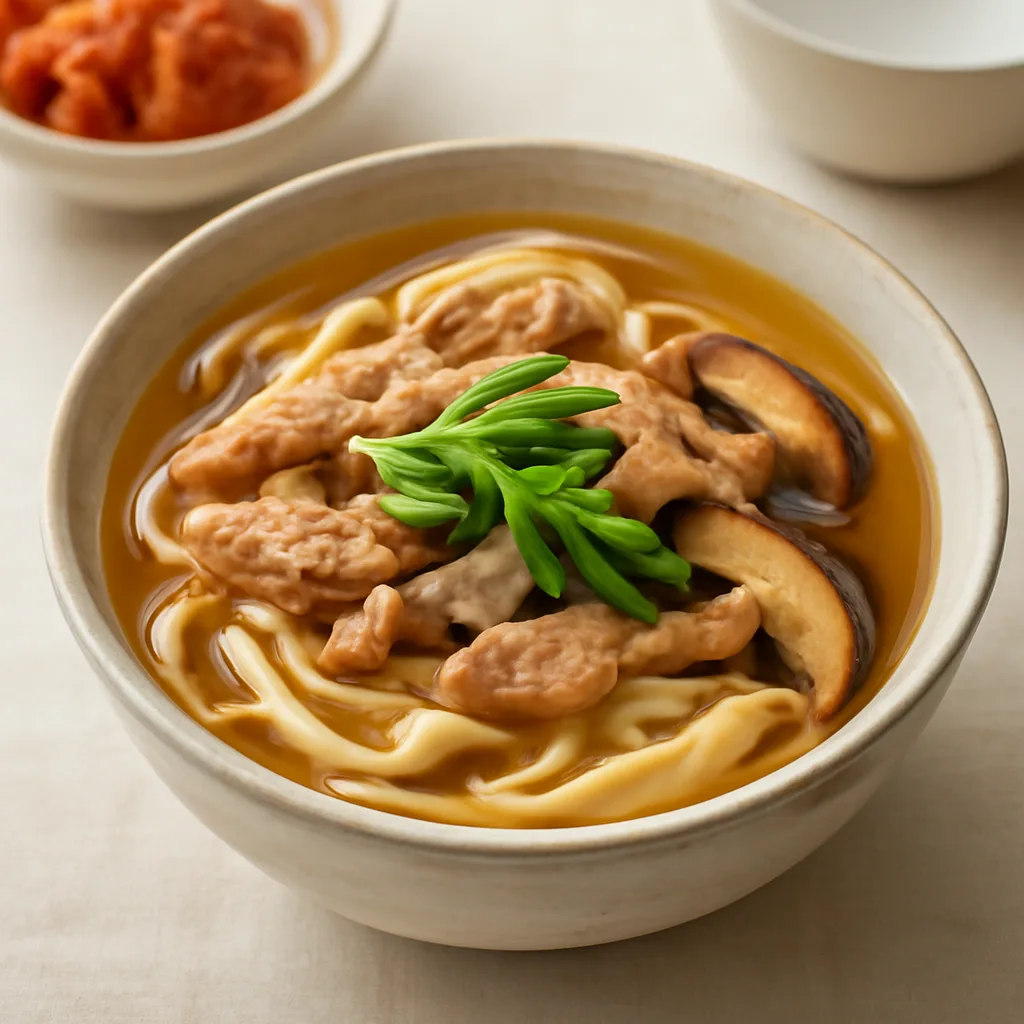
Pork Udon Soup
Pork udon soup is a warm bowl of dish where a rich broth blends with soft udon noodles. Fresh cabbage and onions add depth to the broth.
Main Ingredients
11
View0
Like1
AI recommendations0
CreatedAbout this recipe
Pork udon soup is a warm, one-bowl dish built on the savory richness of pork, with udon noodles added for a comforting, complete meal. Cabbage and onion contribute a gentle sweetness and soft texture to the broth, making it easy to scoop both noodles and meat together. Preparation time is about 15 minutes, so it's efficient to prep ingredients beforehand. In particular, udon noodles tend to become soggy if boiled for too long, so a good approach is to adjust the broth seasoning and pork doneness first, then add the noodles at the end and heat them through. The thickness of the broth can be adjusted to taste. If you want a light, clear broth, simmer only until the vegetables are just tender; to enhance the sweetness of cabbage and onion, cook a bit longer. However, boiling vegetables too long reduces the time you have to add the noodles or can make the noodles mushy, so this method is especially suitable when serving a single bowl right away.
Taste and Texture
A warm broth with the savory pork flavor, complemented by the natural sweetness of onion and cabbage. Soft yet springy udon noodles, vegetables that soften as they cook, and moist pork all come together in one spoonful. Keeping the noodles’ bounciness yields a clean impression, while cooking a bit longer softens the noodles and vegetables for a comforting texture. The latter method is not ideal if you prioritize chewiness of the noodles.
Key to making it delicious
- When pork is added to the pot, check that the surface color has almost disappeared and the pork aroma begins to permeate the broth before adding the next ingredients, which helps reduce undercooked portions in a short cooking time.
- If the onion and cabbage are cut too large, they may not become sufficiently tender within 15 minutes, so cut them into bite-sized pieces that are easy to scoop with the noodles to match the cooking speed.
- Udon noodles should be added toward the end while the broth is boiling, and handled only until the strands loosen naturally, which helps prevent the starch from over-releasing and clouding the broth or making the noodles soggy.
- If the broth is reduced and the ingredients look too crowded, add hot water or prepared broth to submerge the noodles a bit; conversely, if it tastes too thin, simmer a bit longer before adding the noodles to check the concentration.
Common mistakes
- If udon noodles are boiled from the start for too long, the noodles can break easily and the broth can feel thick, so add them after the meat and vegetables are nearly cooked and briefly heat before serving.
- If pork is added in a large chunk, the outside may cook but the center may lag, so prep thin or bite-sized pieces and ensure the thickest pieces are evenly colored.
- If onions and cabbage are boiled too long, their texture can become overly mushy, so if you don’t want soft vegetables, add them just before the noodles or very close to that time.
- Stirring the noodles too much while the broth is vigorously boiling can damage the noodle surfaces, so loosen them only when the strands stick together.
Application Ideas
- If you want to keep some of the cabbage crispy, partially cook it first and then add the rest with the udon noodles to briefly cook, creating textural contrast within the same ingredients.
- If you want the onion to be less prominent, slice it thinner and cook it thoroughly in the broth; if you want a chewier bite, slice it with more texture along the grain.
- Different cuts or thickness of pork can change the broth’s feel, so use thin slices for quick tenderness and more uniform results, or cook thicker pieces fully before adding the noodles for safety.
- If you want to emphasize the noodles over the broth, increase the amount of udon noodles while preparing the broth and vegetables generously to prevent them from clumping together.
Pairing ideas
- Serve immediately in deep bowls with the noodles submerged in broth to prevent them from drying or sticking together.
- When serving, place the noodles first and top with pork and vegetables evenly to make it easy to eat all components in one bowl.
- If serving in a slower-meal setting, portion the bowls right before eating rather than letting the noodles and broth sit separately to maintain noodle texture.
- To keep the broth warm, use pre-warmed bowls and check the temperature before serving, as they can be very hot right away.