Voir les plats
Vérifiez les données de référence des aliments sélectionnés.
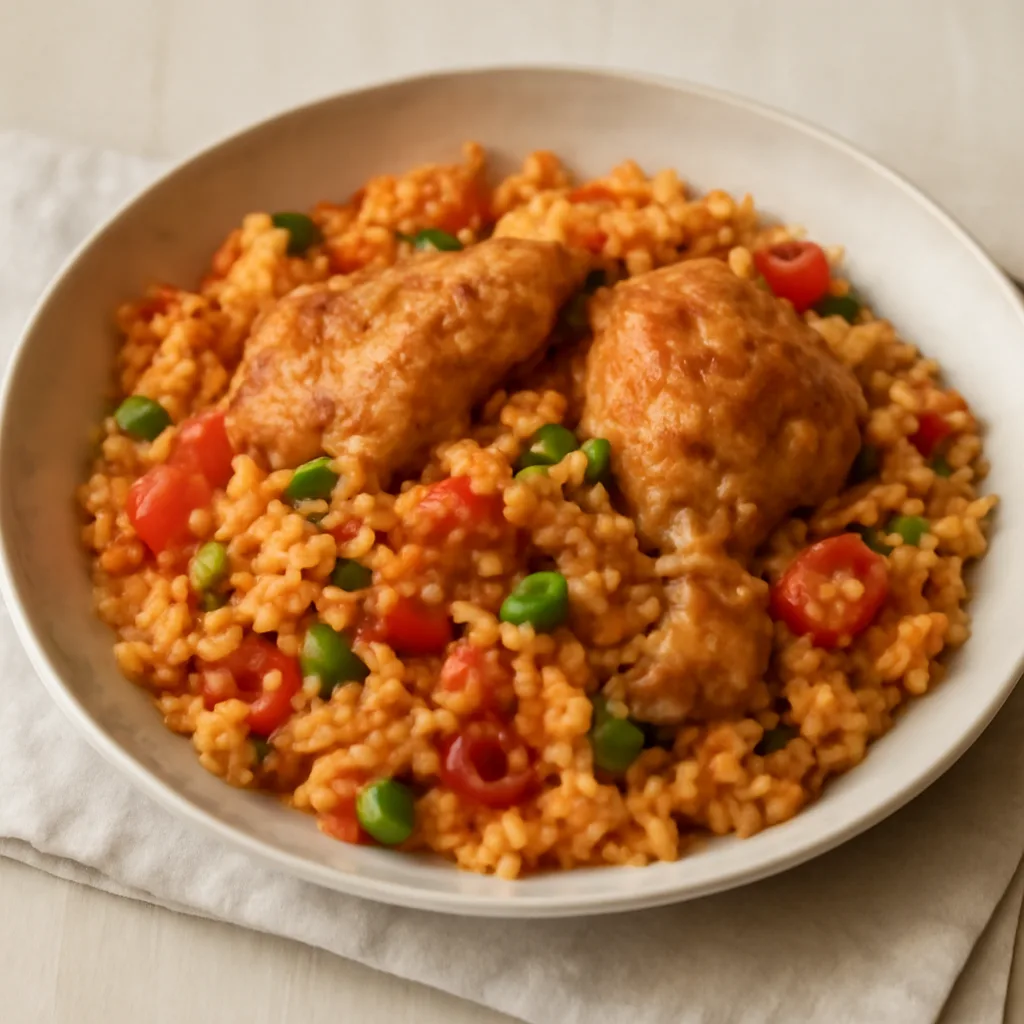
plat espagnol de poulet et riz
Le plat espagnol de poulet et riz associe poulet et légumes frais pour offrir une saveur riche. Le riz est tendre et savoureux, et la fraîcheur du paprika et de la tomate vient compléter le tout, faisant de ce plat un repas convenant à la famille.
Ingrédient principal
Thèmes associés
11
Consultation0
J'aime1
Recommandation AI0
CrééÀ propos de ce plat
Spanish-style chicken and rice dish where chicken, tomatoes, bell peppers, and peas are harmoniously cooked with rice in one pan. The core idea is to let the chicken’s savory flavor soak into the rice and balance the dish with the bright moisture from tomatoes and the sweetness of bell peppers. Cooking time is about 40 minutes, difficulty is medium. Using a wide pan helps prevent overlapping and makes it easy to monitor the chicken’s surface browning and the rice’s doneness. If the pan is too shallow or ingredients are added in excess, moisture evaporates unevenly and parts of the rice may be undercooked or the bottom can scorch. When serving as a family meal, keep chicken pieces roughly the same size and spread tomatoes and bell peppers evenly among the grains of rice so every spoonful tastes fairly balanced. Since there are no exact cooking steps or liquid ratios provided, you should adjust moisture and cooking time based on the type of rice used and the size of the pan.
Goût et texture
When well cooked, the rice is soft and flavorful in the center, and the chicken adds a chewy texture. Tomatoes contribute brightness and moisture, while bell peppers and peas provide a subtle sweetness and color contrast. If the tomatoes are very juicy, the overall dish will be closer to a moist rice dish; if you boil off enough moisture, the grains will have crisper definition. Which outcome is better is a matter of preferred texture, not a right or wrong choice.
Clé pour réussir
- 닭고기는 팬에 넣었을 때 표면이 옅은 갈색으로 변할 만큼 먼저 익혀 두면 풍미의 기반이 생기며, 색이 나기 전에 채소와 수분을 많이 넣었다면 팬이 과밀했을 수 있으니 재료를 나누어 익히는 편이 낫습니다.
- 토마토는 쌀에 수분과 산미를 더하므로, 팬 바닥에 맑은 물기가 많이 고이면 잠시 끓여 수분을 정리한 뒤 쌀을 익히는 편이 질척한 결과를 줄이는 데 도움이 됩니다.
- 쌀이 익는 동안에는 한쪽만 강하게 끓지 않는지 살피고, 가장자리는 마르는데 가운데가 지나치게 젖어 있으면 불을 낮추고 팬을 돌려 열을 고르게 분산합니다.
- 파프리카와 완두콩의 색과 식감을 살리고 싶다면 지나친 가열을 피하는 것이 좋습니다. 특히 완두콩이 이미 익힌 제품이라면 오래 끓일수록 주름지고 무를 수 있으므로 마무리 단계에 더하는 방식을 고려할 수 있습니다.
Erreurs courantes
- 쌀의 가운데가 단단한데 팬 바닥만 마르고 눌어붙는 증상은 수분이 너무 빨리 줄었거나 불이 강했을 때 나타날 수 있으므로, 소량의 뜨거운 물이나 육수를 가장자리로 보충한 뒤 약한 열에서 익힘을 이어 갑니다.
- 완성 후 밥이 지나치게 죽처럼 퍼졌다면 토마토를 포함한 재료의 수분을 충분히 고려하지 않았을 가능성이 있으므로, 다음에는 토마토에서 나온 물기를 먼저 줄이거나 액체를 한 번에 과하게 넣지 않습니다.
- 닭고기가 퍽퍽하고 쌀은 아직 덜 익었다면 닭고기를 처음부터 오래 끓였을 수 있으므로, 닭고기를 먼저 익힌 뒤 쌀의 조리 시간에 맞춰 다시 합치는 방법이 적합합니다.
- 파프리카가 흐물흐물하고 색이 탁해졌다면 가열 시간이 길었던 것이므로, 부드러운 식감을 특별히 원하지 않는 한 비교적 늦게 넣어 짧게 익힙니다.
Idées d'application
- 토마토의 산미가 두드러질 때는 파프리카를 충분히 익혀 단맛을 끌어내면 맛의 균형을 잡기 좋지만, 파프리카의 아삭한 식감을 원한다면 일부는 마무리에 넣는 편이 낫습니다.
- 완두콩의 존재감을 높이고 싶다면 쌀과 섞기 전에 마지막에 고르게 뿌려 색을 유지할 수 있으며, 쌀에 완전히 섞인 부드러운 식감을 원한다면 더 이른 시점에 넣습니다.
- 닭고기를 한입 크기로 준비하면 가족이 덜어 먹기 편하지만, 너무 작은 조각은 쌀이 익는 시간 동안 쉽게 마를 수 있으므로 조각 크기를 지나치게 줄이지 않습니다.
Idées d'accompagnement
- 팬에서 잠시 뜸을 들인 뒤 내면 남은 수분이 쌀에 고르게 퍼져 덜어낼 때 형태가 안정적일 수 있습니다.
- 토마토와 파프리카가 눈에 보이도록 윗면에 남겨 담으면 재료 구성이 분명해져 가족 식사 상에서 나누어 먹기 좋습니다.
- 상큼한 곁들임을 원한다면 별도의 신선한 채소를 곁들이되, 이미 토마토의 수분감이 충분한 경우에는 물기 많은 곁들임을 많이 더하면 전체 식사가 다소 묽게 느껴질 수 있습니다.