Encyclopédie des ingrédients
Découvrez les caractéristiques des ingrédients et comment les utiliser en cuisine.
김
7
8
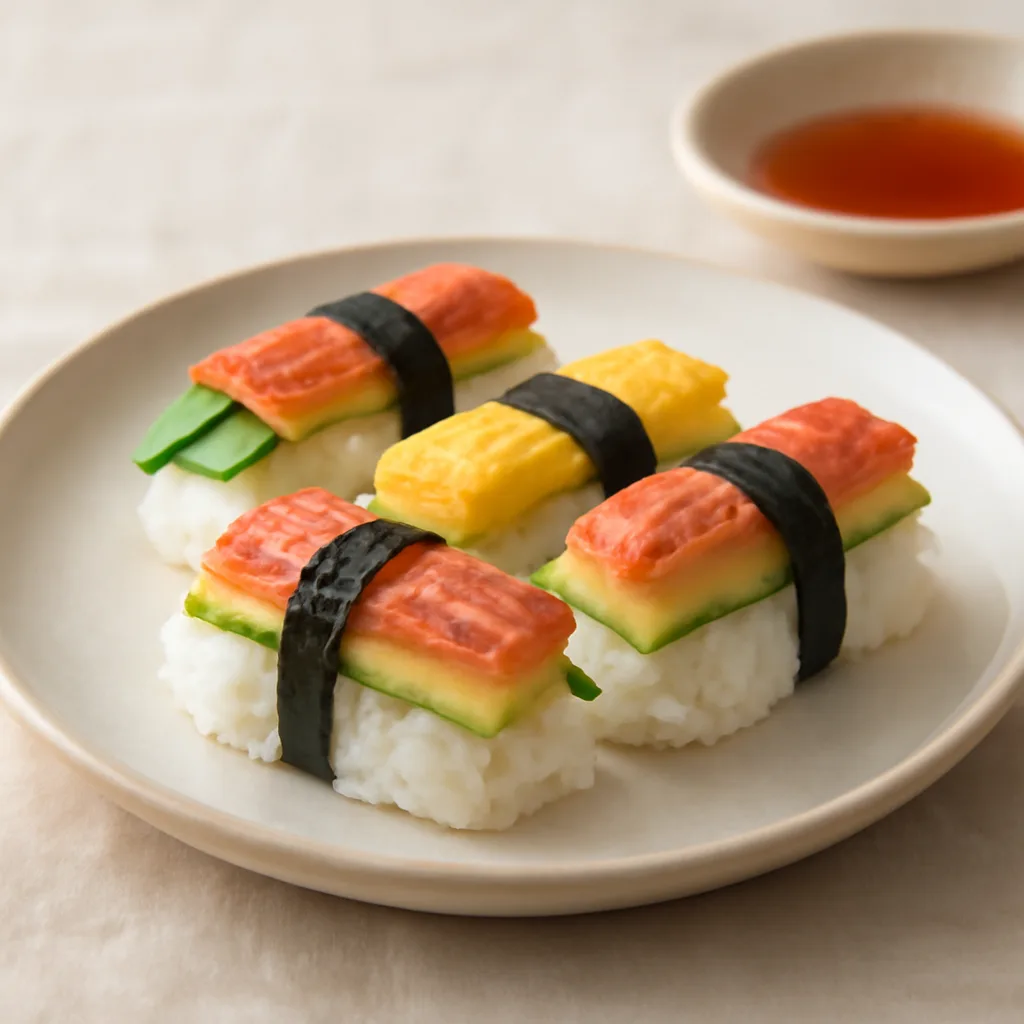
Kim is thinly sliced dried seaweed, eaten with rice or used to add aroma to soups, noodles, or fried rice. Dried seaweed can be crumbled as is, and seasoned seaweed fried with oil and salt is used as an easy side dish or finishing topping. It has a gentle sea aroma and umami, especially pairing well with bland ingredients like plain rice, eggs, and tofu. However, if it comes into contact with strongly flavored sauces or highly moist sauces for a long time, the kim’s distinctive aroma and crispness can be muted, so when used as a topping, it is usually best to add it just before finishing.
Goût et texture
Kim has a savory, salty sea scent with a light umami. Depending on whether it is seasoned, the saltiness and oil aroma can vary, so when using seasoned kim, it is safer to adjust the dish’s seasoning first. Dried kim is very thin and crispy, but it rapidly softens when exposed to moisture or broth. If you want a crispy texture, crush it finely and sprinkle it at the end; if you need a texture that melts into broth, add it a little earlier.
Principales utilisations
- Used to wrap rice, when paired with warm rice and sesame oil and sesame seeds the kim flavor becomes simply prominent. Since seasoned kim is already salted, adding too much seasoning can taste salty.
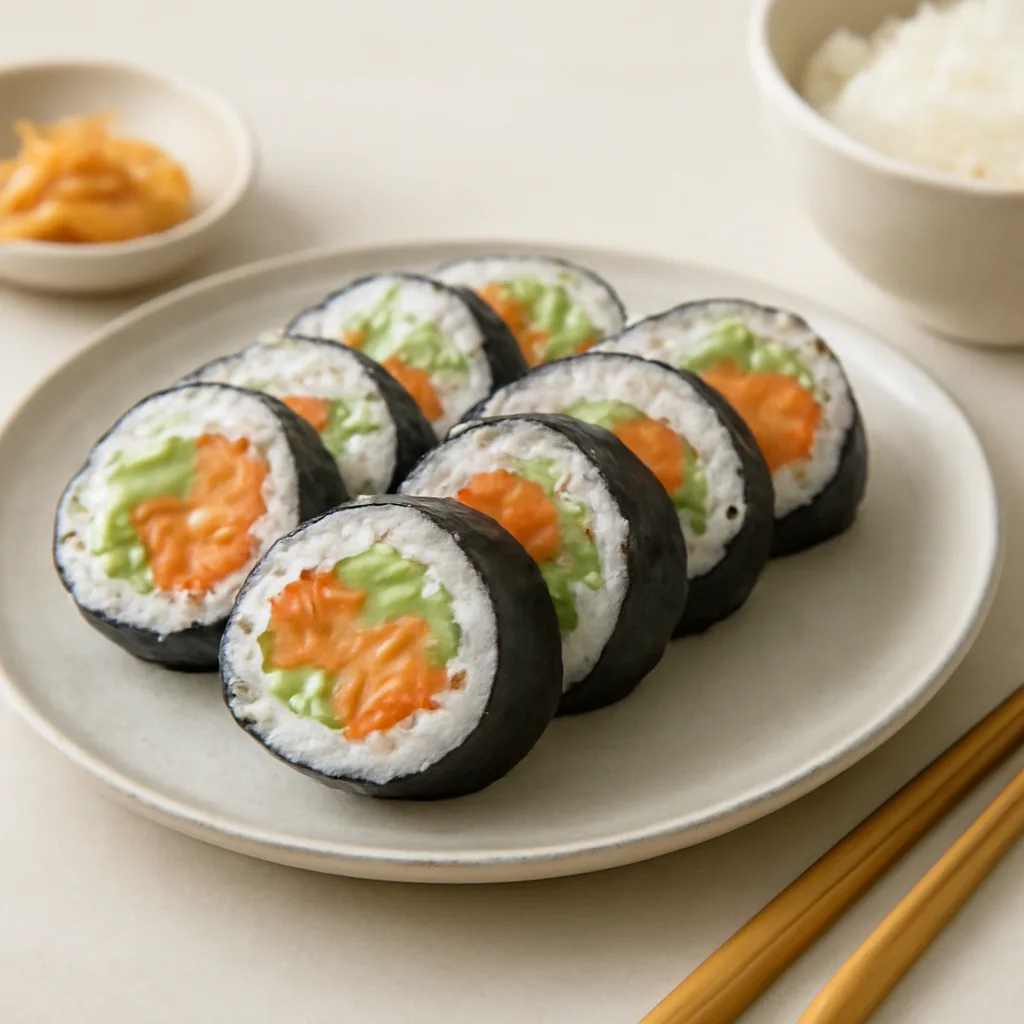
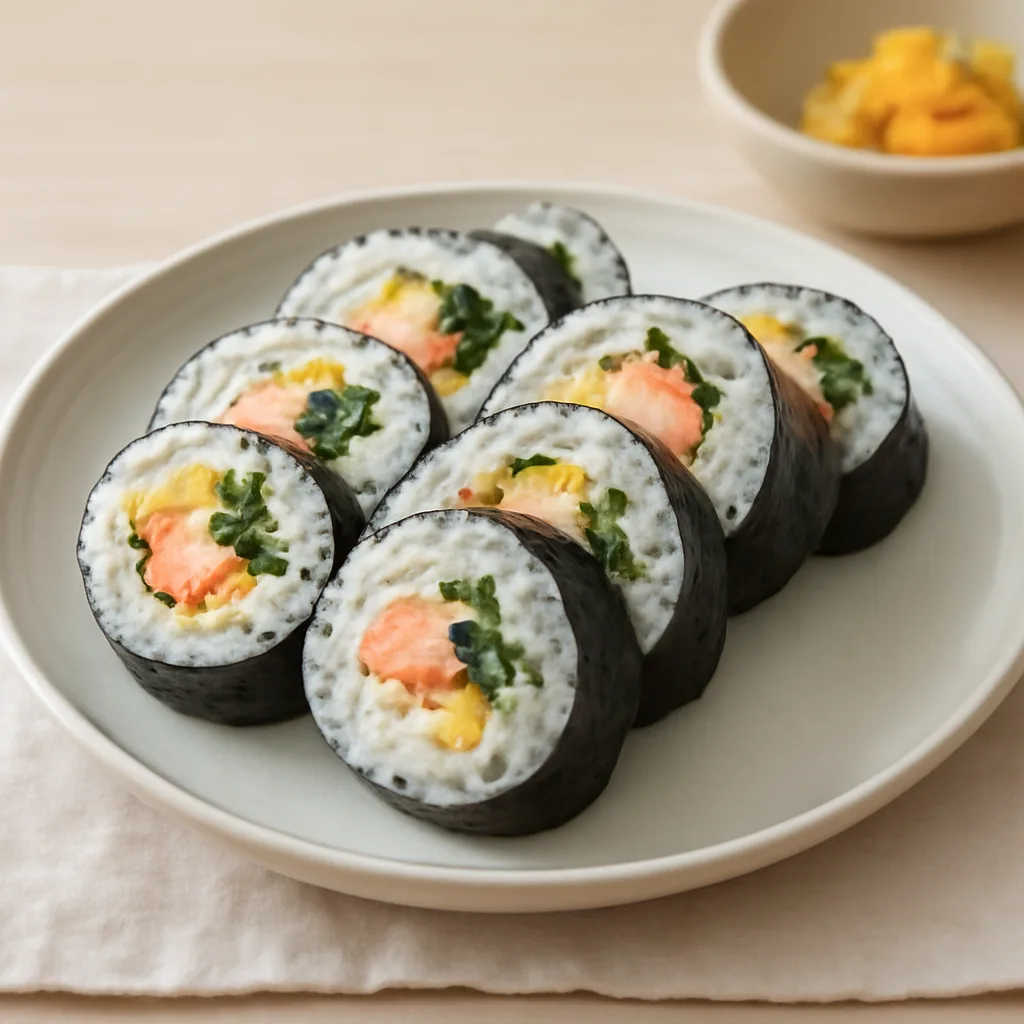
- In kimbap, it acts as a wrap for rice and fillings. If the rice is too hot or sticky, the kim can get soggy and tear easily, so it’s easier to handle if the rice is cooled slightly before spreading.
- For soups such as soups, ramen, udon, or rice cake soup, cut into pieces and sprinkled as a topping. Since kim in broth softens quickly, if you want to chew it, place it in the bowl and then top.
- For fried rice, bibimbap, and onigiri, mix crushed kim or sprinkle at the end. If you mix evenly with ingredients, the umami spreads, but crispness decreases.
Conseils de préparation
- Crumple or cut dried kim as needed with scissors or by hand. When cutting many sheets at once, stacking helps, but pressing too hard can create a lot of powder.
- If you want to lightly toast plain kim, warm briefly on a dry pan or over low heat. When the edges harden slightly and the aroma rises, stop; if the color darkens or smoke appears, the heat is too high.
- Kimbap kim is often used on the rough side to spread rice, so rice grains can stick easily. However, differences between products aren’t large, so it’s fine to test which side sticks better by placing rice on a small area before finishing.
- For broth toppings, cut or crumble just before serving. If prepared kim is damp, restoring crisp texture is difficult, so it’s better to use fresh kim or use a soft topping instead.
Caractéristiques lors de la cuisson
- When kim is exposed directly to heat, its aroma becomes more pronounced and texture becomes lighter, but excessive heat can cause a roasted aroma and bitter taste. Heat just briefly and remove from heat as soon as the aroma rises.
- It quickly absorbs water or steam and becomes soft. This is advantageous for dissolving into broth to add umami, but for toppings that require crispness on bowls or salads, use it right before finishing.
- Kim brushed with oil gains a rich savoriness, but seasoned kim with oil and salt can have its aroma roughened easily on high heat. When adding to fried dishes, turn off the heat and mix or handle briefly on low heat.
- In kim-bap, the parts in contact with moist fillings soften first. Wipe moisture from ingredients like cucumber, pickled radish; for kim-bap not eaten immediately, avoid overly wet fillings.
Combinaisons recommandées
- Warm rice, sesame oil, and toasted sesame briefly enhance kim’s nutty aroma naturally. If using seasoned kim, start with less sesame oil or salt and adjust after tasting.
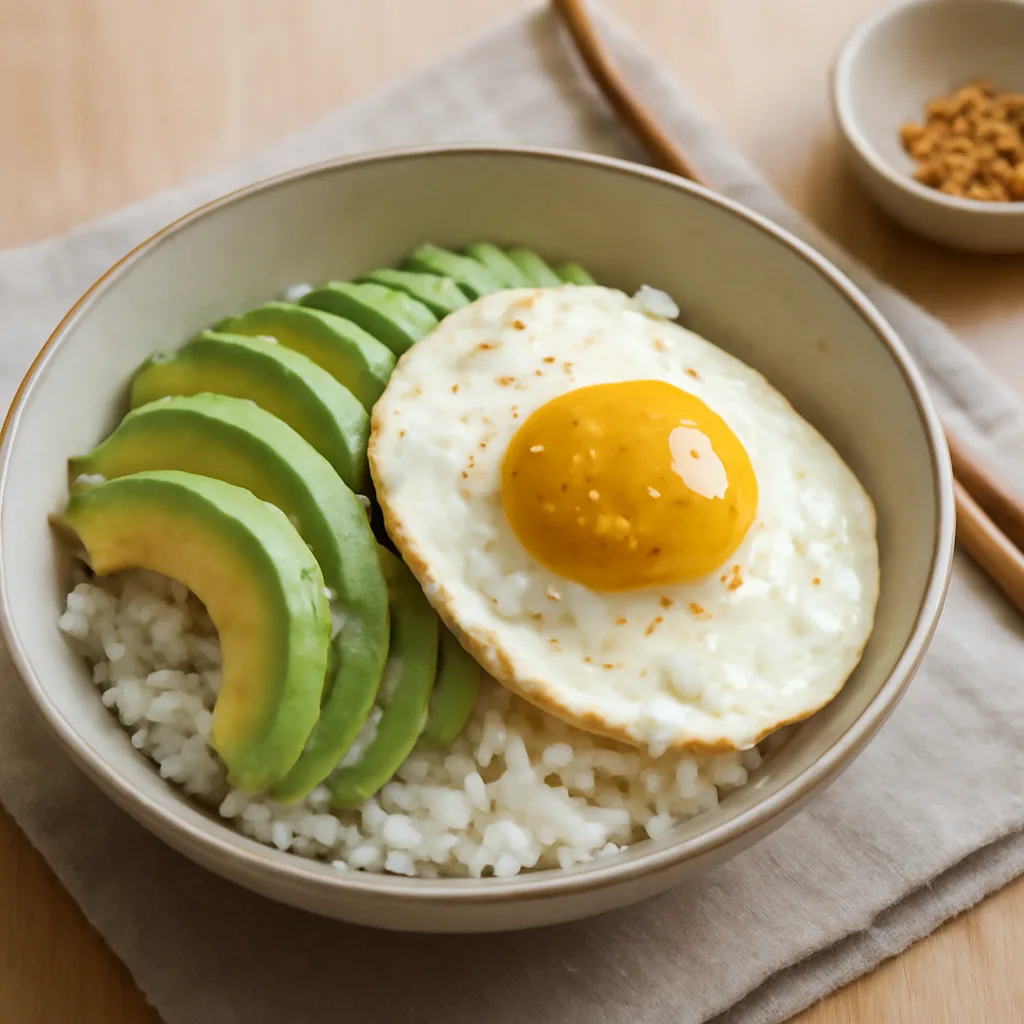
- For soft ingredients like eggs, tofu, or avocado, the kim’s umami stands out. Conversely, when using strong salted shrimp paste, cheese, or very spicy seasonings, kim aroma may recede to the background.
- For clear broths, add a small amount of crushed kim to deepen aroma, and reduce amount in rich broths like doenjang or gochujang to avoid overpowering sea flavor.
- For kim-bap fillings, pair with relatively dry ingredients like pickled radish, shredded egg, spinach, or carrot.
Points à considérer lors du remplacement
- If wrapping rice, there aren’t many exact substitutes that replicate the same function. Thin egg crepes or lettuce can be used, but they alter wrapping strength, aroma, and moisture reaction, so adjust fillings and serve promptly.
- If the goal is finishing umami in soups or fried dishes, a small amount of finely chopped other edible seaweed can be used. Since seaweeds vary in saltiness and aroma, add gradually to match flavor.
- If you need a crispy topping but have no kim, use toasted sesame seeds or toasted onions. This helps texture but won’t reproduce kim’s sea aroma.
- When using plain unseasoned kim instead of seasoned, add salt and oil separately to adjust flavor. Conversely, if you replace plain with seasoned kim, it’s better to lower the overall dish’s seasoning.
Ingrédients souvent utilisés ensemble dans les plats réels
Basé sur le nombre d'apparitions simultanées des ingrédients principaux des plats publics enregistrés sur CookPagoda.
Plats contenant cet ingrédient
Nous affichons les plats où cet ingrédient est un ingrédient principal, classés par nombre de vues.