Gericht ansehen
Überprüfen Sie die Basisdaten des ausgewählten Gerichts.
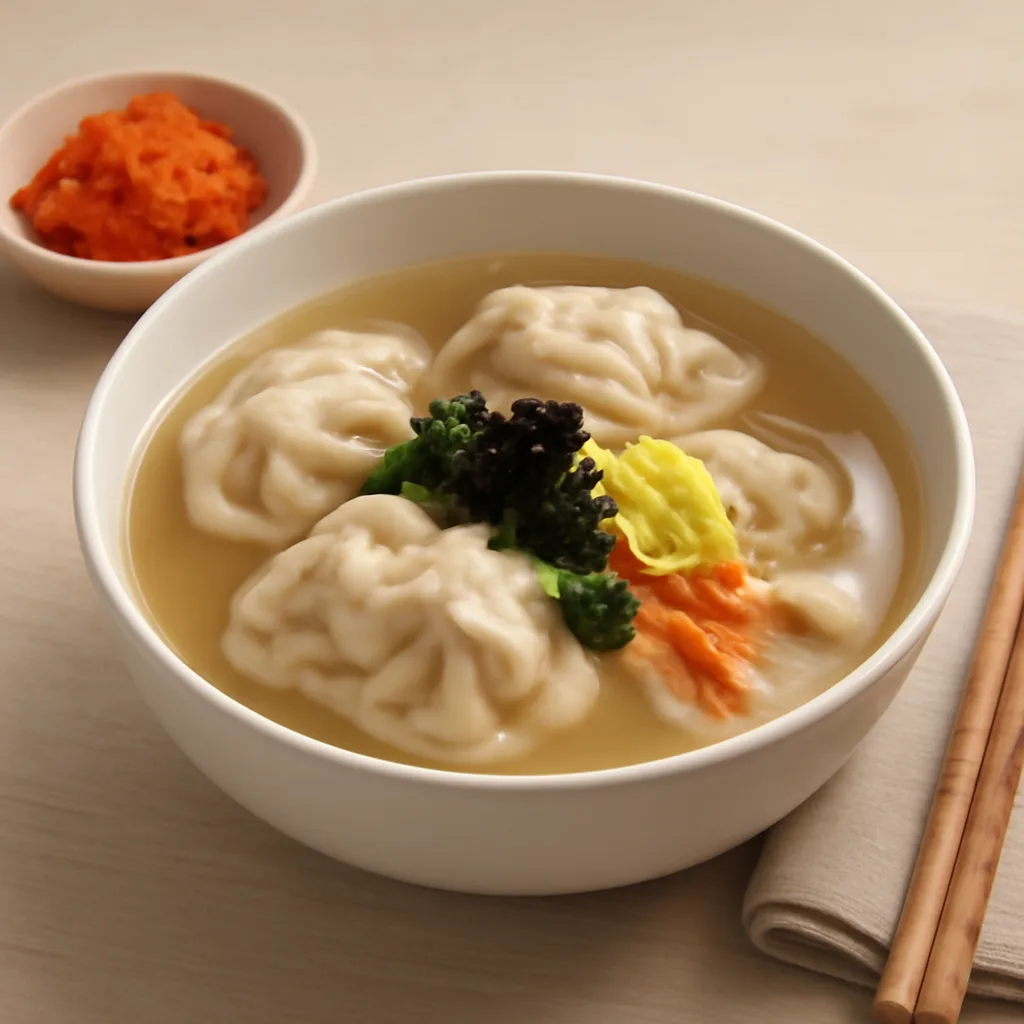
Mandu-guk (Mandu-Suppe)
Mandu-guk ist eine warme, deftig-würzige Brühe, in der TK-Mandu und frisches Gemüse zu einer harmonischen Mahlzeit verschmelzen. Schnell zuzubereiten und damit eine perfekte Mahlzeit zu jeder Zeit.
Verwandte Themen
9
Abfrage0
Gefällt mir1
AI-Empfehlung0
Habe ich gemachtÜber dieses Gericht
Mandu-guk is a simple soup dish where you boil water, cook frozen mandu, and finish with bok choy, green onion, and eggs. Even with few ingredients, the flavors from the dumpling filling and the green onion spread into the broth, making it a good one-bowl meal. Since cooking time is about 15 minutes, washing and slicing ingredients in advance makes it easy to add vegetables and eggs while the mandu finish cooking. The flavor center is a clear, light broth and the mandu. After tasting the broth, adjust salt little by little, as the saltiness can vary with each mandu’s wrapper and filling. If you salt it heavily from the start, the broth may become salty because different frozen mandu have different salt levels. Chingensai (bok choy) can become soft on the stems and leaves can dull in color if boiled too long, so it’s best to add them toward the end when the mandu are almost cooked and cook briefly. Eggs soften the broth, but if you prefer a clear broth, you can add them gently without whisking or omit them.
Geschmack und Textur
Soft mandu skin and moist filling contrast with the crispness of bok choy leaves. Green onion adds a subtle aroma as it cooks, and if you add whisked eggs, the broth becomes smoother and softer. The broth is honed to a clear, lightly salted taste. If you expect a rich stock flavor, boiling with only water may feel rather plain, so consider this as a light meal that highlights the mandu’s own savor.
Der Schlüssel zu einem leckeren Gericht
- Once the water is rapidly boiling, add the frozen mandu to prevent the dumpling wrappers from spreading quickly; if the boil subsides, adjust the heat until it returns to a boil to prevent over-spilling.
- Immediately after adding the mandu to the pot, gently stir once or twice to prevent sticking to the bottom. Stirring vigorously repeatedly can tear the wrappers and make the broth cloudy.
- Even after the mandu float, they need time for the insides to heat through, so check that the wrappers look translucent and plump before adding the next ingredients.
- Add bok choy from the stems first, then the leaves. If you want softer greens, cook a bit longer, but the vibrant color and crunch will fade.
- Eggs should be added as thin ribbons into the gently simmering broth and not whisked immediately to avoid forming thin strands. If you want chunky egg pieces, whisk the eggs and add them, then let them set briefly before stirring gently.
- Salt should be tasted and adjusted after all ingredients are in; if the mandu release more saltiness, you may not need extra salt at all.
Häufige Fehler
- If you start with high heat and boil vigorously, the mandu skins may burst; once the broth returns to a boil, reduce to medium to minimize rocking. Bursting mandu can release filling and cloud the broth.
- If bok choy is put in with the mandu and leaves turn yellowish and limp, in the future reserve the greens until near the end and boil briefly.
- If you add too much salt early, the broth tastes salty; add a bit of water and bring to a boil again, judging additional seasoning after the mandu and vegetables are cooked.
- If you whisk the eggs vigorously as soon as adding them, the broth becomes cloudy; next time lower the heat and add the eggs in a thin stream, letting them set briefly before stirring gently.
- If frozen mandu are left thawed for a long time and wrappers stick together, do not forcefully separate them; drop into boiling water and let them separate naturally. If the wrappers are very wet, reduce stirring during cooking to avoid breakage.
Anwendungsideen
- You can use leafy greens you have at home instead of bok choy, but greens that wilt quickly like spinach should be added just before turning off the heat to avoid becoming too soft.
- If you want more of the green onion aroma, add the white parts first to the broth and add the green parts at the end. If you don’t want a strong onion flavor, add all at once for full cooking.
- Instead of whisking the egg, serve with a soft- or hard-boiled egg on the side to maintain a clear broth appearance.
- Depending on the type of frozen mandu, vegetable dumplings tend to be lighter in flavor, while meat dumplings feel more robust, so salt should be adjusted accordingly.
Beilagenideen
- Right after the dish is ready, serve in bowls while the green onion remains vibrant to best enjoy the warmth and aroma of the broth.
- When served with rice, the remaining broth is great as a pairing; if you’ve increased the mandu amount, you can have it as a one-bowl meal without rice.
- Serve with a side of kimchi or other acidic and spicy condiments to contrast the mild mandu soup. If the kimchi is very salty, tone down the broth accordingly.