Gericht ansehen
Überprüfen Sie die Basisdaten des ausgewählten Gerichts.
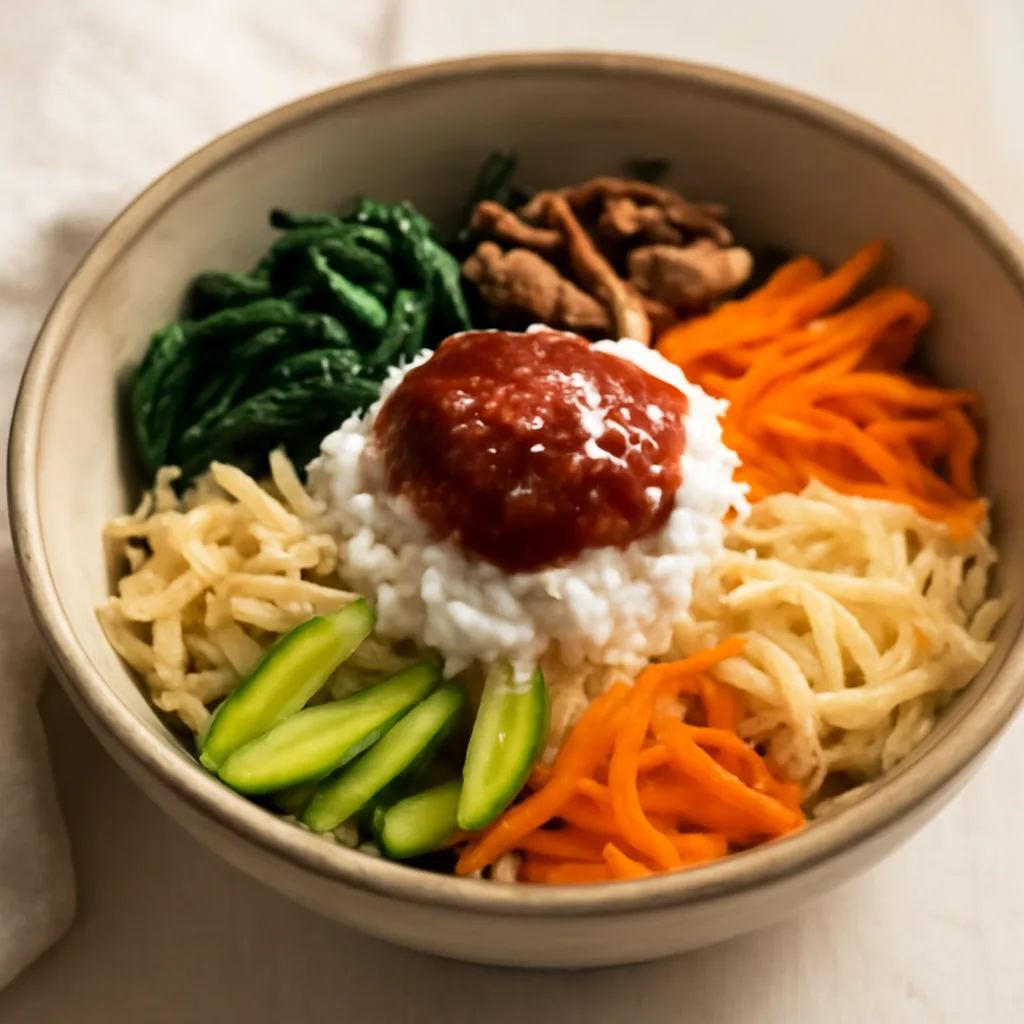
Bibimbap
Bibimbap ist ein koreanisches, typisches Gericht für eine Mahlzeit, das eine Vielzahl von Kräutern, Gemüse, Fleisch und Ei vereint. Wenn man es mit Gochujang und Sesamöl mischt, ist es aromatisch und köstlich.
Hauptzutat
Verwandte Themen
19
Abfrage2
Gefällt mir1
AI-Empfehlung0
Habe ich gemachtÜber dieses Gericht
Bibimbap is a one-bowl dish where warm rice is topped with sautéed namul and vegetables and a soft-cooked egg, then mixed with gochujang and sesame oil. In this preparation, the key is to sauté greens like spinach or bracken separately to bring out each ingredient’s aroma and texture. The preparation time is about 30 minutes, and the complexity is medium because several ingredients need trimming and seasoning separately. The flavor center is the spicy-sweet-savory glaze of gochujang and the nutty aroma of sesame oil, and the yolk becomes smoother when mixed with the sauce. Keep the rice warm so gochujang can dissolve evenly and ingredients blend naturally. Depending on the types and moisture level of the namul, the amount of gochujang and salt will vary. Instead of adding all the seasoning at first, split the gochujang when mixing and adjust by taste to avoid overpowering the inherent saltiness and aroma of the namul.
Geschmack und Textur
Warm, soft rice with moist namul and a slightly runny yolk creates a soft, savory texture. If the namul isn’t fried too long, each ingredient retains a slightly different chew and aroma, making each bite change. Gochujang adds deep heat and saltiness, and sesame oil links the aroma at the end. If you add too much gochujang, the flavor becomes more pronounced but can mask the delicate aroma of the namul, so starting with less is better when you want a milder taste.
Der Schlüssel zu einem leckeren Gericht
- Rice should be served warm with a little steam to prevent the gochujang from clumping and to help it dissolve well; if the cooked rice has cooled, reheat sufficiently.
- Like spinach and bracken have different properties, sauté them separately rather than all at once in one pan, to control moisture and doneness more easily.
- When namul releases a lot of moisture in the pan, sauté on high heat briefly to evaporate it; for already-soft namul, avoid prolonged heating to prevent toughness.
- Turn off the heat when the egg white is set and the yolk is still soft; the yolk will spread like sauce when mixed, but if you prefer hard yolks or want to avoid using yolk, cook to your desired doneness.
- Split and sprinkle gochujang and sesame oil over the rice and toppings and mix while considering the saltiness of the namul to achieve balance.
Häufige Fehler
- Sautéing too many namul at once can crowd moisture in the pan, leading to boiling rather than frying; divide portions or heat the pan well and cook briefly.
- If you add the same amount of salt to all namul, seasoned ingredients may become too salty; add salt in small amounts per ingredient and taste before mixing.
- Cold rice prevents even mixing of gochujang and sesame oil and can cause clumping; re-warm the rice or mix with small portions of seasoning at a time.
- Adding the egg too early can cause residual heat to set the yolk, reducing the soft binding; plate other ingredients first and add the egg last.
- Overuse of sesame oil can mute the gochujang and namul aromas, so start with the recorded 1 tablespoon and adjust to suit the rice quantity and taste.
Anwendungsideen
- Adjust the proportions of spinach and bracken to emphasize preferred namul aromas, and if adding wetter vegetables, drain well to avoid making the rice soggy.
- To reduce heat, use less gochujang and mix first with sesame oil and egg yolk, then only adjust the seasoning with a touch of salt as needed.
- If you want a more pronounced gochujang flavor, don’t mix everything into the rice at once; instead place gochujang on one side and mix gradually to control the level of seasoning.
- If the moistness of the soft yolk isn’t right, cook the egg to a hard yolk and use it, but still drizzle sesame oil to maintain a savory gloss.
Beilagenideen
- Place the rice in a wide bowl, artfully arranging the namul varieties around so their colors and textures are visible before mixing.
- Offer gochujang and sesame oil on the side near the egg, so the eater can control the heat and aroma intensity.
- When mixing right away, lift the rice from the bottom to the top gently to keep namul shapes and textures relatively intact.
Notwendige Zutaten
밥
따뜻한 밥 준비
나물
시금치, 고사리 등 다양한 나물 사용
계란
반숙으로 익히기
고추장
비빔용
소금
간 맞추기 위해 사용
Ausgewählte Zutaten
참기름
마무리용으로 추가
Kochanleitung
밥을 준비하고 따뜻하게 유지합니다.
각종 나물과 야채를 깨끗이 씻어 준비합니다.
팬에 식용유를 두르고 나물을 각각 볶아 소금으로 간을 합니다.
계란을 프라이팬에 올려 반숙으로 익힙니다.
그릇에 밥을 담고 볶은 나물과 계란을 올립니다.
고추장과 참기름을 넣고 잘 비벼줍니다.
잘 비벼진 비빔밥을 그릇에 담아 제공합니다.