View recipes
Check the reference data for the selected food.
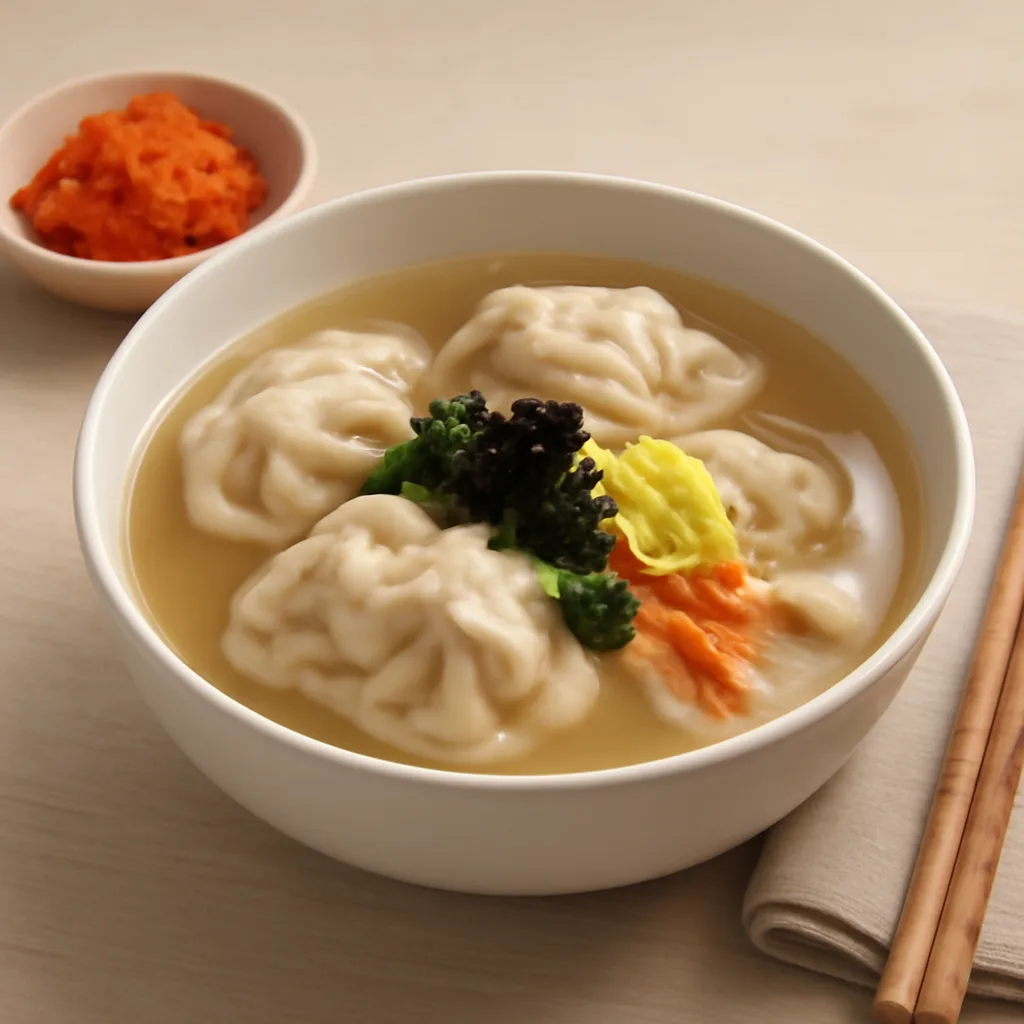
Mandu-guk
Mandu-guk is a warm, hearty broth with frozen dumplings and fresh vegetables. It’s a simple, perfect meal that can be enjoyed any time.
Main Ingredients
Related Themes
9
View0
Like1
AI recommendations0
CreatedAbout this recipe
Dumpling soup is a simple broth dish where you boil water to cook frozen dumplings and finish with bok choy, scallions, and eggs. Even with few ingredients, the flavors of the dumpling filling and scallion perfume spread through the broth, making it satisfying as a one-bowl meal. Since cooking time is about 15 minutes, washing and slicing ingredients in advance makes it easier to add vegetables and eggs while the dumplings cook. The flavor center is a clear, light broth and dumplings. It is better to taste the broth after adding the dumplings and adjust salt gradually. Because each frozen dumpling has different skin and filling saltiness, seasoning too strongly from the start can make the broth salty. Bok choy should not be boiled for long, or the stalks become soft and the leaves dull in color; a good approach is to add them just before the dumplings are almost cooked and cook briefly. Eggs soften the broth, but if you prefer a clear broth, you can add them lightly cooked without whisking, or omit them.
Taste and Texture
Soft dumpling skin and moist filling contrast with the crisp bok choy which retains some snap. Scallions add a gentle aroma as they cook, and lightly whisked eggs make the broth even richer and smoother. The broth is simply seasoned with salt to a clear taste. If you expect a rich stock flavor, boiling with just water may feel rather light, so it's best to treat this as a light meal that highlights the dumplings’ inherent flavor.
Key to making it delicious
- Once the water is rolling vigorously, add frozen dumplings to prevent the dumpling skins from spreading too much; if boiling calms, adjust the heat to bring it back to a boil.
- Right after adding dumplings, stir gently once or twice to prevent sticking to the pot bottom. Repeated strong stirring can tear the dumpling skins and cloud the broth.
- Even after they float, dumplings need time to heat through; check that the wrappers look transparent and the dumplings are plump before adding the next ingredients.
- Add bok choy from the stems first and leaves later to minimize textural differences. If you want very tender vegetables, cook a little longer, but the color and crispness will soften.
- Eggs should be poured in thinly when the broth is at a gentle simmer and not whisked right away to avoid stringy egg strands. If you want lumps of egg, whisk them and let sit briefly before turning gently.
- Salt should be added after all ingredients are in and you taste the broth; if the dumplings impart more salt, you may not need extra salt.
Common mistakes
- If you start with high heat and boil vigorously from the beginning causing dumplings to burst, then reduce to medium heat after the boil to avoid excessive agitation. Burst dumplings can release filling and cloud the broth.
- If bok choy becomes yellowish soft when added with the dumplings, next time leave the greens until near they’re almost cooked and then briefly simmer.
- If you add too much salt early and the broth tastes salty, add a little water and bring to boil again, then judge additional seasoning after the dumplings and vegetables are cooked.
- If you add eggs and vigorously stir immediately causing the broth to cloud, next time lower the heat one notch and add eggs in a thin stream, letting them set briefly before stirring.
- If frozen dumplings stick together after thawing, don’t forcibly separate; add to boiling water and let them separate naturally. If the wrappers are already very wet, reduce stirring during cooking to prevent bursting.
Application Ideas
- You can use leafy greens available at home instead of bok choy, but greens like spinach that wither quickly should be added right before turning off the heat so they don’t become mushy.
- To enhance scallion aroma, add the white parts to the broth first and the green parts near the end. If you don’t prefer a strong scallion flavor, add all at once and cook until just tender.
- Instead of whisking eggs, serve with half-cooked or fully cooked eggs on the side to keep the clear look of the broth.
- Depending on the type of frozen dumplings, vegetable-filled dumplings may taste lighter, while meat-filled dumplings are bolder, so adjust salt with the same base amount regardless.
Pairing ideas
- Serve immediately in bowls when the scallions are bright; this best preserves the warmth and aroma of the broth.
- Pair with rice for leftovers, or if dumplings are increased, you can have a one-bowl meal without rice.
- Serve with kimchi or other tangy and spicy accompaniments to contrast the comforting dumpling soup. If the kimchi is very salty, balance by making the broth lighter than usual.