View recipes
Check the reference data for the selected food.
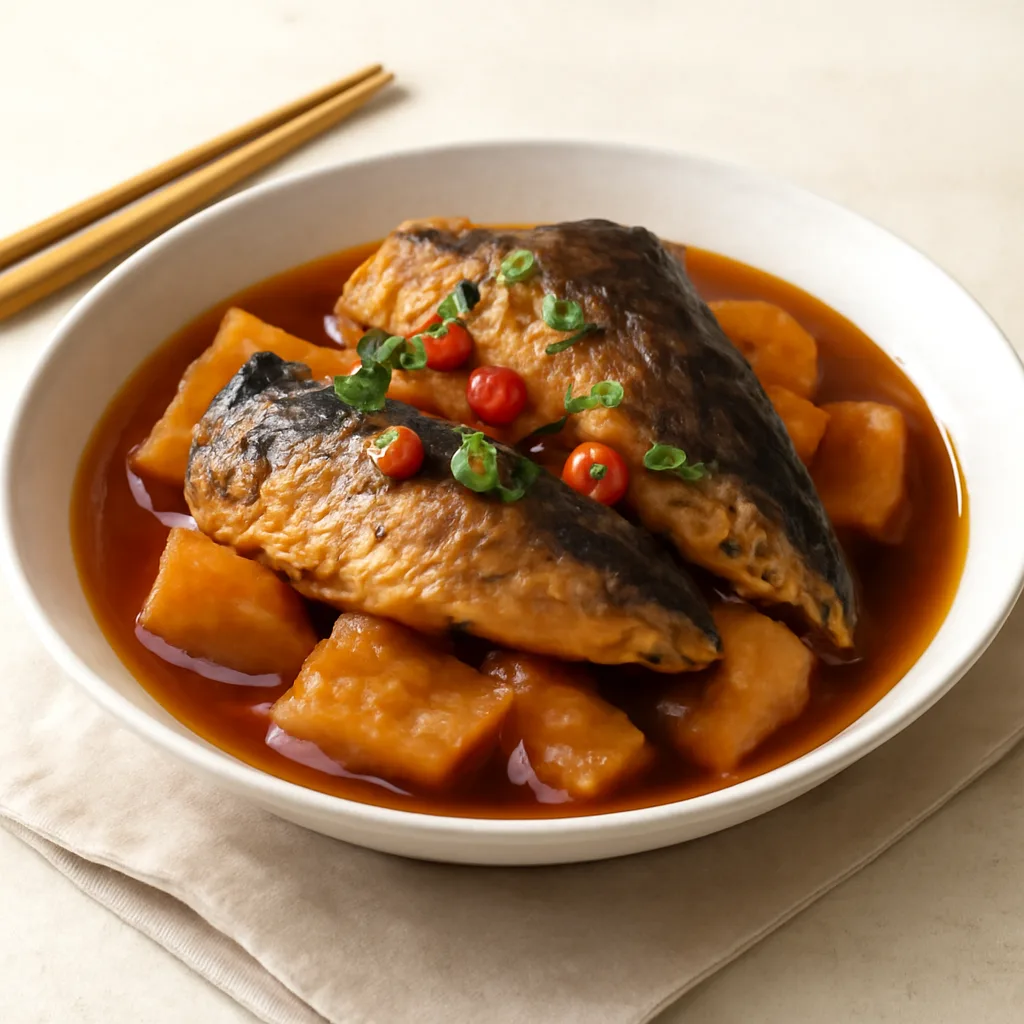
Braised mackerel with radish
Braised mackerel with radish combines tender mackerel and subtly sweet radish to create a depth of flavor in a side dish. Cooked in a soy sauce glaze to reduce fishy aroma, allowing the radish to absorb the flavors for a richer, more nuanced taste.
Main Ingredients
Related Themes
13
View0
Like2
AI recommendations0
CreatedAbout this recipe
Mackerel stewed with radish is a side dish that cooks the oily flavor of mackerel with the subtle sweetness of radish in a soy sauce seasoning. As the cooking time passes, the radish absorbs the seasoning and fish flavors, and the mackerel becomes tender and flakes apart.
Taste and Texture
Well-cooked mackerel flakes tenderly; the radish edges are soft with a slightly fibrous center. The savory saltiness from the soy sauce complements the radish sweetness, making the broth enjoyable to eat. Leaving generous broth yields a moist, comforting taste, while further simmering intensifies the seasoning. However, excessive simmering may make both radish and fish taste too salty.
Key to making it delicious
- Radish takes longer to cook than mackerel, so start by cooking it until a chop can enter from the edge relatively easily, so the seasoning doesn’t stay on the surface.
- Place the mackerel in a wide pan so the pieces don’t overlap or press, helping keep their shape.
- After the broth starts boiling, gently shake the pan or ladle the broth over the top to prevent the seasoning from settling at the bottom; stirring vigorously can break the fish.
- At the end, check the broth amount and the radish seasoning together, and decide whether to reduce further. If the radish is already salty enough, don't simmer too long and turn off the heat.
- Add scallions at the final stage to retain their aroma and color, or add them a bit earlier if you want them more mellow in flavor.
Common mistakes
- If the radish is still firm but the fish flakes easily, rather than continuing to boil the fish, briefly remove the fish and continue cooking the radish, then rejoin.
- If the broth reduces quickly and the bottom looks heavily seasoned or scorched, lower the heat and add a little more water as needed.
- Turning the fish several times can make the pieces look messy after cooking; instead, ladle the broth over the top to cook the surface.
- If scallions lose their aroma because they were boiled too long from the start, add some just before turning off the heat to restore fragrance.
Application Ideas
- Leave a slightly larger amount of broth so the radish and mackerel stay moist and so it pairs well with rice.
- If you want a stronger flavor, simmer briefly after the radish is fully cooked to thicken the sauce; simmering from the start can make the radish too salty before it’s tender.
- If you want the radish’s delicate and sweet flavor to stand out, avoid over-reducing the soy sauce so the radish’s taste isn’t overwhelmed.
- To highlight scallions, slice them thickly and add at the end, but if you prefer them to melt in, add them during cooking.
Pairing ideas
- Serve warm with rice, and drizzle some of the remaining braising liquid over the radish for moisture.
- Arrange the radish and mackerel on one plate so you can taste the fish’s tenderness with the radish sweetness in each bite.
- If plenty of broth remains, complement with a small amount over the rice; if the seasoning has reduced too much, serve with less broth.
- Place the scallion side up to emphasize aroma and make the fish color pop more.