View recipes
Check the reference data for the selected food.
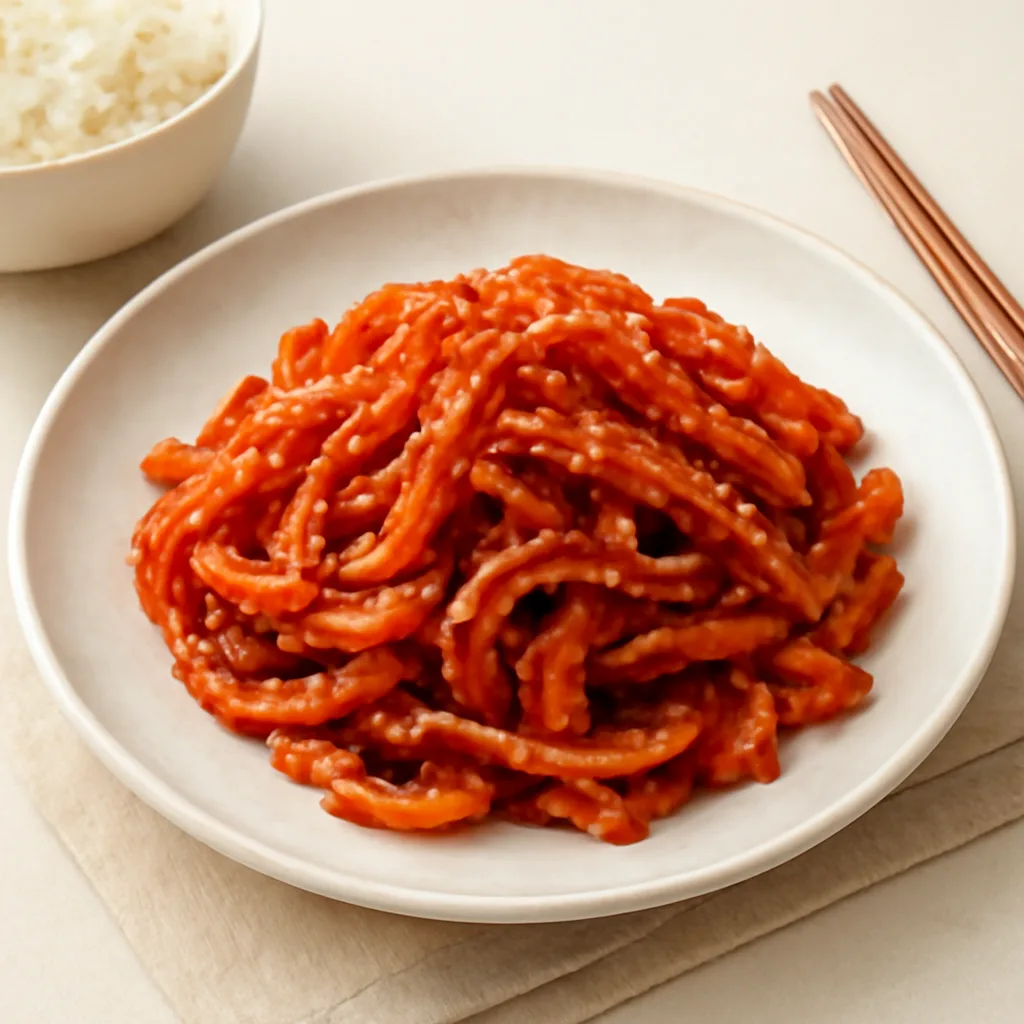
Spicy Dried Squid Stir-fry
Spicy dried squid stir-fry pairs chewy dried squid with a spicy sauce, making it a great beer snack. Quick to prepare and low in calories for easy enjoyment.
Main Ingredients
Related Themes
13
View0
Like1
AI recommendations0
CreatedAbout this recipe
Spicy seasoned dried squid strips stir-fry is a dish where softened squid strips are briefly stir-fried after soaking, coated with a sauce of gochujang, soy sauce, sugar, and garlic. The key is to mix quickly so the sauce coats evenly, and the final texture varies greatly depending on the moisture state of the squid strips. If you drain the soaking water well, the sauce will not become runny and will cling with a glossy finish. Conversely, if you want a moister and softer texture, you don’t need to squeeze out every drop of moisture, but in this case, if you fry on high heat for too long, the sauce may burn or the squid strips can become tough. The basic seasoning provides a spicy-sweet flavor, and additional gochugaru (red pepper powder) is added only when a stronger spiciness is desired. Gochugaru adds color and heat, but if the pan is too hot and you fry for too long, it can taste flat or bitter, so it’s better to add it at the finishing stage.
Taste and Texture
The gochujang provides spiciness, while soy sauce adds savory umami and sugar brings sweetness, yielding a rich, familiar sauce flavor. If you sauté the garlic in oil first, it helps settle the weight of the seasoning. The squid strips can be soft and chewy or firm like dried flesh depending on soaking time and frying duration. Quick stir-frying keeps the texture defined, while longer heating can cause moisture to evaporate and result in a firmer, tougher chew.
Key to making it delicious
- Soak the squid strips in water, then wring them to remove moisture until a pinch test shows no water drips, which helps keep the sauce from becoming runny.
- Heat the pan to medium and add garlic until aroma rises; when the edges start to brown quickly, lower the heat so you can add the next ingredients before bitterness develops.
- First, sauté the squid strips for 2–3 minutes to remove surface moisture, then add the sauce so it coats more evenly rather than clumping in one place.
- After adding the sauce, keep turning and mixing until the bottom glaze is not too thick and glossy, then turn off the heat promptly and don’t leave it simmering.
- Add gochugaru only at the end if you want more spiciness; if the gochujang already provides enough heat or you prefer a milder dish, omit it for balanced flavor.
Common mistakes
- If you leave the soaked squid strips wet, water can pool in the pan and the dish may become stewy instead of stir-fried, so drain through a sieve or gently squeeze out excess water before adding sauce.
- If you overcook after adding the sauce and the squid strips become hard and chewy, next time heat briefly just until the seasoning coats with gloss, and lower the heat if the pan gets overheated.
- Adding the garlic after the squid strips have browned deeply can produce a burnt aroma across the dish, so add the squid when the garlic aroma first rises to pause further browning.
- Starting with high heat when frying gochugaru can dull the color and roughen the spicy aroma, so add it at the end after mixing with the gochujang for a brief finish.
Application Ideas
- If you want a more pronounced spiciness, add the stated chili powder (1 teaspoon) but, if the gochujang’s saltiness and heat are strong, add only half and taste before adjusting.
- For softer squid strips, increase soaking time a bit and remove moisture only lightly; note this can thin the sauce, so instead of extending frying time, turn off the heat and finish with the residual heat in the pan.
- If the sweetness is too strong, start with less sugar and only add a small amount after frying if the spiciness seems too sharp, to balance the flavor.
Pairing ideas
- Just before serving, scatter scallions for a fresh aroma that contrasts with the spicy glaze.
- Spread the dish out on the plate to prevent excess heat and moisture from being trapped in one area, helping the squid retain its chewy texture longer.
- If the spiciness is intense, portion gradually rather than serving a large amount at once, and if desired, accompany with more scallions to mellow the bold seasoning.
Essential ingredients
오징어채
고추장
간장
설탕
다진 마늘
Optional ingredients
고춧가루
매운맛을 강조하기 위해 추가
Cooking order
오징어채를 물에 불려 부드럽게 만든 후 물기를 제거한다.
팬에 식용유를 두르고 중불로 예열한 후, 다진 마늘을 넣고 볶아 향을 낸다.
오징어채를 팬에 넣고 2-3분간 볶아준다.
고추장 1큰술, 간장 1큰술, 설탕 1작은술을 넣고 잘 섞어 볶는다.
고춧가루와 후추로 간을 맞춘 후 1분 더 볶아준다.
완성된 오징어채 볶음을 접시에 담고 대파로 장식한다.