View recipes
Check the reference data for the selected food.
About this recipe
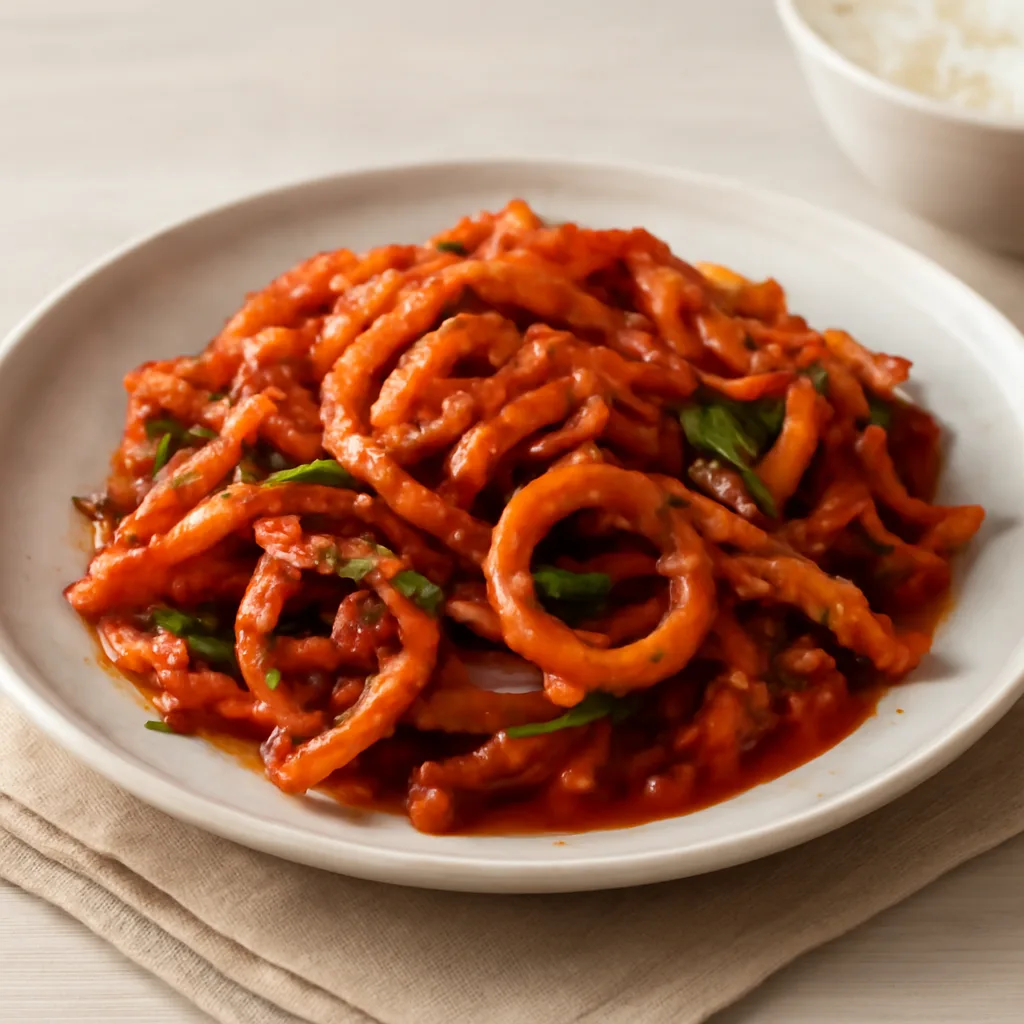
Spicy stir-fried squid (채 볶음) is a simple side dish made by briefly stir-frying cleaned squid with a seasoning of gochujang, soy sauce, and minced garlic. Because the cooking time is short, how you manage the squid’s moisture determines the finish. After thoroughly preheating the pan, fry quickly in one go to let the sauce cling with a gloss, while keeping the squid’s chewy texture. Because gochujang and soy sauce are used, starting on high heat for too long can cause the sauce to stick to the bottom of the pan or taste salty and clumpy. When the squid becomes opaque white and the edges start to dry slightly, check doneness and reduce the heat or finish. Spring onion and sesame seeds are not essential, but scallions freshen the aroma of the spicy seasoning, and sesame adds a nutty finish. It’s an easy cook that can be done in about 15 minutes, but if you expect a very dry, crispy style by cooking the squid longer, this short method may not suit. This recipe is suited for tender, chewy squid lightly coated with the seasoning.
Taste and Texture
Gochujang provides a spicy, rich flavor with soy sauce’s salty, savory notes, and the sharp aroma of garlic. If you add scallions, a faint onion aroma lingers at the end, and sesame seeds add nuttiness. When briefly stir-fried, squid is bouncy and chewy. Conversely, if the pan has a lot of moisture and you cook it longer, the seasoning becomes runny and the squid can become firm and tough.
Key to making it delicious
- Dry any surface moisture from the squid as much as possible before frying. If moisture remains, the pan temperature drops and the squid may steam instead of fry, and the seasoning may become runny, so press dry with a paper towel before adding to the pan.
- Heat the pan and oil over medium heat first, then add the squid. If you hear a light sizzle when you add the squid, that is appropriate; if not, reheat a bit to prevent too much moisture from coming out.
- When the squid becomes opaque and the edges start to dry, add the seasoning and mix quickly. If you continue to cook after it has contracted, it tends to become hard, so check doneness as soon as the seasoning coats evenly.
- Do not let gochujang and soy sauce stay on empty parts of the pan for long; mix them with the squid right away. If you smell the sauce sticking thickly, lower the heat and swirl the pan to mix in any remaining moisture and finish.
- Add the scallions at the end and stir briefly. For a more pronounced green onion aroma, turn off the heat just as the scent is about to fade.
Common mistakes
- If the squid releases a lot of liquid and the sauce becomes watery, the pan may not have heated enough or the squid was wet on the surface. Next time, pat dry, preheat the pan, and briefly fry on high heat to evaporate moisture, finishing before the sauce reduces too much.
- If the squid dries and becomes tough from being cooked too long, the total frying time may have been too long. As soon as it becomes opaque, stop cooking, mix in the seasoning, and finish when the edges just start to dry.
- If the final saltiness and spiciness feel particularly strong, the gochujang and soy sauce may be richer than the squid portion. In the next cook, add only part of the seasoning at first to gauge color and balance and adjust accordingly.
- If the pan has black residue from the sauce on the bottom, the gochujang has been in contact with high heat for too long. After adding the seasoning, keep at medium heat and stir quickly, lowering the heat when it starts to stick.
Application Ideas
- If you want to soften the spiciness a bit, reduce the gochujang and add generous scallions to balance the aroma. However, reducing gochujang too much will also weaken the red color and deep flavor of the stir-fry.
- If you want the squid texture to be more distinct, slice the body wide and thin, and the tentacles to a bite-sized length. If too thin, they shrink quickly in a short fry and look less plentiful.
- Sesame seeds can be sprinkled on a plate at the end to leave a nutty aroma. If added early during frying, the aroma weakens and they may stick to the pan, so finishing addition is more fitting.
- If scallions are unavailable, you can cook with only gochujang, soy sauce, and garlic seasoning. However, the aroma contrast will lessen, so avoid over-doubling the garlic and focus on not overheating the squid.
Pairing ideas
- Spread and plate while warm right after frying so the squid stops steaming and the glossy sauce is well showcased.
- Finish with sesame seeds and chopped scallions for added nuttiness and onion aroma, making it a good party snack.
- If the spicy seasoning feels strong, pair with plain rice to balance the salt and spicy heat. On the other hand, if you want to highlight the squid’s chewy texture, serve it without any watery sides.
Essential ingredients
오징어
신선한 오징어를 사용합니다.
식용유
팬에 두릅니다.
고추장
양념장에 사용합니다.
간장
양념장에 사용합니다.
다진 마늘
양념장에 사용합니다.
Optional ingredients
대파
다진 것으로 사용합니다.
통깨
마무리용으로 뿌립니다.
Cooking order
오징어를 깨끗이 손질하고, 먹기 좋은 크기로 썰어줍니다.
팬에 식용유를 두르고 중불로 예열합니다.
오징어를 팬에 넣고 2-3분간 볶아줍니다.
고추장 1큰술, 간장 1큰술, 다진 마늘 1작은술을 넣고 잘 섞어 볶습니다.
오징어가 익을 때까지 2-3분 더 볶아줍니다.
마지막에 대파를 넣고 1분 정도 더 볶아줍니다.
접시에 담고 통깨를 뿌려 마무리합니다.