Voir les plats
Vérifiez les données de référence des aliments sélectionnés.
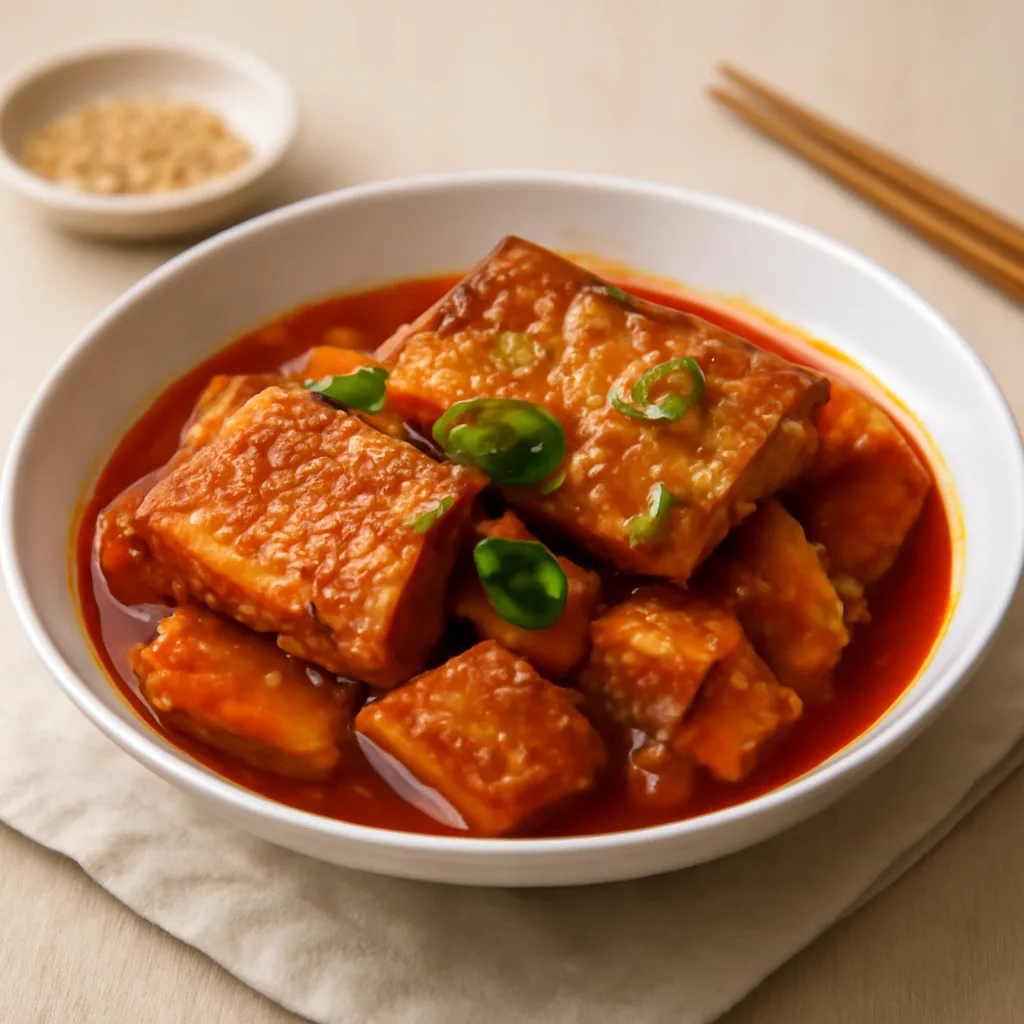
갈치조림
Le ragoût de maquereau (갈치조림) associe le maquereau tendre à du radis daikon croquant pour un harmonie de textures. Une sauce soja relevée par du piment apporte une saveur profonde, rehaussée par la ciboule et l’oignon pour enrichir le parfum. Ce serait un banchan coréen idéal à déguster avec du riz.
7
Consultation0
J'aime1
Recommandation AI0
CrééÀ propos de ce plat
Kamchijorim is a fish side dish where the mild flesh of hairtail absorbs seasoning, pairing with radish that becomes soft in broth. In this version, radish is laid at the bottom of the pot first to prevent the fish from directly touching the bottom and sticking, and to let the radish gradually absorb the soy sauce–gochugaru flavor.
Goût et texture
The hairtail has a tender, mild texture, and the braising broth enriched with soy sauce, gochugaru, and garlic gives a sharp, salty note to the meat. Onion and green onion add sweetness and aroma to soften the straightforward saltiness of the seasoning. The radish becomes transparent at the edges and tender enough for chopsticks to go in easily; if you don’t want the radish to be too mushy, check the level of doneness before the broth becomes too thick and adjust the heat accordingly.
Clé pour réussir
- Cleanly remove the scales and innards from the hairtail and cut into pieces to reduce any fishy or bitter notes in the broth, using cleaned hairtail.
- Radish should be cut into about 1 cm thickness to ensure even cooking; during cooking, check that the outer edges of the radish become transparent and that a chopstick can reach the center.
- Lay the radish on the bottom tightly with no gaps and place the hairtail on top so the radish receives the broth’s heat and flavors first, reducing the chance of the flesh sticking to the pot.
- Add the seasoning so it distributes evenly in the water; once the broth starts to simmer, reduce to a low heat. If the boil is too strong, the hairtail flesh may shake and split.
- Final salt seasoning is done after the broth has reduced to a certain level; since soy sauce has already been used, adding too much salt early can make the saltiness stand out as the broth reduces.
Erreurs courantes
- If you keep the heat high and boil vigorously, causing the hairtail pieces to break apart, lower the heat and gently swirl the pot rather than stirring with a spatula to make the broth move.
- If the radish is still firm but there’s little broth left, the cooking time may be insufficient, so add a little water and cover to finish cooking the radish.
- If the broth is too thin, after the hairtail is fully cooked, uncover and simmer a bit longer to reduce moisture. However, over-simmering for too long can dry the fish meat, so also check the radish.
- If salt was added just before finishing and the dish is too salty, do not reduce it further; instead add a small amount of water to loosen the broth gradually. The onions and radish may release more moisture, so adjust the seasoning gradually.
Idées d'application
- If you want less heat, reduce the gochugaru and center the flavor on soy sauce and garlic, though the color and spiciness of the broth will lessen.
- Adding more radish can make the braise more radish-forward than fish-forward, but due to radish moisture the broth may become thin, so final concentration adjustment is needed.
- Adding a bit more onion during cooking can increase sweetness and moisture, softening the seasoning taste; if you want a clear spicy braise flavor, keep the base amount unchanged.
- Some scallions can be added during cooking to extract aroma, and some can be added at the end to provide the sweetness of cooked green onion and fresh green onion aroma.
Idées d'accompagnement
- Serve with warm rice; flake the hairtail meat and combine with the broth and radish so the seasoning naturally complements the rice.
- If there is excess broth, ladle a little over the radish and fish pieces so the seasoning is well absorbed and enjoyable as braised ingredients.
- There are bones in hairtail, so when plating, avoid overlapping pieces too much and remove meat easily to eat.
- If there is a remaining broth that is quite soupy, pour it over the rice sparingly to prevent masking the hairtail’s mild flavor.
Ingrédients essentiels
갈치
무
양파
대파
물
간장
고춧가루
다진 마늘
소금
Ingrédients optionnels
Aucun ingrédient optionnel.
Ordre de cuisson
갈치를 깨끗이 손질하여 비늘과 내장을 제거한 후, 3~4조각으로 썬다.
무는 두께 1cm 정도로 썰고, 양파는 채 썬다.
냄비에 썬 무를 깔고 그 위에 갈치를 올린다.
양파와 대파를 갈치 위에 뿌린 후, 물 2컵을 부어준다.
간장 3큰술, 고춧가루 1큰술, 다진 마늘 1큰술을 넣고 중불에서 끓인다.
국물이 끓어오르면 불을 약하게 줄이고 20분 정도 조리하여 갈치가 익고 국물이 자작해지도록 한다.
마지막으로 소금으로 간을 맞추고, 대파를 송송 썰어 올려서 마무리한다.